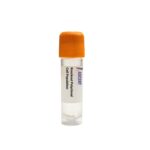
The ENOPH1 Knockout Raji Polyclonal Cells constitute a polyclonal population of Raji B lymphocytes engineered with CRISPR/Cas9-mediated disruption of the ENOPH1 gene. This gene-edited cell pool provides a loss-of-function model for studying enolase-phosphatase activity within the methionine salvage pathway. The polyclonal format retains genetic diversity, making it suitable for population-level analyses of null allele effects. These cells enable detailed investigation of ENOPH1-dependent metabolic reprogramming and its impact on tumor cell growth, particularly in B-cell lymphoma contexts.
The Raji host cell line is a human Burkitt lymphoma-derived B lymphocyte, established from an Epstein-Barr virus (EBV)-positive patient. These cells grow in suspension as lymphoblastoid cultures and are widely employed as a model for aggressive B-cell malignancies. The Raji background exhibits characteristic MYC translocation-driven proliferation, intersecting with oncogenic signaling networks. This cell line is frequently used to assess chemotherapeutic sensitivity, apoptotic regulation, and metabolic adaptations in lymphomagenesis, providing a physiologically relevant system for functional genomics.
ENOPH1 encodes an enolase-phosphatase that catalyzes the dephosphorylation of 2,3-diketo-5-methylthio-1-phosphopentane to 2-hydroxy-3-keto-5-methylthiopentene-1, a necessary step in the methionine salvage pathway. This reaction recycles 5-methylthioadenosine (MTA), a byproduct of polyamine biosynthesis, back to methionine. ENOPH1 activity is positioned downstream of methylthioadenosine phosphorylase (MTAP) and upstream of methylthioribose-1-phosphate isomerase (MRI1), ultimately supporting S-adenosylmethionine (SAM) and polyamine production. Upstream regulators include the MYC proto-oncogene, transcription factor ATF4, and mTORC1 nutrient-sensing complex, while Mg2+ serves as an essential cofactor. Downstream outputs encompass methionine, SAM, and polyamines, linking amino acid metabolism to cell-cycle progression.
In the context of Raji cells, ENOPH1 disruption directly impinges on the methionine salvage axis that sustains polyamine and SAM pools under nutrient-replete and stressed conditions. Burkitt lymphoma cells often exhibit heightened dependence on methionine recycling to support rapid proliferation and oncogenic MYC-driven anabolism. Consequently, loss of ENOPH1 may unmask metabolic vulnerabilities and sensitize cells to interventions such as methionine deprivation or polyamine pathway blockade. This model thus serves as a powerful tool to dissect the interplay between methionine metabolism, polyamine flux, and apoptotic thresholds in B-cell lymphomas.
Typical research applications include metabolic flux analysis via metabolomics and RNA-seq profiling, proliferation and apoptosis assays (e.g., MTT, BrdU, annexin V), drug sensitivity testing with methionine restriction, and protein interaction studies by co-immunoprecipitation with MTAP pathway components. Further mechanistic inquiries can involve examining MYC or mTORC1 signaling effects on methionine salvage using flow cytometry-based cell-cycle analysis. These polyclonal knockout cells are also amenable to CRISPR-library screens for synthetic lethal interactions. For technical inquiries or product specifications, please contact Ascent Research.