Security Notice: Please be aware of impersonation attempts using our company name
Legitimate communications from Ascent Research will only come from official @ascentresearch.com email addresses.
Quick Order Cart

Cat. No. ARG0481

ERAP1 Knockout K562 Cell Line

  • Product Type:

    Genome-edited Cells

  • Tissue Source:

    Pleural effusion

  • Disease:

    Chronic myeloid leukemia

  • Gene Species:

    Homo sapiens (Human)

ERAP1 Knockout K562 Cell Line is a CRISPR/Cas9-edited human cell line with disrupted ERAP1 gene expression in the K562 chronic myelogenous leukemia background. This model abolishes endoplasmic reticulum aminopeptidase activity, altering MHC class I peptide trimming and cytokine receptor shedding. ERAP1 functions downstream of IFNG and TNF signaling, interacting with the peptide-loading complex components TAP1 and tapasin. The knockout cell line is designed for immunopeptidomics, antigen presentation studies, and investigation of immune evasion mechanisms. It enables analysis of MHC class I peptide repertoire changes via mass spectrometry and functional assays including flow cytometry and T cell activation. Applicable to autoimmunity, cancer immunotherapy, and drug target validation research.

Inquire Now

In stock

Ships next business day


Ask a Question

Shipping Info:

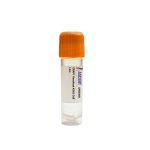
Cryopreserved in vials and shipped on dry ice


Disclaimer:

For Research Use Only

  • Characteristics

    Host Cell

    K562

    Sex of Donor

    Female

    Gene Name

    ERAP1

    Gene Species

    Homo sapiens (Human)

    Gene Identifier

    NCBI Gene ID 51752

  • Culture Conditions

    Temperature

    37°C

    Atmosphere

    5% CO₂

  • Quality Control

    Sterility testing

    Daily monitoring confirms that the cells are free from bacterial, yeast, and fungal contamination.

    Mycoplasma testing

    Negative for mycoplasma through PCR analysis

    Pathogens

    Cells tested negative for HIV-1, HBV, and HCV.

  • Disclaimer

    Intended Use

    This product is intended for laboratory in vitro use only. lt is not intended for diagnostic, therapeutic, or clinical applications.

    Disclaimer

    Ascent Research endeavors to provide accurate and up-to-date product information. However, no warranties or representations are made regarding its completeness or reliability. References to scientific literature and patents are for informational purposes only, and the customer assumes sole responsibility for verifying their accuracy.

    By accepting this product, the customer acknowledges and agrees to assume all risks associated with its receipt, handling, storage, disposal, and use, including compliance with all applicable safety and environmental regulations and precautions. Relevant laws, regulations, and ethical guidelines must be followed in conducting any research, modifications, or derivatives derived from this product.

    This product is provided "AS IS", and except as expressly stated herein, Ascent Research disclaims all other warranties, express or implied. Under no circumstances shall Ascent Research, its affiliates, or representatives be liable for indirect, incidental, consequential, or punitive damages arising from the use of this material. While Ascent Research employs rigorous quality control measures, we shall not be held responsible for damages resulting from misidentification or misinterpretation of the provided materials.

Description

The ERAP1 Knockout K562 Cell Line is a CRISPR/Cas9-edited human cell model featuring disruption of the ERAP1 gene in the K562 chronic myelogenous leukemia background. This stable cell line provides a defined loss-of-function system for investigating endoplasmic reticulum aminopeptidase function in antigen processing and immune regulation.

K562 is a Philadelphia chromosome-positive cell line expressing the BCR-ABL fusion tyrosine kinase, widely used as a model for leukemia biology and hematopoietic differentiation. This suspension-adapted cell line is deficient in normal MHC class I expression, making it a suitable platform to study the effects of ERAP1 disruption on peptide loading and immune recognition.

ERAP1 trims N-terminal residues from peptide precursors in the endoplasmic reticulum, optimizing them for loading onto MHC class I molecules. This process, involving interaction with the peptide-loading complex components TAP1, TAP2, and tapasin, shapes the immunopeptidome presented on the cell surface. ERAP1 also catalyzes ectodomain shedding of cytokine receptors such as TNFR1, IL6R, and IL1R2, which modulates inflammatory signals. The enzyme??s expression is regulated by upstream cytokines including IFNG and TNF, and transcription factor NFKB1 influences its induction during stress responses. Knockout of ERAP1 thus disrupts both the generation of optimal MHC class I ligands and the shedding of key immune receptors.

In K562 cells, which lack normal MHC class I expression, ERAP1 knockout further reshapes the residual peptide repertoire, potentially altering natural killer cell recognition through changes in class I?Cpeptide complexes. The BCR-ABL-driven oncogenic context makes this model valuable for examining how aminopeptidase activity intersects with leukemogenesis and immune evasion. Additionally, the reduced shedding of cytokine receptors may impact autocrine and paracrine signaling pathways known to influence K562 proliferation and differentiation.

This knockout cell line supports detailed immunopeptidomic profiling using mass spectrometry, enabling comparison of peptide length distributions and anchor residue preferences in the absence of ERAP1. Functional studies can employ flow cytometry to quantify surface MHC class I levels, while ELISAs detect changes in soluble cytokine receptors. T cell activation assays and NK cell cytotoxicity experiments provide readouts of altered immune recognition. The model is applicable to investigations of autoimmunity, cancer immunotherapy target validation, and the molecular basis of ankylosing spondylitis. Researchers may use RT-qPCR or western blotting to confirm gene disruption. For technical inquiries and ordering details, please contact Ascent Research.


Reset Password

    Reach Us Questions? Click Me Here!

    Fill out the form below and a member of our team will contact you shortly!

    *Required field


      Reach Us

      Fill out the form below and a member of our team will contact you shortly!

      *Required field

      Product Inquiry (Optional)