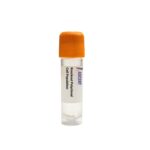
The ERCC5 Knockout Raji Polyclonal Cells are a CRISPR/Cas9-edited polyclonal knockout cell population for loss-of-function studies of the ERCC5 gene. This heterogeneous pool of Raji cells contains diverse disruptions at the ERCC5 locus, generated via non-homologous end joining following Cas9-mediated double-strand breaks. The polyclonal format avoids clonal selection biases and represents a pooled gene knockout model, suitable for functional studies of ERCC5 in DNA repair.
The Raji cell line is a human Burkitt??s lymphoma B lymphocyte model, derived from an Epstein-Barr virus (EBV)-positive patient. Raji cells grow in suspension as immortalized lymphoblastoid cells, expressing B-cell markers and retaining antibody production capacity. As a transformed B-cell line, Raji is widely used in immunology and cancer research, providing a relevant background for studying DNA repair in lymphoid malignancies and EBV-associated genomic instability.
ERCC5 encodes XPG, a structure-specific endonuclease that incises DNA 3?? to lesions in nucleotide excision repair (NER). XPG functions with XPA-RPA, TFIIH (helicases XPB and XPD), and ERCC1-XPF to remove UV-induced pyrimidine dimers and bulky adducts. Repair synthesis by DNA polymerases ??, ??, or ?? and ligation by DNA ligase I or III follow lesion removal. ERCC5 is regulated by ATM/ATR kinases and p53, linking DNA damage to cell cycle checkpoint recovery and transcription restart. XPG also interacts with CSB and BRCA1 in transcription-coupled repair; its loss disrupts repair synthesis, ligation, and chromatin restoration after damage.
ERCC5 knockout in Raji B cells models NER deficiency in hematologic malignancies and inherited disorders such as xeroderma pigmentosum group G and Cockayne syndrome, characterized by UV hypersensitivity and elevated cancer risk. In lymphocytes, defective NER may promote lymphoma development and impair immune surveillance. Suspension growth allows high-throughput UV sensitivity and clonogenic survival assays, while the polyclonal population better mimics heterogeneous tumor responses. This model enables studies of NER-dependent drug sensitivity, DNA damage signaling, and the interplay between EBV-driven proliferation and genomic instability in a B lymphocyte context.
ERCC5 Knockout Raji Polyclonal Cells support a range of research applications, including NER mechanistic studies, UV sensitivity profiling via clonogenic survival and comet assays, and chemosensitivity testing with DNA-damaging agents. XPG protein levels can be assessed by Western blotting, ERCC5 transcript levels by RT-qPCR, and nuclear localization by immunofluorescence. Functional complementation via host cell reactivation assays or repair synthesis measurements further defines NER deficiency. In cancer biology, these cells enable studies linking DNA repair defects to lymphoma pathogenesis and immune function. For additional information or support, please contact Ascent Research.