Quick Order Cart

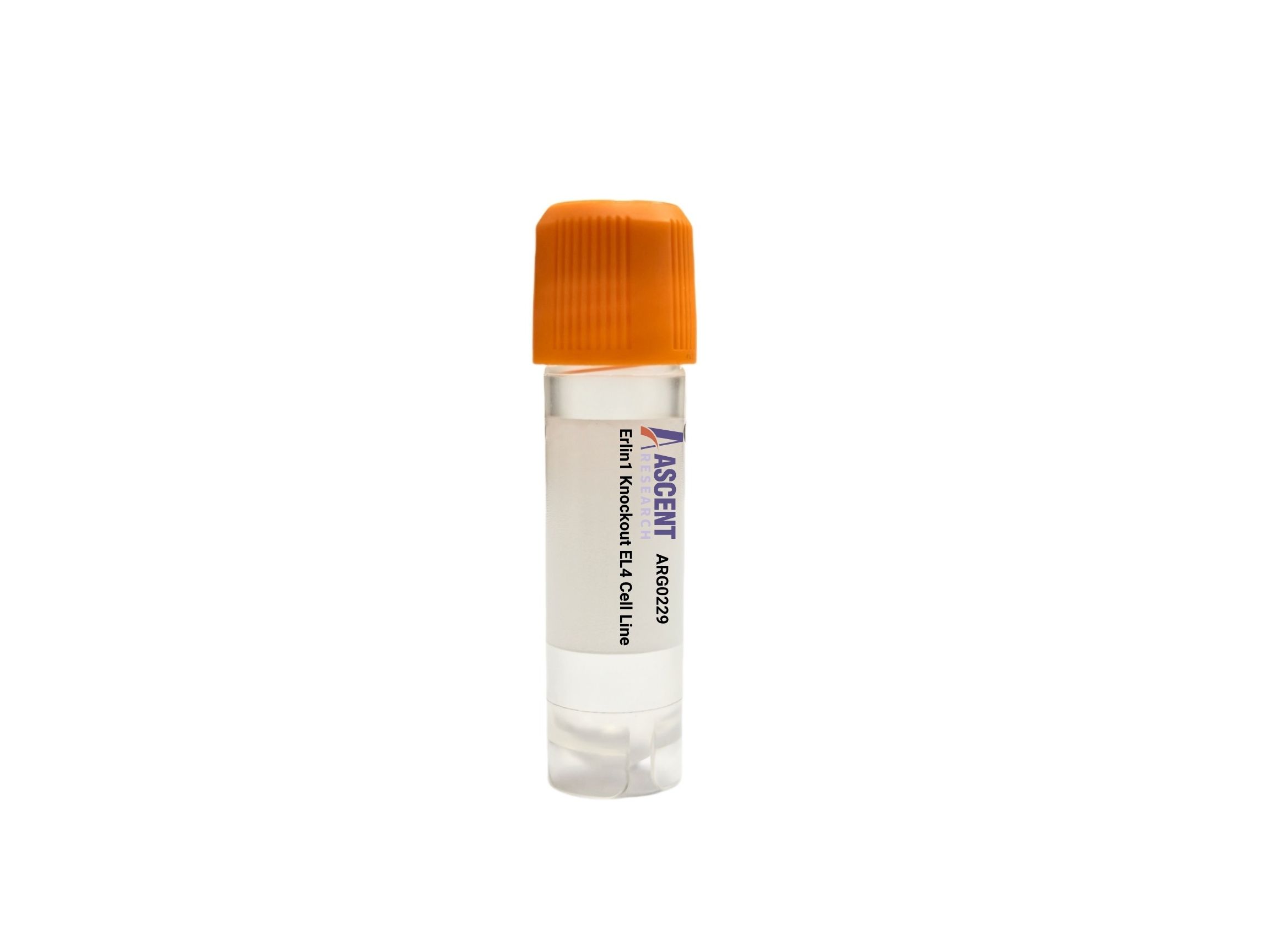
Cat. No. ARG0229

Erlin1 Knockout EL4 Cell Line

  • Product Type:

    Genome-edited Cells

  • Tissue Source:

    Ascites

  • Disease:

    Lymphoma

  • Gene Species:

    Mus musculus (Mouse)

The Erlin1 Knockout EL4 Cell Line is a CRISPR/Cas9-edited knockout cell line derived from the mouse T lymphoma EL4 line. Disruption of Erlin1, which encodes an ER membrane protein that forms complexes with Erlin2, provides a loss-of-function model to study ER-associated degradation, cholesterol homeostasis, and NLRP3 inflammasome regulation. This line enables investigation of ER stress responses and inflammasome signaling in T lymphocyte biology. Suitable applications include functional assays such as IL-1?? ELISA, caspase-1 activity measurements, and cholesterol efflux analysis, as well as gene expression profiling and drug screening. The model supports research into inflammatory disorders and neurological diseases linked to Erlin1 dysfunction.

Inquire Now

In stock

Ships next business day


Ask a Question

Shipping Info:

Cryopreserved in vials and shipped on dry ice


Disclaimer:

For Research Use Only

  • Characteristics

    Host Cell

    EL4

    Morphology

    Lymphoblast-like

    Age

    Unknown

    Sex of Donor

    Unknown

    Gene Name

    Erlin1

    Gene Species

    Mus musculus (Mouse)

    Gene Identifier

    NCBI Gene ID 226144

  • Culture Conditions

    Temperature

    37°C

    Atmosphere

    5% CO₂

  • Quality Control

    Sterility testing

    Daily monitoring confirms that the cells are free from bacterial, yeast, and fungal contamination.

    Mycoplasma testing

    Negative for mycoplasma through PCR analysis

    Pathogens

    Cells tested negative for HIV-1, HBV, and HCV.

  • Disclaimer

    Intended Use

    This product is intended for laboratory in vitro use only. lt is not intended for diagnostic, therapeutic, or clinical applications.

    Disclaimer

    Ascent Research endeavors to provide accurate and up-to-date product information. However, no warranties or representations are made regarding its completeness or reliability. References to scientific literature and patents are for informational purposes only, and the customer assumes sole responsibility for verifying their accuracy.

    By accepting this product, the customer acknowledges and agrees to assume all risks associated with its receipt, handling, storage, disposal, and use, including compliance with all applicable safety and environmental regulations and precautions. Relevant laws, regulations, and ethical guidelines must be followed in conducting any research, modifications, or derivatives derived from this product.

    This product is provided "AS IS", and except as expressly stated herein, Ascent Research disclaims all other warranties, express or implied. Under no circumstances shall Ascent Research, its affiliates, or representatives be liable for indirect, incidental, consequential, or punitive damages arising from the use of this material. While Ascent Research employs rigorous quality control measures, we shall not be held responsible for damages resulting from misidentification or misinterpretation of the provided materials.

Description

The Erlin1 Knockout EL4 Cell Line is a CRISPR/Cas9-edited knockout cell line engineered for targeted disruption of the Erlin1 gene. This loss-of-function model enables investigation of Erlin1 function in a mouse T lymphocyte lymphoma background. The product is provided as a live cell line and is intended for use in molecular, biochemical, and cellular assays to dissect the roles of Erlin1 in endoplasmic reticulum biology and immune signaling pathways.

The host EL4 cell line is a well-characterized suspension cell line derived from a chemically-induced T cell lymphoma in C57BL/6 mice. These cells maintain T lymphocyte characteristics and are extensively employed in immunological research, including studies of T cell receptor signaling, cytokine responses, and lymphoma biology. Their rapid growth and responsiveness to a range of stimuli make them a robust platform for investigating gene function in a lymphocytic context.

Erlin1 encodes an endoplasmic reticulum membrane protein that assembles into oligomeric complexes with Erlin2, functioning as a scaffold for ER-associated degradation (ERAD) of misfolded substrates and for the regulation of cholesterol homeostasis. Erlin1 negatively regulates NLRP3 inflammasome activation by interacting with NLRP3 and influencing its stability. The protein acts downstream of ER stress transducers such as PERK, IRE1??, and ATF6, and is transcriptionally regulated by SREBP2 and XBP1. Key interacting partners include UBXD8, the AAA-ATPase VCP/p97, and E3 ubiquitin ligases like gp78, which together mediate substrate retrotranslocation and proteasomal degradation. Erlin1 loss may impair ERAD efficiency and alter cholesterol metabolic pathways, including the expression of ABCA1 and LDLR, while potentiating NLRP3-dependent caspase-1 activation and IL-1?? release.

In the EL4 T lymphoma background, Erlin1 knockout offers a physiologically relevant model to examine the intersection of ER stress, cholesterol metabolism, and inflammasome signaling in lymphocyte biology. T lymphocytes rely on precise cholesterol flux for membrane integrity and signaling, and dysregulation of ERAD can lead to unresolved unfolded protein responses affecting cell survival or malignant transformation. By disrupting Erlin1, researchers can probe how the Erlin1?CErlin2 complex influences T cell lymphoma cell fitness, apoptotic thresholds, and inflammatory cytokine production, potentially revealing vulnerabilities relevant to lymphoid malignancies or inflammatory conditions.

This knockout cell line is suited for a variety of research applications, including mechanistic dissection of NLRP3 inflammasome regulation in T lymphoma, analysis of ERAD efficiency using pulse-chase assays, and evaluation of cholesterol efflux via ABCA1. Functional assays such as Western blotting for Erlin1 and ER stress markers (BiP, CHOP), RT-qPCR for downstream targets, IL-1?? ELISA, and caspase-1 activity measurements can be readily performed. Furthermore, the line can be utilized in compound screening platforms aimed at modulators of ER stress, inflammasome activity, or cholesterol homeostasis. For further technical details, please contact Ascent Research.


Reset Password

    Reach Us Questions? Click Me Here!

    Fill out the form below and a member of our team will contact you shortly!

    *Required field


      Reach Us

      Fill out the form below and a member of our team will contact you shortly!

      *Required field

      Product Inquiry (Optional)