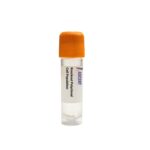
The ESYT1 Knockout Raji Polyclonal Cells product comprises a heterogeneous population of Raji B lymphocytes harboring CRISPR/Cas9-mediated disruption of the ESYT1 gene. This polyclonal knockout cell population is generated by introducing targeted gene edits across a bulk culture, resulting in a loss-of-function model that retains cellular diversity typical of the parental line. The knockout is not clonally derived; therefore, the population reflects a range of independent editing events, providing a robust system for studying gene function without the biases of single-cell isolation.
Raji cells are a suspension-adapted human B lymphocyte line derived from a Burkitt lymphoma patient and are Epstein-Barr virus (EBV) positive. As a model of malignant B cells, Raji cells retain key features of B lymphocyte biology, including surface immunoglobulin expression, antigen presentation capacity, and active signaling networks that regulate proliferation, survival, and adhesion. Their rapid growth and well-characterized signal transduction make them a widely used host for gene perturbation studies in immunology and cancer biology.
ESYT1 (Extended Synaptotagmin-1) is a critical component of endoplasmic reticulum (ER)?Cplasma membrane (PM) contact sites, where it acts as a calcium-dependent tether. ESYT1 forms homo- and heteromeric complexes with ESYT2 and ESYT3, bridging the ER to the PM via interactions with phosphatidylinositol 4,5-bisphosphate (PIP2) and F-actin at the PM and with VAPA/VAPB at the ER. Upon elevation of cytosolic calcium, ESYT1 mediates non-vesicular lipid transfer between the two membranes, directly influencing PM phospholipid composition. This lipid exchange modulates the local lipid environment and thereby regulates the activity of downstream effectors such as PIP2-dependent signaling, F-actin dynamics, and integrin-mediated adhesion. Upstream, ESYT1 function is regulated by calcium fluxes and the PI3K/AKT signaling pathway, which converges on lipid metabolism and membrane remodeling.
In the Raji B lymphocyte model, disruption of ESYT1 gene expression provides a powerful tool to dissect the role of ER?CPM contact sites in B-cell biology and lymphomagenesis. Because B lymphocytes rely on tightly regulated calcium fluxes for antigen receptor signaling and on dynamic cytoskeletal rearrangements for migration and immune synapse assembly, ESYT1 loss is expected to perturb lipid raft organization, PIP2 localization, and actin-dependent processes. This knockout model is particularly relevant for investigating altered adhesion and homing properties of lymphoma cells, as well as changes in signaling outputs downstream of the B-cell receptor.
Researchers can employ ESYT1 Knockout Raji Polyclonal Cells to study the molecular machinery of ER?CPM contact site formation and function using techniques such as co-immunoprecipitation with VAPA/VAPB, immunofluorescence to visualize tethering complexes, and lipidomics to assess changes in membrane lipid profiles. The cells are also suitable for calcium flux assays to examine calcium-dependent tethering dynamics and for cell adhesion and migration assays to evaluate the functional consequences of disrupted lipid exchange on integrin signaling and cytoskeletal organization. Additionally, this polyclonal knockout population can serve as a screening tool for small molecules that modulate membrane contact site biology in B-cell malignancies. For further information, please contact Ascent Research.