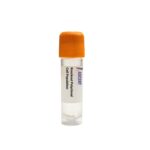
The EVPL Knockout Raji Polyclonal Cells represent a CRISPR/Cas9-edited polyclonal knockout cell population derived from the human Burkitt lymphoma B lymphocyte line Raji, in which the endogenous EVPL gene has been disrupted to abolish envoplakin expression. This pooled population provides a genetically heterogeneous loss-of-function model suitable for studying envoplakin-dependent processes without the confounding effects of monoclonal selection, enabling robust and reproducible experimental outcomes.
Raji cells are a well-characterized immortalized B lymphocyte line originating from a Burkitt lymphoma, extensively utilized for their antigen-presenting capacity and robust antibody production. These cells serve as a versatile platform for immunological investigations, including autoantibody profiling and lymphocyte activation studies, making them particularly relevant for modeling autoimmune conditions such as pemphigus where envoplakin acts as a target autoantigen.
The EVPL gene encodes envoplakin, a critical component of the cornified envelope that provides mechanical integrity to epithelial tissues. Envoplakin operates within the Notch signaling and p63 transcriptional regulatory networks, functioning downstream of p63 and Notch1 to facilitate the incorporation of involucrin and cross-linking of loricrin via transglutaminase-mediated reactions. It physically interacts with periplakin, desmoplakin, and keratin filaments to form stable scaffold complexes essential for epidermal barrier formation and keratinocyte terminal differentiation.
Disruption of EVPL in the Raji B lymphocyte background eliminates envoplakin protein expression, creating a defined negative control system to dissect its role as an autoantigen in paraneoplastic pemphigus and related autoimmune blistering disorders. This model allows researchers to attribute observed autoantibody reactivity and T-cell responses specifically to envoplakin, while also providing a platform to examine potential non-canonical roles of envoplakin in hematopoietic cells, should they exist.
This polyclonal knockout cell pool is ideally suited for assays such as Western blotting and RT-qPCR for knockout validation, immunofluorescence and co-immunoprecipitation for protein interaction studies, and ELISA-based autoantibody screening in pemphigus sera. It also supports flow cytometric analysis of B-cell surface markers and apoptosis assays to investigate envoplakin??s impact on cell survival. Researchers can employ these cells in high-throughput drug screening to identify modulators of keratinocyte differentiation or autoantigen presentation. For further information, please contact Ascent Research.