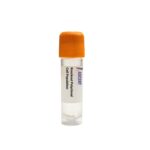
The EXT2 Knockout Raji Polyclonal Cells product comprises a population of CRISPR/Cas9-edited Raji cells harboring targeted disruption of the EXT2 gene. This polyclonal knockout pool provides a loss-of-function model for exostosin-2, a glycosyltransferase essential for heparan sulfate chain elongation. By eliminating functional EXT2 protein, the cells enable systematic investigation of heparan sulfate biosynthesis and its wide-ranging roles in growth factor signaling, cell adhesion, and extracellular matrix organization.
The host cell line, Raji, is an Epstein-Barr virus (EBV)-positive B lymphoblastoid line derived from a Burkitt lymphoma patient. Raji cells are widely employed as a model system for B-cell biology, lymphomagenesis, and signal transduction studies due to their well-characterized growth characteristics and responsiveness to cytokines and growth factors. Their malignant phenotype and continuous proliferation make them suitable for dissecting oncogenic pathways influenced by glycosaminoglycan modifications.
EXT2 encodes exostosin-2, which forms a heterodimeric complex with EXT1 to polymerize alternating glucuronic acid and N-acetylglucosamine residues, elongating heparan sulfate chains on core proteoglycans. This enzymatic activity is central to the formation of heparan sulfate proteoglycans (HSPGs) such as syndecans and glypicans, which function as co-receptors for fibroblast growth factors (FGFs), bone morphogenetic proteins (BMPs), and Wnt morphogens. Knockout of EXT2 thus abrogates HSPG assembly, disrupting multiple signaling cascades. Upstream, transcription factors like SOX9 regulate EXT2 expression during chondrogenesis, while downstream, the loss of sulfated heparan sulfate motifs impairs ligand binding to FGFR and BMPR, altering downstream kinase activation and transcriptional responses. Interacting partners include the EXT1/EXT2 copolymerase, and pathway components such as NDST1, HS6ST1, HS2ST1, HS3ST1, and heparanase further modify or degrade the chains, highlighting the complex regulatory network centered on EXT2.
In the Raji B-cell context, EXT2 knockout is particularly significant because heparan sulfate participates in lymphocyte adhesion, migration, and receptor clustering. Disruption of EXT2 may affect B-cell receptor (BCR)-mediated signaling and cytokine responses, processes often dysregulated in Burkitt lymphoma and other B-cell malignancies. The EBV-positive background of Raji cells adds another layer, as viral proteins might intersect with heparan sulfate-dependent pathways. Consequently, this model offers a unique platform to dissect how glycosaminoglycan changes contribute to lymphomagenesis and immune cell function.
Researchers can apply these polyclonal knockout cells in diverse experimental workflows. Functional consequences can be assessed by Western blotting for heparan sulfate content and HSPG core proteins, flow cytometric analysis of surface syndecan-1, or RT-qPCR for EXT2 and downstream targets. Growth factor responsiveness may be evaluated through proliferation and apoptosis assays, while adhesion assays reveal changes in cell-matrix interactions. Glycan profiling via mass spectrometry enables detailed structural analysis of residual glycosaminoglycans. The EXT2 Knockout Raji Polyclonal Cells are thus a valuable tool for studies in hereditary multiple exostoses, osteochondroma progression, glycobiology, and cancer signaling. For additional information or custom inquiries, please contact Ascent Research.