Quick Order Cart

Cat. No. ARG1897

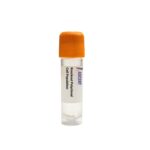
F11 Knockout Raji Polyclonal Cells

  • Product Type:

    Polyclonal Cell Population

  • Species:

    Homo sapiens (Human)

  • Tissue Source:

    Bone

  • Disease:

    Burkitt lymphoma

The F11 Knockout Raji Polyclonal Cells are a CRISPR/Cas9-edited polyclonal population of human Raji B lymphocytes with disruption of the F11 gene, encoding coagulation factor XI (FXI). FXI is activated by factor XIIa or thrombin and cleaves factor IX to drive the intrinsic coagulation cascade, making this model valuable for hemostasis and thrombosis research. Raji cells, derived from Burkitt lymphoma and EBV-positive, provide a B-cell context for studying non-hemostatic functions of FXI in immune surveillance and inflammation. Applications include coagulation assays, drug screening for FXI-targeted anticoagulants, and investigation of FXI signaling in B cell biology.

Inquire Now

In stock

Ships next business day


Ask a Question

Shipping Info:

Cryopreserved in vials and shipped on dry ice


Disclaimer:

For Research Use Only

  • Characteristics

    Host Cell

    Raji

    Cell Type

    B cell line

    Sex of Donor

    Male

    Age

    11 years

    Derived From Site

    In situ; Maxilla

    Gene Name

    F11

    Gene Identifier

    NCBI Gene ID 2160

    Morphology

    Lymphoblast-like

    Growth Mode

    Suspension

    Storage

    Liquid nitrogen (LN2)

  • Culture Conditions

    Growth medium

    RPMI 1640

    Supplement(s)

    10% Fetal Bovine Serum, 1% Penicillin-Streptomycin Solution

    Temperature

    37°C

    Atmosphere

    5% CO₂

  • Quality Control

    Sterility testing

    The bacterial, yeast, and fungi are not detected in these cells by daily monitor.

    Mycoplasma testing

    Negative for mycoplasma through PCR analysis

  • Disclaimer

    Intended Use

    This product is intended for laboratory in vitro use only. lt is not intended for diagnostic, therapeutic, or clinical applications.

    Disclaimer

    Ascent Research endeavors to provide accurate and up-to-date product information. However, no warranties or representations are made regarding its completeness or reliability. References to scientific literature and patents are for informational purposes only, and the customer assumes sole responsibility for verifying their accuracy.

    By accepting this product, the customer acknowledges and agrees to assume all risks associated with its receipt, handling, storage, disposal, and use, including compliance with all applicable safety and environmental regulations and precautions. Relevant laws, regulations, and ethical guidelines must be followed in conducting any research, modifications, or derivatives derived from this product.

    This product is provided "AS IS", and except as expressly stated herein, Ascent Research disclaims all other warranties, express or implied. Under no circumstances shall Ascent Research, its affiliates, or representatives be liable for indirect, incidental, consequential, or punitive damages arising from the use of this material. While Ascent Research employs rigorous quality control measures, we shall not be held responsible for damages resulting from misidentification or misinterpretation of the provided materials.

Description

The F11 Knockout Raji Polyclonal Cells are a CRISPR/Cas9-edited polyclonal knockout population from the Raji B lymphocyte line, disrupting the F11 gene encoding coagulation factor XI (FXI). This heterogeneous gene-edited pool serves as a loss-of-function model for studying FXI in intrinsic coagulation and related pathways, without monoclonal isolation. The polyclonal format preserves population-level heterogeneity, reflecting natural variation in gene disruption responses.

Raji cells, derived from Burkitt lymphoma, are EBV-positive lymphoblastoid B cells maintaining antibody production, antigen presentation, and immune surveillance. Widely used in immunology and oncology, they provide a reproducible background for studying B cell biology, signaling, and transformation. Their robust growth and well-characterized transcriptional profile support consistent gene knockout studies in a lymphocytic setting.

FXI, a serine protease zymogen encoded by F11, is activated by factor XIIa or thrombin in the intrinsic coagulation cascade. Upon activation, it cleaves factor IX to amplify factor Xa generation, culminating in thrombin burst and fibrin clot. FXI also interacts with high molecular weight kininogen and glycoprotein Ib-IX-V on platelets, bridging contact activation and platelet signaling. Upstream regulators include the contact activation complex, while downstream targets involve factor IX and possibly factor X and XII, placing FXI at a critical intersection of hemostasis, inflammation, and thrombosis.

Disrupting F11 in Raji cells allows dissection of non-canonical FXI roles in B lymphocytes, including cell survival, proliferation, and immune signaling. EBV transformation may intersect with the coagulation network, and this model permits exploration of viral latency effects. Additionally, FXI loss in an antigen-presenting cell line enables study of how coagulation proteases modulate adaptive immunity, revealing hemostasis-immune crosstalk.

This polyclonal knockout model supports various applications: western blotting and RT-qPCR to confirm FXI depletion, aPTT coagulation assays to assess functional impact, and factor IX activation assays to evaluate enzymatic activity. Flow cytometry profiles FXI expression, and thrombin generation assays probe downstream clot formation. In drug discovery, the cells enable screening of FXI-targeted anticoagulants; in basic research, they facilitate studies on FXI??s role in B cell proliferation, apoptosis, and inflammation. Contact Ascent Research for further support.


Reset Password

    Reach Us Questions? Click Me Here!

    Fill out the form below and a member of our team will contact you shortly!

    *Required field


      Reach Us

      Fill out the form below and a member of our team will contact you shortly!

      *Required field

      Product Inquiry (Optional)