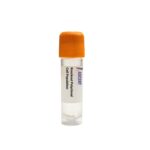
The F11R Knockout Raji Polyclonal Cells represent a CRISPR/Cas9-edited polyclonal knockout cell population derived from the Raji human B lymphoblastoid cell line, engineered for targeted disruption of the F11R gene. This product comprises a heterogeneous pool of edited cells with loss-of-function mutations in F11R, which encodes junctional adhesion molecule A (JAM-A). By generating a polyclonal knockout population rather than a clonal isolate, researchers can evaluate the collective functional consequences of JAM-A deficiency in a pooled format that preserves the inherent diversity of editing outcomes. This model provides a versatile reagent for studying JAM-A-dependent processes in a B lymphocyte context, without relying on single-clone effects.
The host cell line, Raji, is an Epstein-Barr virus (EBV)-positive B lymphoblastoid line originally derived from a Burkitt??s lymphoma patient. These cells grow in suspension and serve as a widely used model for B lymphocyte biology, lymphoma pathogenesis, and EBV-host interactions. Raji cells exhibit markers characteristic of mature B cells and retain signaling networks relevant to lymphocyte activation, adhesion, and apoptosis. Their EBV positivity adds a layer of complexity relevant to viral oncogenesis and immune evasion, making them particularly suitable for studying JAM-A functions that intersect with viral entry or inflammatory pathways.
F11R encodes JAM-A, a member of the immunoglobulin superfamily that localizes to tight junctions and is integral to endothelial and epithelial barrier integrity. JAM-A is activated by upstream regulators including TNF-alpha, IFN-gamma, thrombin, ADP, collagen, and VEGF, and it mediates downstream signaling through effectors such as PI3K/Akt, MAPK, RhoA, Rac1, and integrins (alphaIIbbeta3 and LFA-1). Direct interactions with ZO-1, ZO-2, afadin, claudins, and LFA-1 (ITGAL/ITGB2) form complexes that orchestrate tight junction assembly. Additionally, JAM-A functions as a receptor for reovirus and facilitates outside-in signaling in platelets via alphaIIbbeta3 integrin, promoting platelet activation and aggregation. In leukocytes, homophilic JAM-A interactions and LFA-1 binding drive transendothelial migration.
In the Raji cell context, JAM-A knockout disrupts critical pathways for B lymphocyte adhesion and migration. Raji cells, as EBV-positive B lymphoblasts, provide a unique environment to dissect how JAM-A loss affects B cell homing, endothelial barrier traversal, and responses to inflammatory cytokines such as TNF-alpha and IFN-gamma. The model enables exploration of JAM-A??s role in EBV-related lymphoma biology, including potential impacts on viral susceptibility, integrin-mediated signaling, and cytoskeletal reorganization. This makes it a powerful system for linking JAM-A-dependent tight junction dynamics to hematological malignancy and immune cell trafficking.
Typical applications include flow cytometric verification of JAM-A expression, western blotting, and RT-qPCR to confirm gene disruption. Functional studies can employ adhesion assays to endothelial monolayers, transwell migration assays to quantify leukocyte transendothelial migration, and reovirus entry assays to assess JAM-A-dependent viral entry. Phospho-signaling analysis of Akt and MAPK pathways reveals altered downstream signaling. This knockout model is also suited for screening anti-inflammatory compounds that target JAM-A-mediated leukocyte adhesion and for modeling JAM-A-related thrombocytopenia. For further information or integration into customized studies, please contact Ascent Research.