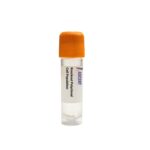
The FEM1B Knockout Raji Polyclonal Cells are a CRISPR/Cas9-edited polyclonal knockout cell population derived from the human Raji B lymphocyte lineage, engineered to disrupt the endogenous FEM1B gene. This product provides a heterogeneous pool of cells with targeted gene disruption via CRISPR/Cas9-mediated genome editing, offering a loss-of-function model suitable for studying the role of FEM1B in apoptosis signaling and B-cell biology. The polyclonal format captures a range of editing outcomes without clonal selection, enabling robust population-level analyses in biomedical research applications. As a Homo sapiens?Cderived product, these cells serve as a physiologically relevant system for investigating FEM1B-dependent mechanisms in lymphoblastoid contexts.
The parental Raji cell line originates from a Burkitt lymphoma patient and is widely used as an Epstein-Barr virus (EBV)-positive model for B-cell malignancies and immunology research. Raji cells exhibit a lymphoblastoid phenotype and represent a valuable platform for examining oncogenic signaling, viral interactions, and apoptotic regulation. Their well-characterized responsiveness to death receptor ligands makes them particularly suited for exploring extrinsic apoptosis pathways. The polyclonal knockout population retains the inherent genetic background of Raji cells, including EBV positivity, while introducing targeted FEM1B disruption to elucidate gene-specific functions within this established lymphoma model.
FEM1B (FEM-1 homolog b) is a pro-apoptotic adaptor protein that functions as a substrate-recognition component of a CUL2?CElongin B/C E3 ubiquitin ligase complex, promoting caspase-mediated apoptosis. It bridges death receptors to the caspase cascade by interacting with adaptors such as TRADD and FADD upon stimulation by ligands like TNF-alpha and FasL. FEM1B acts downstream of death receptors TNF receptor and Fas, facilitating activation of initiator caspase-8 and executioner caspase-3, along with cleavage of substrates including BID and PARP. Upstream regulators of FEM1B expression and activity include NF-kB and p53, positioning FEM1B at a critical node in the extrinsic apoptosis network. Knockout of FEM1B disrupts these protein?Cprotein interactions and downstream signaling events.
In the Raji B-cell lymphoma background, loss of FEM1B function is expected to attenuate death receptor?Cinduced apoptotic signaling, offering a tool to dissect apoptosis resistance mechanisms relevant to B-cell malignancies. This model enables investigation of how disruption of the FEM1B-mediated ubiquitin-proteasome crosstalk alters caspase activation thresholds and therapeutic responses. Since Raji cells are derived from Burkitt lymphoma, FEM1B knockout may recapitulate aspects of immune dysregulation or drug resistance observed in Non-Hodgkin lymphoma subtypes. Researchers can employ this system to evaluate the contribution of FEM1B to TNF-alpha or FasL-induced cell death, NF-kB pathway modulation, and tumor cell survival.
The FEM1B Knockout Raji Polyclonal Cells are suited for a range of experimental applications including apoptosis resistance profiling, cancer drug sensitivity screens, and B-cell lymphoma functional genomics. Typical assays include Western blotting for cleaved caspase-8 and caspase-3 to assess pathway activation, Annexin V/PI flow cytometry for quantifying apoptosis, and co-immunoprecipitation to confirm disrupted FEM1B?CTRADD/FADD complex formation. RT-qPCR can verify FEM1B transcript loss, while cell viability assays with exogenous TNF-alpha or FasL treatment permit functional validation of death receptor signaling defects. These polyclonal cells also facilitate studies on ubiquitin-mediated proteolysis and death receptor crosstalk. For additional information, please contact Ascent Research.