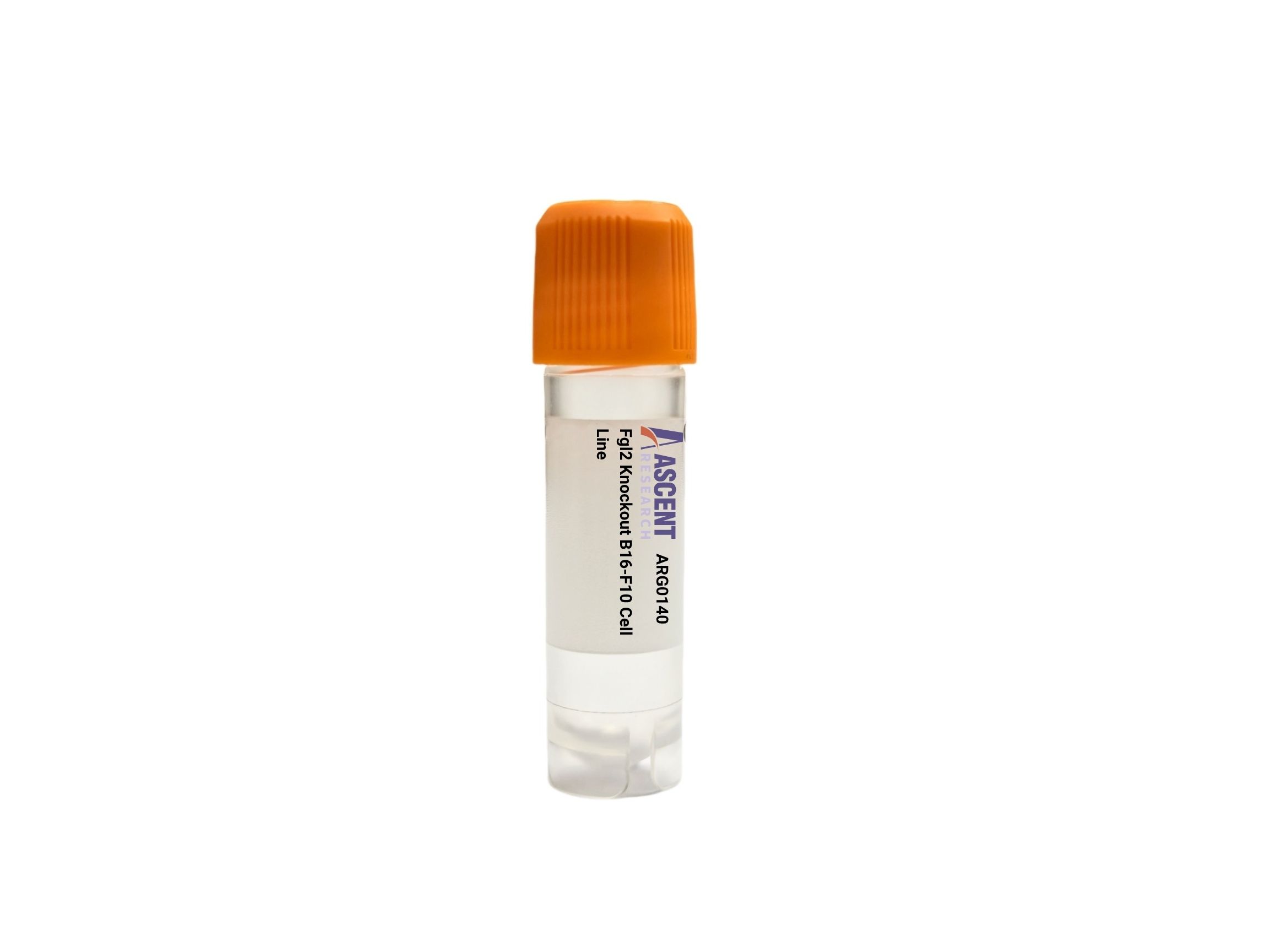
The Fgl2 Knockout B16-F10 Cell Line is a CRISPR/Cas9-engineered mouse melanoma model in which the Fgl2 gene has been disrupted to eliminate functional FGL2 expression. This stable edited cell line is generated in the B16-F10 background, a widely used murine melanoma host line, and provides an in vitro system for investigating the consequences of Fgl2 loss in tumor-intrinsic and tumor?Cmicroenvironment-associated signaling. The model is designed for studies requiring defined genetic ablation of an immune-regulatory and procoagulant mediator within a metastatic melanoma context.
B16-F10 is a highly metastatic melanoma subline derived from C57BL/6 mouse melanoma and is broadly used in syngeneic tumor biology, lung colonization, invasion, and tumor-immune interaction studies. Its aggressive growth behavior and compatibility with immunocompetent mouse models make it particularly valuable for examining mechanisms that couple tumor cell signaling to host immune responses. As a skin cancer model with strong metastatic potential, B16-F10 is frequently applied to studies of melanoma progression, dissemination, and microenvironmental regulation, including interactions with myeloid cells, lymphocytes, endothelial components, and inflammatory mediators.
FGL2 encodes fibrinogen-like protein 2, an immunoregulatory factor with membrane-associated prothrombinase activity and soluble suppressive functions in inflammatory and tumor settings. Fgl2 expression is regulated by inflammatory cues including TNF-alpha, IFN-gamma, LPS/TLR4 signaling, NF-kappaB, STAT1, and MAPK pathway activity such as ERK1/2 and p38 MAPK. Functionally, FGL2 interacts with prothrombin (F2) to promote thrombin generation and contributes to fibrin deposition-related outputs. In immune-regulatory networks, it is associated with increased IL10 production, TGFB1-linked suppressive signaling, inhibition of dendritic cell maturation, suppression of T cell proliferation, and macrophage suppressive polarization. These relationships place FGL2 at the interface of tumor immune evasion, coagulation-associated inflammation, innate immune regulation, and adaptive immune suppression.
Within the B16-F10 background, Fgl2 knockout is a relevant model for testing how loss of a coagulation-linked immunosuppressive factor alters melanoma cell behavior and communication with stromal and immune compartments. This system can support mechanistic studies of NF-kappaB-, STAT1-, and MAPK-dependent responses to inflammatory microenvironment cues, while also enabling interrogation of downstream changes affecting myeloid regulation, lymphocyte suppression, and procoagulant phenotype.
The cell line is suitable for western blotting, RT-qPCR, flow cytometry, ELISA, immunofluorescence, and phospho-signaling analysis to evaluate FGL2-associated signaling outputs. It is also useful in co-culture assays with T cells, macrophages, or dendritic cells to examine effects on proliferation, polarization, and maturation, as well as in thrombin generation and procoagulant activity assays to assess FGL2-dependent coagulation biology. Additional applications include RNA-seq, cytokine profiling, migration and invasion assays, checkpoint immunotherapy combination studies, and in vivo syngeneic tumor growth or lung colonization experiments to investigate melanoma progression, metastasis, and tumor-immune crosstalk under defined Fgl2-loss conditions. Researchers may contact Ascent Research for additional technical information, product details, or related gene-edited cell models.