Quick Order Cart

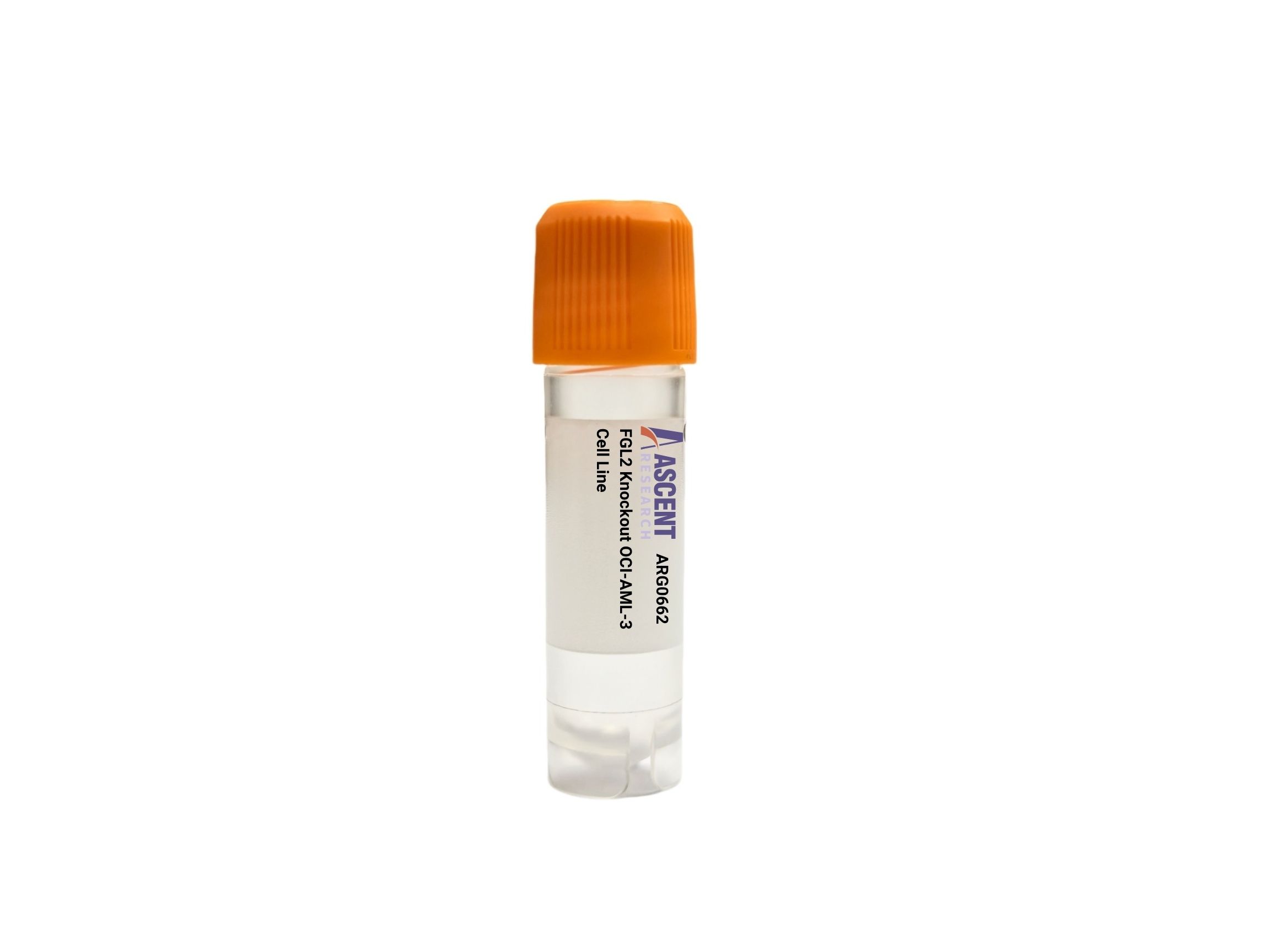
Cat. No. ARG0662

FGL2 Knockout OCI-AML-3 Cell Line

  • Product Type:

    Genome-edited Cells

  • Tissue Source:

    Blood (peripheral blood)

  • Disease:

    Acute myeloid leukemia (AML)

  • Gene Species:

    Homo sapiens (Human)

The FGL2 Knockout OCI-AML-3 Cell Line is a CRISPR/Cas9-mediated gene disruption model in the human AML cell line OCI-AML-3. FGL2 encodes a secreted immunomodulatory protein that acts as an immune checkpoint by binding Fc??RIIB, thereby suppressing T cell activation via PTPN11/SHP-2 and promoting Treg differentiation. Its expression is upregulated by IFN-?? and TNF-?? through STAT1 and NF-??B, and it promotes thrombin generation and immunosuppressive cytokines such as IL-10 and TGF-??. This knockout cell line enables studies on immune evasion in leukemia, T cell?Ctumor cell crosstalk, and coagulation-related pathophysiology. Key applications include co-culture T cell proliferation assays, FoxP3+ Treg flow cytometry, cytokine ELISA, and drug sensitivity screening, supported by Western blot and RT-qPCR validation.

Inquire Now

In stock

Ships next business day


Ask a Question

Shipping Info:

Cryopreserved in vials and shipped on dry ice


Disclaimer:

For Research Use Only

  • Characteristics

    Host Cell

    OCI-AML-3

    Morphology

    Lymphoblast-like

    Age

    57 years

    Sex of Donor

    Male

    Gene Name

    Fgl2

    Gene Species

    Homo sapiens (Human)

    Gene Identifier

    NCBI Gene ID 10875

  • Culture Conditions

    Temperature

    37°C

    Atmosphere

    5% CO₂

  • Quality Control

    Sterility testing

    Daily monitoring confirms that the cells are free from bacterial, yeast, and fungal contamination.

    Mycoplasma testing

    Negative for mycoplasma through PCR analysis

    Pathogens

    Cells tested negative for HIV-1, HBV, and HCV.

  • Disclaimer

    Intended Use

    This product is intended for laboratory in vitro use only. lt is not intended for diagnostic, therapeutic, or clinical applications.

    Disclaimer

    Ascent Research endeavors to provide accurate and up-to-date product information. However, no warranties or representations are made regarding its completeness or reliability. References to scientific literature and patents are for informational purposes only, and the customer assumes sole responsibility for verifying their accuracy.

    By accepting this product, the customer acknowledges and agrees to assume all risks associated with its receipt, handling, storage, disposal, and use, including compliance with all applicable safety and environmental regulations and precautions. Relevant laws, regulations, and ethical guidelines must be followed in conducting any research, modifications, or derivatives derived from this product.

    This product is provided "AS IS", and except as expressly stated herein, Ascent Research disclaims all other warranties, express or implied. Under no circumstances shall Ascent Research, its affiliates, or representatives be liable for indirect, incidental, consequential, or punitive damages arising from the use of this material. While Ascent Research employs rigorous quality control measures, we shall not be held responsible for damages resulting from misidentification or misinterpretation of the provided materials.

Description

The FGL2 Knockout OCI-AML-3 Cell Line is a genetically engineered human acute myeloid leukemia (AML) cell model in which CRISPR/Cas9-mediated gene disruption has been employed to eliminate expression of the FGL2 gene. This cell line serves as a defined loss-of-function system for studying the immunomodulatory and procoagulant functions of FGL2 within the context of AML biology. The product is supplied as a live cell line, ready for expansion and downstream experimental use.

The parental OCI-AML-3 cell line was originally derived from a patient diagnosed with acute myeloid leukemia of the FAB M4 subtype and harbors recurrent genetic alterations characteristic of AML. OCI-AML-3 is widely utilized as a model system to investigate leukemic cell behavior, including proliferation, differentiation, and drug sensitivity, as well as to recapitulate critical aspects of leukemogenesis in vitro and in xenograft settings. The cell line??s established genetic background provides a reliable platform for interrogating gene function through targeted knockout strategies.

FGL2 (fibrinogen-like protein 2) encodes a secreted protein that functions as a bifunctional immune checkpoint and coagulation regulator. Transcriptionally activated by IFN-??, TNF-??, and IL-2 through STAT1, NF-??B, and IRF1 signaling pathways, FGL2 is released into the extracellular milieu where it engages Fc??RIIB on effector immune cells, triggering inhibitory signaling via PTPN11/SHP-2. This interaction suppresses T cell receptor signaling, inhibits T cell proliferation, and promotes the differentiation of regulatory T cells (Tregs), in part through the downstream induction of immunosuppressive cytokines such as IL-10 and TGF-??. FGL2 also promotes thrombin generation, linking immune regulation to coagulation. Interacting partners include T cell glycans, CD44, and integrins.

In the AML microenvironment, FGL2 overexpression has been implicated in the establishment of an immunosuppressive niche that allows leukemic blasts to evade host T cell-mediated immune surveillance. By disrupting FGL2 expression in the OCI-AML-3 background, researchers can systematically dissect how loss of this checkpoint alters immune cell crosstalk, Treg polarization, and the cytokine milieu. This knockout cell line thus provides a tractable tool to evaluate the contribution of FGL2 to leukemia progression and to test strategies aimed at restoring anti-leukemic immunity.

The FGL2 Knockout OCI-AML-3 Cell Line is suitable for a variety of research applications, including co-culture experiments with primary T cells to quantitatively assess T cell proliferation and FoxP3+ Treg induction via flow cytometry, cytokine profiling using ELISA for IL-10 and TGF-??, and thrombin generation assays to examine coagulation-related pathophysiology. The cell line can also be employed in drug sensitivity screens to determine whether FGL2 loss alters responses to immunomodulatory agents or conventional chemotherapeutics. Standard validation assays such as Western blotting and RT-qPCR are recommended to confirm FGL2 protein and mRNA ablation. For further details and technical support, please contact Ascent Research.


Reset Password

    Reach Us Questions? Click Me Here!

    Fill out the form below and a member of our team will contact you shortly!

    *Required field


      Reach Us

      Fill out the form below and a member of our team will contact you shortly!

      *Required field

      Product Inquiry (Optional)