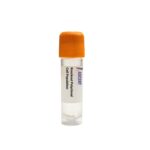
The FIBP Knockout Raji Polyclonal Cells are a CRISPR/Cas9-edited polyclonal knockout cell population from the human Raji Burkitt’s lymphoma B lymphocyte line, providing a pooled loss-of-function model for the FIBP gene. The product features targeted disruption of FIBP in a heterogeneous cell mixture, suitable for studying the effects of FIBP deficiency without clonal selection.
Raji is an Epstein-Barr virus (EBV)-positive, immortalized human B lymphocyte suspension cell line originating from Burkitt’s lymphoma. It is a foundational model for studying B-cell biology, oncogenesis, and immune responses, particularly in the context of MYC-driven lymphomas and EBV-mediated transformation. The cell line’s genetic and phenotypic features make it ideal for examining signaling networks that regulate lymphocyte growth and survival.
FIBP encodes an intracellular FGF1-binding protein that chaperones FGF1 to the nucleus and mitochondria, promoting cell proliferation and survival. Mechanistically, FGF1-bound FIBP translocates to the nucleus to activate transcription factors FOS and JUN, upregulating cell cycle regulators such as cyclin D1. FIBP also interacts with the mitochondrial import receptor Tom70 (TOMM70A) to facilitate import of proteins that support mitochondrial function and anti-apoptotic BCL2 expression. FIBP acts downstream of FGFR1 via the FRS2-GRB2-RAS-RAF-MEK-ERK cascade and PI3K/AKT pathway, and is regulated by growth factors and oncogenic MYC in B cells. Its mitochondrial partners include TOM40 and TOMM20.
In Raji cells, FIBP depletion is anticipated to impair FGF1-driven proliferative and survival signals and disrupt mitochondrial protein homeostasis, mirroring pathways active in lymphomagenesis. Overexpression of FIBP has been reported in various tumor types, including lymphoid malignancies, suggesting its role as an oncogenic facilitator. Thus, this polyclonal knockout model enables dissection of FIBP functions in B-cell lymphoma growth, cell cycle progression, and apoptosis resistance within an EBV-positive, MYC-deregulated environment.
Typical applications include investigating FGF1 signaling in B-cell malignancies, probing the mitochondrial import pathway in lymphocyte proliferation, and evaluating FIBP as a therapeutic target. Researchers can utilize Western blotting for FIBP and FGF1, qPCR for downstream targets (FOS, JUN), flow cytometry for proliferation (EdU) and apoptosis (Annexin V), mitochondrial function assays (MitoTracker, Seahorse), co-immunoprecipitation of FIBP-Tom70 complexes, phospho-ERK analysis, and RNA sequencing for global transcriptome profiling. For further information, contact Ascent Research.