Quick Order Cart

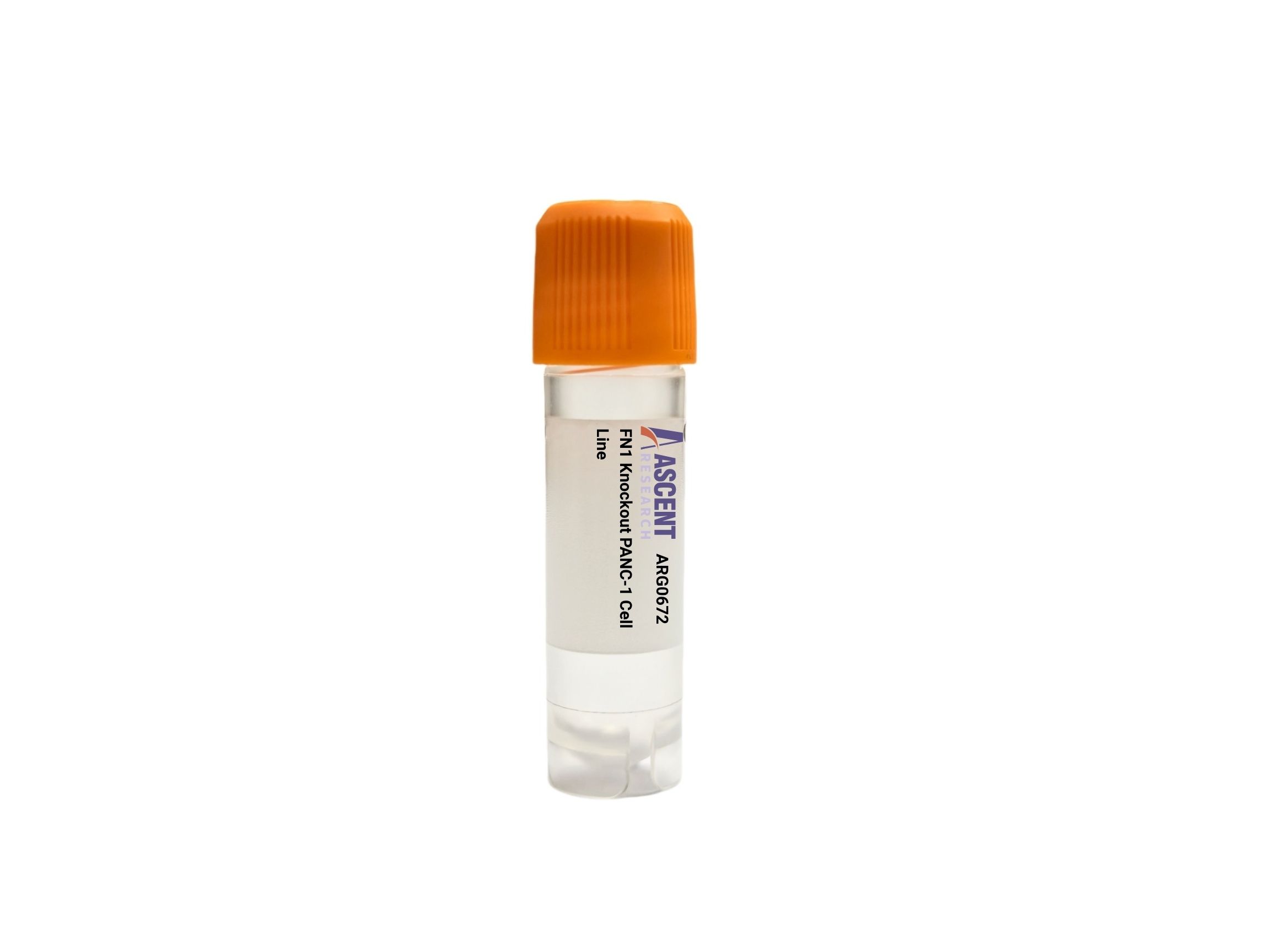
Cat. No. ARG0672

FN1 Knockout PANC-1 Cell Line

  • Product Type:

    Genome-edited Cells

  • Tissue Source:

    Pancreas

  • Disease:

    Epithelioid carcinoma

  • Gene Species:

    Homo sapiens (Human)

The FN1 Knockout PANC-1 Cell Line is a CRISPR/Cas9-edited knockout cell line derived from the PANC-1 pancreatic ductal adenocarcinoma epithelial cell line. This model eliminates fibronectin expression, disrupting integrin-mediated signaling through receptors such as ??5??1 and ??V??3, and impairing downstream effectors including FAK and Src. Loss of fibronectin reduces cell adhesion, migration, and invasion, and alters chemosensitivity and anoikis resistance in a KRAS/TP53-mutant background. Researchers can employ this cell line to study pancreatic cancer metastasis, ECM remodeling, drug resistance mechanisms, and tumor-stroma interactions using molecular and functional assays. It is an ideal tool for exploring the role of the fibronectin-integrin axis in pancreatic cancer progression and therapy response.

Inquire Now

In stock

Ships next business day


Ask a Question

Shipping Info:

Cryopreserved in vials and shipped on dry ice


Disclaimer:

For Research Use Only

  • Characteristics

    Host Cell

    PANC-1

    Morphology

    Epithelial-like

    Age

    56 years

    Sex of Donor

    Male

    Gene Name

    FN1

    Gene Species

    Homo sapiens (Human)

    Gene Identifier

    NCBI Gene ID 2335

  • Culture Conditions

    Temperature

    37°C

    Atmosphere

    5% CO₂

  • Quality Control

    Sterility testing

    Daily monitoring confirms that the cells are free from bacterial, yeast, and fungal contamination.

    Mycoplasma testing

    Negative for mycoplasma through PCR analysis

    Pathogens

    Cells tested negative for HIV-1, HBV, and HCV.

  • Disclaimer

    Intended Use

    This product is intended for laboratory in vitro use only. lt is not intended for diagnostic, therapeutic, or clinical applications.

    Disclaimer

    Ascent Research endeavors to provide accurate and up-to-date product information. However, no warranties or representations are made regarding its completeness or reliability. References to scientific literature and patents are for informational purposes only, and the customer assumes sole responsibility for verifying their accuracy.

    By accepting this product, the customer acknowledges and agrees to assume all risks associated with its receipt, handling, storage, disposal, and use, including compliance with all applicable safety and environmental regulations and precautions. Relevant laws, regulations, and ethical guidelines must be followed in conducting any research, modifications, or derivatives derived from this product.

    This product is provided "AS IS", and except as expressly stated herein, Ascent Research disclaims all other warranties, express or implied. Under no circumstances shall Ascent Research, its affiliates, or representatives be liable for indirect, incidental, consequential, or punitive damages arising from the use of this material. While Ascent Research employs rigorous quality control measures, we shall not be held responsible for damages resulting from misidentification or misinterpretation of the provided materials.

Description

The FN1 Knockout PANC-1 Cell Line is a CRISPR/Cas9-edited knockout cell line generated from the PANC-1 pancreatic ductal adenocarcinoma epithelial cell line. Designed as a loss-of-function model, this product allows researchers to investigate the biological roles of fibronectin, a key extracellular matrix (ECM) glycoprotein encoded by the FN1 gene, through CRISPR/Cas9-mediated gene disruption. The cell line provides a genetically defined system to dissect fibronectin-dependent processes in a human pancreatic cancer background, particularly for studying integrin-mediated adhesion and signaling pathways.

PANC-1 is an adherent epithelial cell line derived from a male patient with pancreatic ductal adenocarcinoma. It harbors activating mutations in KRAS and TP53, two of the most prevalent genetic alterations in pancreatic cancer, making it a standard model for studying tumor progression, metastasis, and drug response. PANC-1 cells are characterized by their polygonal morphology and ability to form tumors in vivo, making them a reliable platform for functional genomics studies. The cell line retains characteristic features of pancreatic cancer cells, including aggressive growth and metastatic potential, and is widely used in preclinical oncology research.

Fibronectin is a multifunctional ECM glycoprotein that mediates cell adhesion, migration, and wound healing by binding to integrin receptors such as ??5??1 and ??V??3. Ligand-bound integrins activate focal adhesion kinase (FAK) and Src, which propagate signals through the PI3K-Akt and MAPK/ERK cascades, as well as the small GTPase Rac1. FN1 transcription is upregulated by TGF-??, EGF, PDGF, and hypoxia-inducible factor 1 (HIF-1) in response to mechanical stress and tissue remodeling. Downstream, fibronectin signaling modulates effectors including ERK1/2, Akt, RhoA, MMP-2/9, and cyclin D1. Fibronectin also interacts with collagens, heparin, fibrin, VEGF, and cytoskeletal adaptors talin and vinculin, positioning it at the center of focal adhesion and ECM-receptor interaction networks.

In the PANC-1 context, FN1 knockout abrogates fibronectin expression and disrupts integrin-mediated adhesion, leading to attenuated cell migration, invasion, and metastatic capability. Loss of fibronectin can alter sensitivity to chemotherapeutic agents and reduce anoikis resistance, processes critical for cancer dissemination. This abrogation also affects downstream signaling events such as FAK and Akt phosphorylation, which are critical for survival and motility. This knockout model therefore provides a powerful tool to explore how ECM components influence the aggressive behavior of KRAS/TP53-mutant pancreatic cancer cells and to study mechanisms of ECM-dependent tumor progression and drug resistance.

This product is applicable across a range of experimental settings including pancreatic cancer metastasis research, ECM remodeling studies, and tumor microenvironment investigations. Researchers can perform Western blotting for fibronectin, RT-qPCR for FN1 mRNA, immunofluorescence of ECM components, Transwell migration/invasion assays, adhesion and anoikis assays, phospho-signaling analyses (e.g., pFAK, pAKT), co-immunoprecipitation of integrin complexes, and transcriptomic profiling via RNA-seq. The knockout cell line supports studies on chemoresistance, wound healing, and fibrosis modulation. For more information, please contact Ascent Research.


Reset Password

    Reach Us Questions? Click Me Here!

    Fill out the form below and a member of our team will contact you shortly!

    *Required field


      Reach Us

      Fill out the form below and a member of our team will contact you shortly!

      *Required field

      Product Inquiry (Optional)