Quick Order Cart

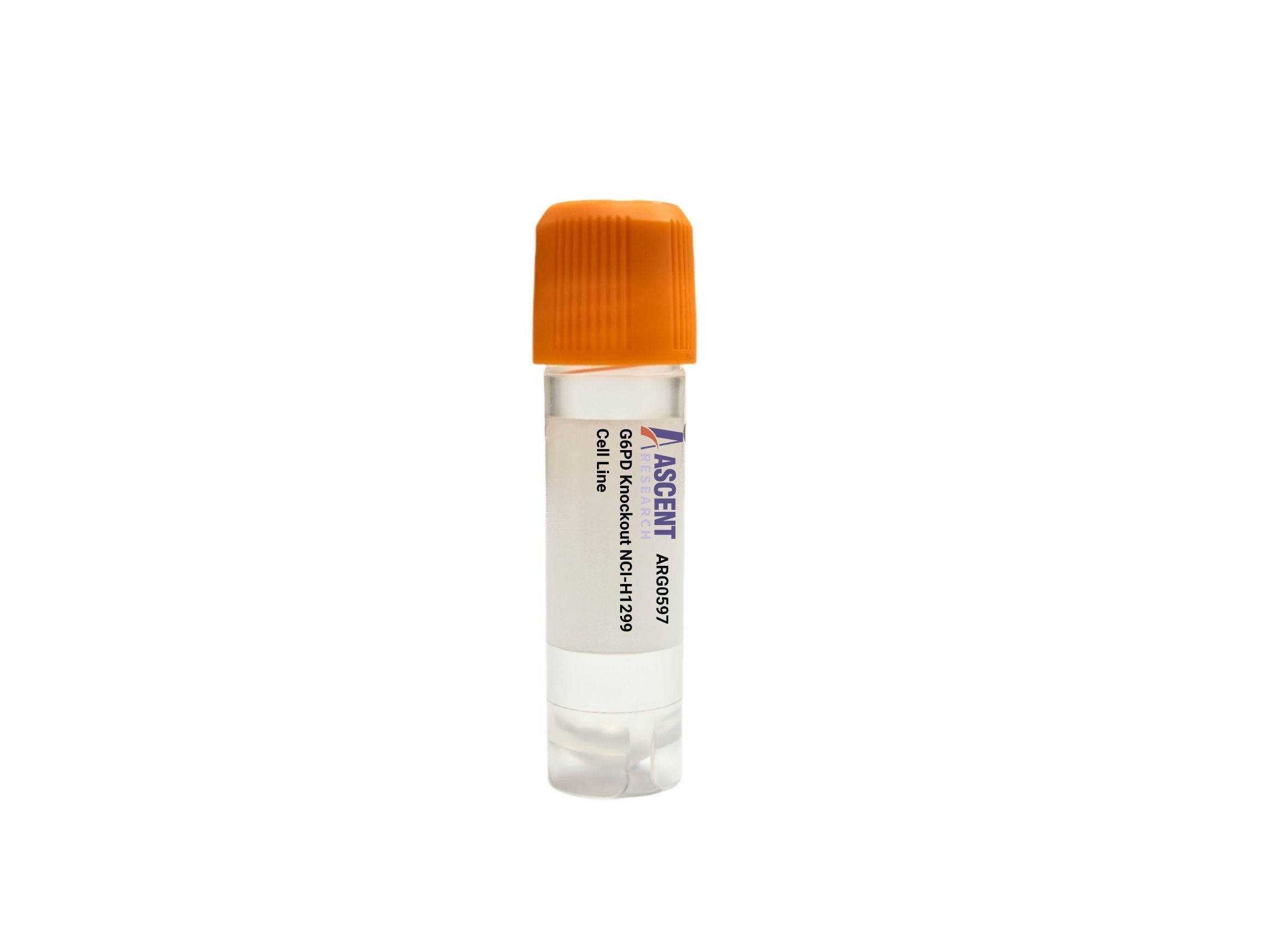
Cat. No. ARG0597

G6PD Knockout NCI-H1299 Cell Line

  • Product Type:

    Genome-edited Cells

  • Tissue Source:

    Lung

  • Disease:

    Carcinoma

  • Gene Species:

    Homo sapiens (Human)

The G6PD Knockout NCI-H1299 Cell Line is a CRISPR/Cas9-edited human lung adenocarcinoma cell line deficient in glucose-6-phosphate dehydrogenase, the rate-limiting enzyme of the pentose phosphate pathway (PPP). G6PD disruption eliminates NADPH and ribose-5-phosphate production, impairing glutathione-dependent antioxidant defense and nucleotide biosynthesis. Derived from metastatic NCI-H1299 cells harboring a TP53 mutation, this model enables studies of redox homeostasis, metabolic reprogramming, and drug resistance in non-small cell lung carcinoma. Applications include NADPH/NADP+ assays, ROS detection, glutathione quantification, drug sensitivity profiling, and G6PD inhibitor screening.

Inquire Now

In stock

Ships next business day


Ask a Question

Shipping Info:

Cryopreserved in vials and shipped on dry ice


Disclaimer:

For Research Use Only

  • Characteristics

    Host Cell

    NCI-H1299

    Morphology

    Epithelial-like

    Age

    43 years

    Sex of Donor

    Male

    Gene Name

    G6PD

    Gene Species

    Homo sapiens (Human)

    Gene Identifier

    NCBI Gene ID 2539

  • Culture Conditions

    Temperature

    37°C

    Atmosphere

    5% CO₂

  • Quality Control

    Sterility testing

    Daily monitoring confirms that the cells are free from bacterial, yeast, and fungal contamination.

    Mycoplasma testing

    Negative for mycoplasma through PCR analysis

    Pathogens

    Cells tested negative for HIV-1, HBV, and HCV.

  • Disclaimer

    Intended Use

    This product is intended for laboratory in vitro use only. lt is not intended for diagnostic, therapeutic, or clinical applications.

    Disclaimer

    Ascent Research endeavors to provide accurate and up-to-date product information. However, no warranties or representations are made regarding its completeness or reliability. References to scientific literature and patents are for informational purposes only, and the customer assumes sole responsibility for verifying their accuracy.

    By accepting this product, the customer acknowledges and agrees to assume all risks associated with its receipt, handling, storage, disposal, and use, including compliance with all applicable safety and environmental regulations and precautions. Relevant laws, regulations, and ethical guidelines must be followed in conducting any research, modifications, or derivatives derived from this product.

    This product is provided "AS IS", and except as expressly stated herein, Ascent Research disclaims all other warranties, express or implied. Under no circumstances shall Ascent Research, its affiliates, or representatives be liable for indirect, incidental, consequential, or punitive damages arising from the use of this material. While Ascent Research employs rigorous quality control measures, we shall not be held responsible for damages resulting from misidentification or misinterpretation of the provided materials.

Description

The G6PD Knockout NCI-H1299 Cell Line is a CRISPR/Cas9-edited human knockout cell line designed to disrupt glucose-6-phosphate dehydrogenase (G6PD) expression in the NCI-H1299 lung carcinoma background. G6PD catalyzes the rate-limiting step of the pentose phosphate pathway (PPP), producing NADPH and ribose-5-phosphate for reductive biosynthesis, antioxidant defense, and nucleotide synthesis. This stable knockout provides a defined loss-of-function model for dissecting the roles of the PPP in redox homeostasis and metabolic adaptation in non-small cell lung carcinoma (NSCLC) research.

The parental NCI-H1299 cell line is a widely used human NSCLC model derived from a metastatic lymph node of a lung adenocarcinoma patient. It carries a homozygous TP53 mutation, resulting in p53 deficiency, a hallmark of advanced disease. The line exhibits epithelial morphology and retains core growth factor pathways (e.g., EGFR, KRAS) that influence tumor metabolism. In this G6PD knockout, the p53-null background provides a system to examine PPP dependency independent of p53-mediated G6PD repression.

G6PD oxidizes glucose-6-phosphate to 6-phosphogluconolactone, reducing NADP+ to NADPH. NADPH is essential for glutathione reductase-mediated regeneration of reduced glutathione (GSH), a major cellular antioxidant, and for NADPH oxidases that generate reactive oxygen species (ROS). Ribose-5-phosphate feeds into nucleotide biosynthesis. G6PD expression is subject to transcriptional regulation by Nrf2 (antioxidant response), SREBP1c (lipogenesis), EGFR/KRAS-mediated growth signaling, and repression by p53 under oxidative stress. Interacting proteins include p53, SIRT2 deacetylase, and 6-phosphogluconate dehydrogenase (6PGD). Disruption of G6PD consequently depletes NADPH and ribose-5-phosphate pools, collapsing GSH regeneration and nucleotide synthesis, and sensitizing cells to oxidative and genotoxic stress.

In NCI-H1299 cells, G6PD knockout is particularly relevant because NSCLC tumors often overexpress G6PD, correlating with poor prognosis and chemoresistance. The p53-null background removes a negative regulator of G6PD, potentially increasing reliance on the PPP for REDOX balance. This model enables investigation of metabolic vulnerabilities in p53-mutant lung adenocarcinoma, including dependence on NADPH for detoxification and nucleotide supply for proliferation. It also allows assessment of G6PD as a therapeutic target, either alone or in combination with agents that elevate ROS.

Researchers can employ the G6PD Knockout NCI-H1299 Cell Line in numerous assays: western blotting and RT-qPCR confirm target disruption, while NADPH/NADP+ ratio, glutathione (GSH/GSSG), and ROS measurements directly assess redox status. Cell viability, apoptosis, and colony formation assays quantify phenotypic responses to oxidative stress. Drug sensitivity screens with chemotherapeutics (e.g., cisplatin, doxorubicin) reveal the role of G6PD in resistance. Additionally, metabolic flux analysis and high-throughput inhibitor screening are supported. For detailed protocols and technical support, please contact Ascent Research.


Reset Password

    Reach Us Questions? Click Me Here!

    Fill out the form below and a member of our team will contact you shortly!

    *Required field


      Reach Us

      Fill out the form below and a member of our team will contact you shortly!

      *Required field

      Product Inquiry (Optional)