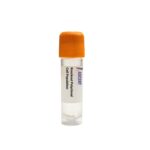
The GAA Knockout Raji Polyclonal Cells constitute a heterogeneous population of Raji B lymphoblasts engineered by CRISPR/Cas9-mediated gene disruption to ablate GAA expression. This polyclonal knockout model yields a mix of cells with diverse editing events, faithfully recapitulating the lysosomal glycogen accumulation hallmark of Pompe disease. The loss of acid alpha-glucosidase activity provides a robust system for investigating glycogen storage and autophagy dysregulation.
The parental Raji line is a human Burkitt??s lymphoma-derived B lymphocyte with Epstein-Barr virus positivity. As transformed B lymphoblasts, these cells exhibit rapid growth, active endolysosomal compartments, and antigen-presenting functions, establishing a pertinent host for exploring glycogen metabolism in a lymphoid background. Their stable maintenance under standard culture conditions facilitates long-term studies and scalable assay development.
GAA encodes lysosomal acid alpha-glucosidase, which hydrolyzes glycogen to glucose. Knockout disrupts lysosomal glycogen degradation, causing intralysosomal glycogen accumulation that impairs autophagy, increases lysosomal membrane permeabilization, and alters mTOR signaling. The stress-responsive transcription factor TFEB and its target CLEAR network (including LAMP1 and CTSB) are activated, while mannose-6-phosphate receptor (M6PR/IGF2R)-mediated trafficking of lysosomal enzymes is perturbed. Interacting factors such as cathepsins further link the lysosomal defect to broader proteolytic dysfunction. Thus, GAA loss triggers a cascade affecting glycogen catabolism, lysosomal integrity, and autophagic flux.
In Raji cells, GAA deficiency uniquely couples Pompe pathology with B-lymphoblastic biology. Lysosomal glycogen overload can influence antigen presentation, as efficient peptide loading on MHC class II depends on intact lysosomal degradation. This model enables dissection of how glycogen storage disorder-related lysosomal dysfunction impacts lymphocyte activation, mTOR-dependent proliferation, and stress responses, offering insights distinct from traditional fibroblast or muscle models.
Typical research applications include Pompe disease modeling, autophagy and lysosomal dysfunction studies, glycogen metabolism investigation in B cells, and therapeutic screening for enzyme replacement or gene therapy. Relevant assays encompass GAA enzymatic activity measurement, glycogen PAS staining, LC3B/p62 immunoblotting, LAMP1 immunofluorescence, LysoTracker flow cytometry, and RT-qPCR for CLEAR network targets. Enzyme uptake assays further support evaluation of candidate therapies. For additional details, please contact Ascent Research.