Quick Order Cart

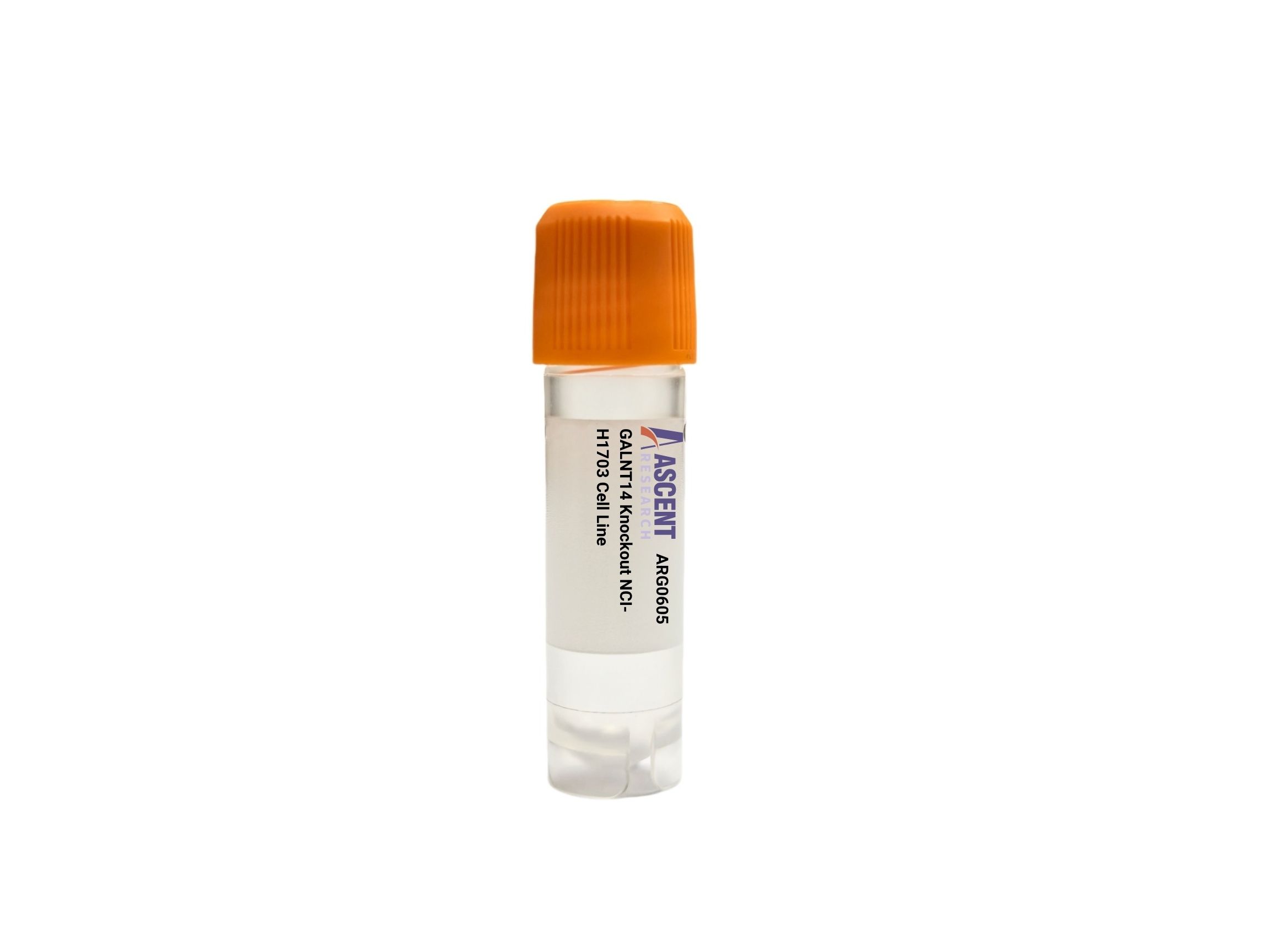
Cat. No. ARG0605

GALNT14 Knockout NCI-H1703 Cell Line

  • Product Type:

    Genome-edited Cells

  • Tissue Source:

    Lung

  • Disease:

    Squamous cell carcinoma

  • Gene Species:

    Homo sapiens (Human)

The GALNT14 Knockout NCI-H1703 Cell Line is a CRISPR/Cas9-edited human lung squamous cell carcinoma model with loss-of-function disruption of the GALNT14 gene. GALNT14 encodes a glycosyltransferase that initiates mucin-type O-linked glycosylation and modifies death receptors DR4 and DR5, thereby suppressing TRAIL-induced apoptosis. This knockout cell line enables dissection of glycosylation-dependent apoptosis regulation, TRAIL resistance mechanisms, and cell migration in a non-small cell lung cancer background. Applications include glycosylation analysis, apoptosis assays, drug sensitivity studies, and glycoproteomic investigations.

Inquire Now

In stock

Ships next business day


Ask a Question

Shipping Info:

Cryopreserved in vials and shipped on dry ice


Disclaimer:

For Research Use Only

  • Characteristics

    Host Cell

    NCI-H1703

    Morphology

    Epithelial-like

    Age

    54 years

    Sex of Donor

    Male

    Gene Name

    GALNT14

    Gene Species

    Homo sapiens (Human)

    Gene Identifier

    NCBI Gene ID 79623

  • Culture Conditions

    Temperature

    37°C

    Atmosphere

    5% CO₂

  • Quality Control

    Sterility testing

    Daily monitoring confirms that the cells are free from bacterial, yeast, and fungal contamination.

    Mycoplasma testing

    Negative for mycoplasma through PCR analysis

    Pathogens

    Cells tested negative for HIV-1, HBV, and HCV.

  • Disclaimer

    Intended Use

    This product is intended for laboratory in vitro use only. lt is not intended for diagnostic, therapeutic, or clinical applications.

    Disclaimer

    Ascent Research endeavors to provide accurate and up-to-date product information. However, no warranties or representations are made regarding its completeness or reliability. References to scientific literature and patents are for informational purposes only, and the customer assumes sole responsibility for verifying their accuracy.

    By accepting this product, the customer acknowledges and agrees to assume all risks associated with its receipt, handling, storage, disposal, and use, including compliance with all applicable safety and environmental regulations and precautions. Relevant laws, regulations, and ethical guidelines must be followed in conducting any research, modifications, or derivatives derived from this product.

    This product is provided "AS IS", and except as expressly stated herein, Ascent Research disclaims all other warranties, express or implied. Under no circumstances shall Ascent Research, its affiliates, or representatives be liable for indirect, incidental, consequential, or punitive damages arising from the use of this material. While Ascent Research employs rigorous quality control measures, we shall not be held responsible for damages resulting from misidentification or misinterpretation of the provided materials.

Description

The GALNT14 Knockout NCI-H1703 Cell Line is a CRISPR/Cas9-edited human cell line featuring a loss-of-function disruption of the GALNT14 gene. This knockout cell line, derived from the NCI-H1703 lung squamous cell carcinoma background, serves as a defined genetic tool for investigating the impact of mucin-type O-linked glycosylation on death receptor signaling and tumor cell biology. The targeted disruption abrogates GALNT14 enzymatic function, enabling dissection of glycosylation-dependent mechanisms in an epithelial cancer model.

The parental NCI-H1703 cell line was established from a primary lung squamous cell carcinoma of a 54-year-old male smoker and grows as an adherent monolayer with epithelial morphology. This line retains key features of non-small cell lung cancer, including functional TRAIL death receptor pathways, and is extensively used for apoptosis, drug resistance, and migration studies. Its robust in vitro characteristics make it well-suited for genetic manipulation and downstream phenotypic analyses.

GALNT14 encodes a polypeptide N-acetylgalactosaminyltransferase that catalyzes the initial step of O-linked glycosylation by transferring N-acetylgalactosamine to serine and threonine residues of substrate proteins. Prominent substrates include the death receptors DR4 (TRAIL-R1) and DR5 (TRAIL-R2). GALNT14-mediated glycosylation reduces receptor sensitivity to TRAIL by hindering ligand-induced clustering and assembly of the death-inducing signaling complex (DISC), which comprises FADD and caspases. GALNT14 is subject to transcriptional regulation and responds to cellular stress signals, and its activity generates O-glycosylated substrates that interact with lectins, thereby modulating cell adhesion and migration. In summary, GALNT14 sits at a nexus between glycosylation and extrinsic apoptosis, influencing TRAIL-DR4/DR5-FADD-caspase signaling.

In the NCI-H1703 context, GALNT14 disruption offers a powerful model to investigate apoptosis resistance in lung squamous cell carcinoma. Aberrant GALNT14 expression has been associated with reduced TRAIL sensitivity and chemoresistance in non-small cell lung cancer, contributing to tumor immune evasion. Knockout of GALNT14 may restore death receptor clustering and enhance apoptotic signaling, providing a system to dissect the molecular basis of glycosylation-dependent survival. This model also supports glycoproteomic comparisons to identify novel O-glycosylated targets driving malignant behaviors such as migration and invasion.

This GALNT14 knockout cell line enables a range of experimental applications. Western blotting can assess DR4 and DR5 glycosylation status, while TRAIL-induced apoptosis assays with Annexin V/PI staining yield quantitative apoptotic readouts. Caspase activity measurements (e.g., caspase-8, caspase-3) delineate downstream signaling. Migration and invasion assays, O-glycomic profiling, and co-immunoprecipitation of death receptor complexes further expand the utility. These assays support research on TRAIL resistance, glycosylation-mediated apoptosis regulation, lung cancer drug sensitivity, and cell motility. For technical inquiries, contact Ascent Research.


Reset Password

    Reach Us Questions? Click Me Here!

    Fill out the form below and a member of our team will contact you shortly!

    *Required field


      Reach Us

      Fill out the form below and a member of our team will contact you shortly!

      *Required field

      Product Inquiry (Optional)