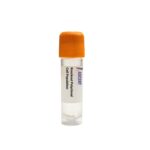
The GGH Knockout Raji Polyclonal Cells represent a CRISPR/Cas9-edited polyclonal knockout cell population designed for targeted disruption of the gamma-glutamyl hydrolase (GGH) gene in the human Raji B lymphocyte line. This product enables loss-of-function studies of GGH, a critical enzyme in folate and antifolate metabolism, in a well-characterized Burkitt’s lymphoma model. The polyclonal format provides a heterogeneous population of edited cells, capturing diverse genetic alterations at the GGH locus, which is suitable for pooled analysis of gene function without clonal selection bottlenecks.
The Raji cell line is derived from an EBV-positive Burkitt’s lymphoma and serves as a widely employed lymphoblastoid B-cell model. These cells exhibit rapid proliferation and retain characteristic features of B-cell malignancies, making them ideal for investigating oncogenic signaling and drug resistance mechanisms. As a suspension cell line, Raji cells are amenable to high-throughput screening and in vitro assays for antineoplastic agent evaluation.
GGH catalyzes the hydrolysis of gamma-linked polyglutamate tails from folates and antifolates, thereby modulating their intracellular retention and pharmacological activity. The enzyme acts on substrates such as methotrexate polyglutamates and folylpolyglutamates, reducing their polyglutamylation state and promoting cellular efflux. GGH expression is regulated upstream by the transcription factor NFE2L2 (NRF2) and cellular folate status, while its activity directly impacts downstream processes including one-carbon metabolism, purine synthesis, and thymidylate biosynthesis. Disruption of GGH is predicted to enhance intracellular polyglutamylation of antifolates, leading to increased drug efficacy and circumvention of chemoresistance.
In the Raji B-cell lymphoma context, knockout of GGH is particularly relevant for studying methotrexate resistance, a major obstacle in lymphoma therapy. By eliminating GGH-mediated cleavage, methotrexate polyglutamates accumulate intracellularly, potentiating drug-induced cytotoxicity. This model thus provides a powerful tool to dissect antifolate resistance pathways and to evaluate strategies aimed at sensitizing lymphoma cells to methotrexate and related chemotherapeutic agents. Moreover, the GGH-deficient Raji cells may illuminate connections between folate metabolism and B-cell malignancy progression.
Researchers can utilize these polyclonal knockout cells in a range of experimental applications, including methotrexate sensitivity assays for IC50 determination via cell viability readouts, intracellular methotrexate polyglutamate profiling by HPLC, and one-carbon metabolite analysis by LC-MS. Expression validation can be performed by western blot and RT-qPCR for GGH mRNA, while functional outcomes are assessable through apoptosis assays following methotrexate treatment. This model is also suitable for screening novel methotrexate sensitizers and for investigating folate pathway dynamics in lymphoid cancers. For comprehensive technical details and customized research support, please contact Ascent Research.