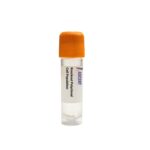
The GLB1 Knockout Raji Polyclonal Cells product constitutes a CRISPR/Cas9-edited polyclonal knockout cell population designed to disrupt the GLB1 gene in a human Burkitt lymphoma B-cell background. This loss-of-function model eliminates functional beta-galactosidase activity, providing a well-defined experimental system for investigating glycosphingolipid catabolism defects and lysosomal storage pathologies. The polyclonal format preserves genetic heterogeneity, thereby avoiding clone-specific artifacts while reliably establishing GLB1 deficiency for population-level analyses.
The Raji cell line serves as an optimal host for this knockout model. Isolated from an 11-year-old male with EBV-positive Burkitt lymphoma, Raji cells grow in suspension and represent a lymphoblastoid B-lymphocyte lineage. This well-characterized line is widely employed to study B-cell malignancies, immune receptor signaling, and EBV latency. The cells?? malignant origin and stable B-cell phenotype make them particularly suitable for examining the crosstalk between lysosomal dysfunction and oncogenic pathways in a B-cell context.
GLB1 encodes the lysosomal hydrolase ??-galactosidase, which cleaves terminal ??-linked galactose residues from GM1 gangliosides and keratan sulfate. Disruption of GLB1 causes accumulation of GM1 ganglioside and other galactose-containing substrates, triggering downstream lysosomal stress and apoptosis. The enzyme??s activity is regulated by the transcription factors TFEB and MITF, which coordinate lysosomal biogenesis and function. GLB1 interacts closely with PSAP, GM2 activator protein, NEU1, and CTSA within the multi-enzyme lysosomal complex, and its elimination alters the entire glycosphingolipid degradation axis, including GALC, HEXA, GBA, SMPD1, and ASAH1 downstream.
In the Raji lymphoma background, GLB1 knockout creates a unique platform to dissect how lysosomal glycolipid accumulation influences B-cell survival, proliferation, and immune evasion. Raji cells express surface GM1, which can be monitored via cholera toxin B staining. The loss of ??-galactosidase activity in these malignant B cells may intersect with EBV latency programs and affect sensitivity to apoptotic stimuli, providing insights into the vulnerability of lymphoma cells to lysosomal stress. This model thus bridges glycosphingolipid metabolism with B-cell pathology.
Research applications include modeling GM1 gangliosidosis, systematically studying lysosomal storage disorders, and evaluating enzyme replacement or small-molecule chaperone therapies. Representative assays encompass Western blotting for GLB1 and LAMP1/2, fluorogenic enzyme activity measurements, LysoTracker staining for lysosomal mass, cholera toxin B?CGM1 binding, flow cytometric profiling of glycosphingolipids, RT-qPCR of lysosomal gene networks, and cell viability assessments under stress conditions. For additional technical details or customization, please contact Ascent Research.