Quick Order Cart

Cat. No. ARG0789

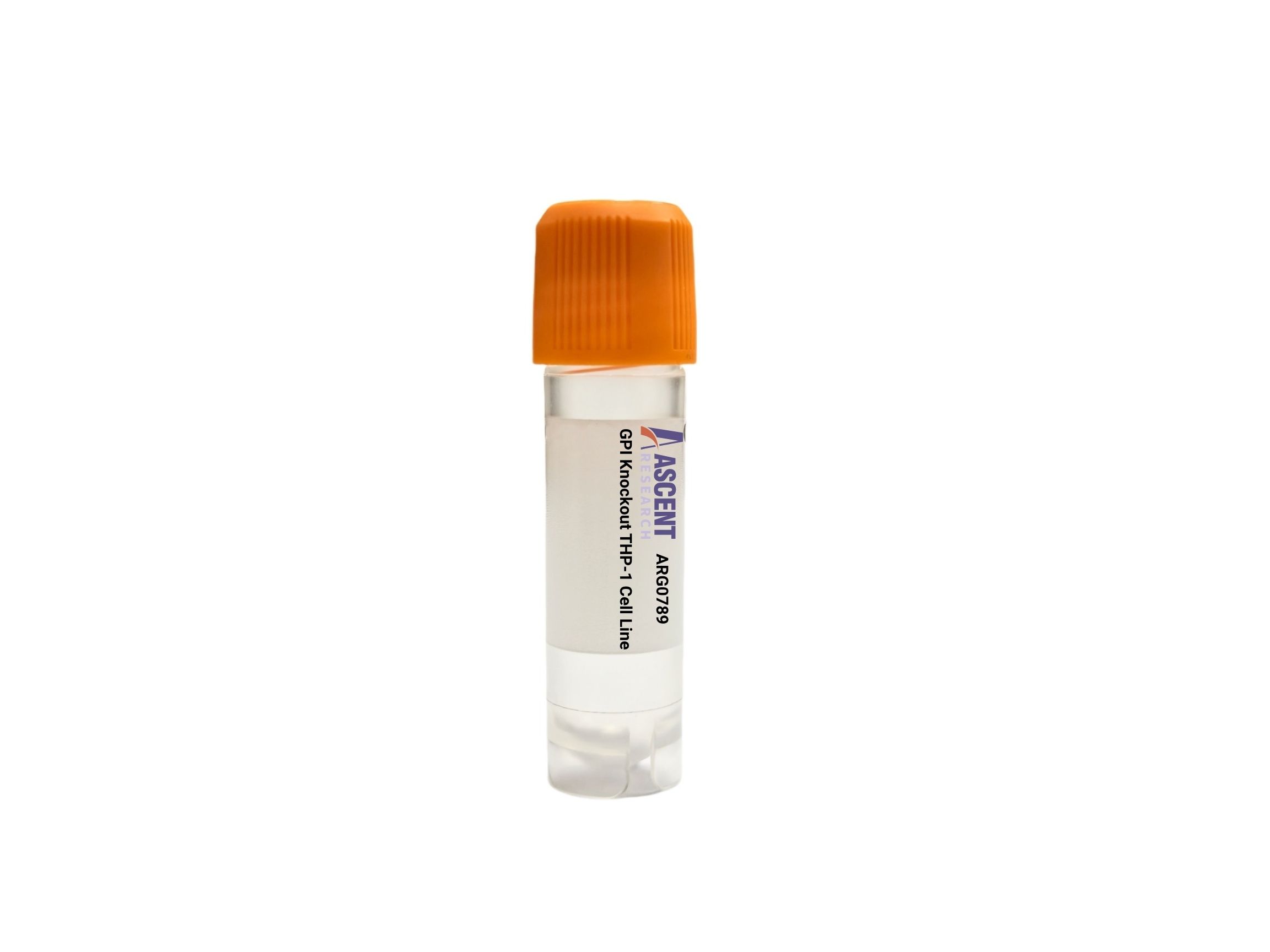
GPI Knockout THP-1 Cell Line

  • Product Type:

    Genome-edited Cells

  • Tissue Source:

    Blood (peripheral blood)

  • Disease:

    Acute monoblastic leukemia

  • Gene Species:

    Homo sapiens (Human)

The GPI Knockout THP-1 Cell Line is a CRISPR/Cas9-edited knockout model in the acute monocytic leukemia THP-1 background, targeting glucose-6-phosphate isomerase. This loss-of-function model ablates GPI's dual roles as a glycolytic enzyme and autocrine motility factor (AMF)/neuroleukin, interrupting key metabolic and signaling pathways. By disrupting glycolysis and AMF-AMFR-driven signaling through RhoA/Rac1, AKT, and Bcl-2, this cell line enables studies of metabolic reprogramming in leukemia, GPI deficiency disorders, and cancer metastasis. Applications include metabolic flux assays (e.g., Seahorse ECAR), Boyden chamber migration, proliferation and apoptosis analyses, and glycolysis-targeted drug screening.

Inquire Now

In stock

Ships next business day


Ask a Question

Shipping Info:

Cryopreserved in vials and shipped on dry ice


Disclaimer:

For Research Use Only

  • Characteristics

    Host Cell

    THP-1

    Age

    1 year

    Sex of Donor

    Male

    Gene Name

    GPI

    Gene Alias

    Glucose-6-phosphate isomerase

    Gene Species

    Homo sapiens (Human)

    Gene Identifier

    NCBI Gene ID 2821

    Gene Family

    Glucose phosphate isomerase protein family

  • Culture Conditions

    Temperature

    37°C

    Atmosphere

    5% CO₂

  • Quality Control

    Sterility testing

    Daily monitoring confirms that the cells are free from bacterial, yeast, and fungal contamination.

    Mycoplasma testing

    Negative for mycoplasma through PCR analysis

    Pathogens

    Cells tested negative for HIV-1, HBV, and HCV.

  • Disclaimer

    Intended Use

    This product is intended for laboratory in vitro use only. lt is not intended for diagnostic, therapeutic, or clinical applications.

    Disclaimer

    Ascent Research endeavors to provide accurate and up-to-date product information. However, no warranties or representations are made regarding its completeness or reliability. References to scientific literature and patents are for informational purposes only, and the customer assumes sole responsibility for verifying their accuracy.

    By accepting this product, the customer acknowledges and agrees to assume all risks associated with its receipt, handling, storage, disposal, and use, including compliance with all applicable safety and environmental regulations and precautions. Relevant laws, regulations, and ethical guidelines must be followed in conducting any research, modifications, or derivatives derived from this product.

    This product is provided "AS IS", and except as expressly stated herein, Ascent Research disclaims all other warranties, express or implied. Under no circumstances shall Ascent Research, its affiliates, or representatives be liable for indirect, incidental, consequential, or punitive damages arising from the use of this material. While Ascent Research employs rigorous quality control measures, we shall not be held responsible for damages resulting from misidentification or misinterpretation of the provided materials.

Description

The GPI Knockout THP-1 Cell Line is a CRISPR/Cas9-edited knockout cell line that completely disrupts the glucose-6-phosphate isomerase (GPI) gene in the THP-1 background. This stable loss-of-function model ablates both the intracellular catalytic function of GPI in glycolysis and its extracellular role as autocrine motility factor (AMF)/neuroleukin, providing a versatile platform for metabolic and signaling studies.

THP-1 is a human acute monocytic leukemia cell line derived from the peripheral blood of a 1-year-old male patient, and it is widely employed in innate immunity and hematological malignancy research. It exhibits monocyte-like features and can be differentiated into macrophage-like cells when exposed to phorbol esters or other stimuli, making it a standard model for monocyte/macrophage biology, immune response research, and leukemogenesis studies. Its robust growth characteristics and amenability to genetic manipulation facilitate detailed investigation of gene function.

GPI catalyzes the reversible isomerization of glucose-6-phosphate to fructose-6-phosphate, a critical junction in glycolysis, gluconeogenesis, and the pentose phosphate pathway. Extracellularly, secreted GPI functions as AMF and neuroleukin, binding to its receptor AMFR/gp78. This interaction activates downstream Rho GTPases (RhoA, Rac1), PI3K/AKT, and MAPK pathways, culminating in enhanced cell migration, invasion, and upregulation of anti-apoptotic Bcl-2. GPI expression is tightly regulated by hypoxia-inducible factor 1-alpha (HIF1A), the oncogene MYC, insulin, and glucose availability, situating GPI at a nexus of metabolic and oncogenic control. Intracellularly, GPI interacts with tubulin and phosphofructokinase, integrating cytoskeletal dynamics and glycolytic flux. Disruption of GPI therefore not only impairs energy metabolism but may also alter nucleotide biosynthesis and cellular redox homeostasis by shifting substrate utilization.

In the THP-1 leukemia context, GPI knockout profoundly disrupts the metabolic reprogramming essential for cancer cell survival and proliferation, likely impairing both energy production and biosynthetic precursor generation. The concomitant loss of AMF autocrine signaling thereby attenuates AMFR-mediated migratory and invasive capacities, making this cell line particularly valuable for dissecting AMF-AMFR crosstalk in the tumor microenvironment. This dual deficiency makes the knockout line an excellent model for investigating the Warburg effect in leukemia, the pathophysiology of hereditary GPI deficiency (e.g., hemolytic anemia, neurological impairment), and AMF-dependent metastatic mechanisms.

Researchers can employ this cell line in metabolic flux analyses such as extracellular acidification rate (ECAR) measurements using Seahorse analyzers, Boyden chamber migration assays, and proliferation or apoptosis studies. It serves as a relevant tool for glycolysis inhibitor screening, validation of GPI disruption by Western blotting or RT-qPCR, and interrogation of downstream signaling nodes including AKT phosphorylation, RhoA/Rac1 activation, and Bcl-2 expression levels. For additional information or to place an order, please contact Ascent Research.


Reset Password

    Reach Us Questions? Click Me Here!

    Fill out the form below and a member of our team will contact you shortly!

    *Required field


      Reach Us

      Fill out the form below and a member of our team will contact you shortly!

      *Required field

      Product Inquiry (Optional)