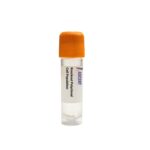
The GPR171 Knockout NCI-H1703 Polyclonal Cells product is a CRISPR/Cas9-edited polyclonal knockout cell population that provides targeted disruption of the GPR171 gene in the NCI-H1703 human lung squamous cell carcinoma line. This pool of edited cells is generated using CRISPR/Cas9-mediated gene disruption, yielding a heterogeneous mixture of mutations at the GPR171 locus. As a polyclonal preparation, it avoids clonal selection biases and is well-suited for population-level assays where functional knockout is assessed across the bulk cell population.
The parental NCI-H1703 cell line is an adherent epithelial line derived from a primary lung squamous cell carcinoma of a 54-year-old male patient. It serves as a well-characterized in vitro model for non-small cell lung cancer (NSCLC), specifically squamous cell carcinoma, and is widely employed in oncology research to study tumor cell biology, signal transduction, and therapeutic responses. NCI-H1703 cells feature defined growth requirements and exhibit reproducible in vitro behavior, making them a reliable platform for genetic perturbation studies.
GPR171 encodes a Gi/o-coupled GPCR that functions as the receptor for the ProSAAS-derived neuropeptide BigLEN. Upon activation, GPR171 interacts with G??i/o subunits??including GNAI1, GNAI2, GNAI3, and GNAO1??to inhibit adenylyl cyclase (ADCY1-9), leading to decreased cAMP production and reduced protein kinase A (PRKACA) activity. This signaling cascade attenuates CREB1 phosphorylation while simultaneously engaging the MAPK/ERK pathway, resulting in ERK1/2 (MAPK3/MAPK1) activation. The receptor also recruits ??-arrestin-1/2, promoting desensitization and internalization. Downstream, ERK signaling can drive expression of cell cycle regulators such as cyclin D1, thereby linking neuropeptide input to proliferative control.
In the context of NCI-H1703 lung squamous carcinoma cells, GPR171 knockout provides a powerful tool to dissect the receptor’s contributions to malignant phenotypes. Loss of GPR171 function may disrupt BigLEN-mediated signaling, potentially altering proliferation, migration, or apoptosis in this non-small cell lung cancer model. By comparing knockout cells to parental controls, researchers can investigate how GPR171-dependent cAMP/PKA and ERK pathways impact tumor cell behavior and validate the receptor as a potential therapeutic target in lung cancer.
These knockout cells are suitable for functional genomics and CRISPR screening applications, as well as detailed GPCR signaling studies. Researchers can assess phenotypic changes using cAMP accumulation assays, cell proliferation assays (MTS, BrdU), and Western blot analysis of phospho-ERK and cyclin D1. Transcriptional profiling by RT-qPCR or RNA-seq enables genome-wide expression analysis, while flow cytometry can monitor cell cycle alterations or apoptosis via Annexin V staining. Additionally, transwell migration and invasion assays may reveal GPR171’s role in cancer cell motility. For further information on experimental protocols or technical support, please contact Ascent Research.