Quick Order Cart

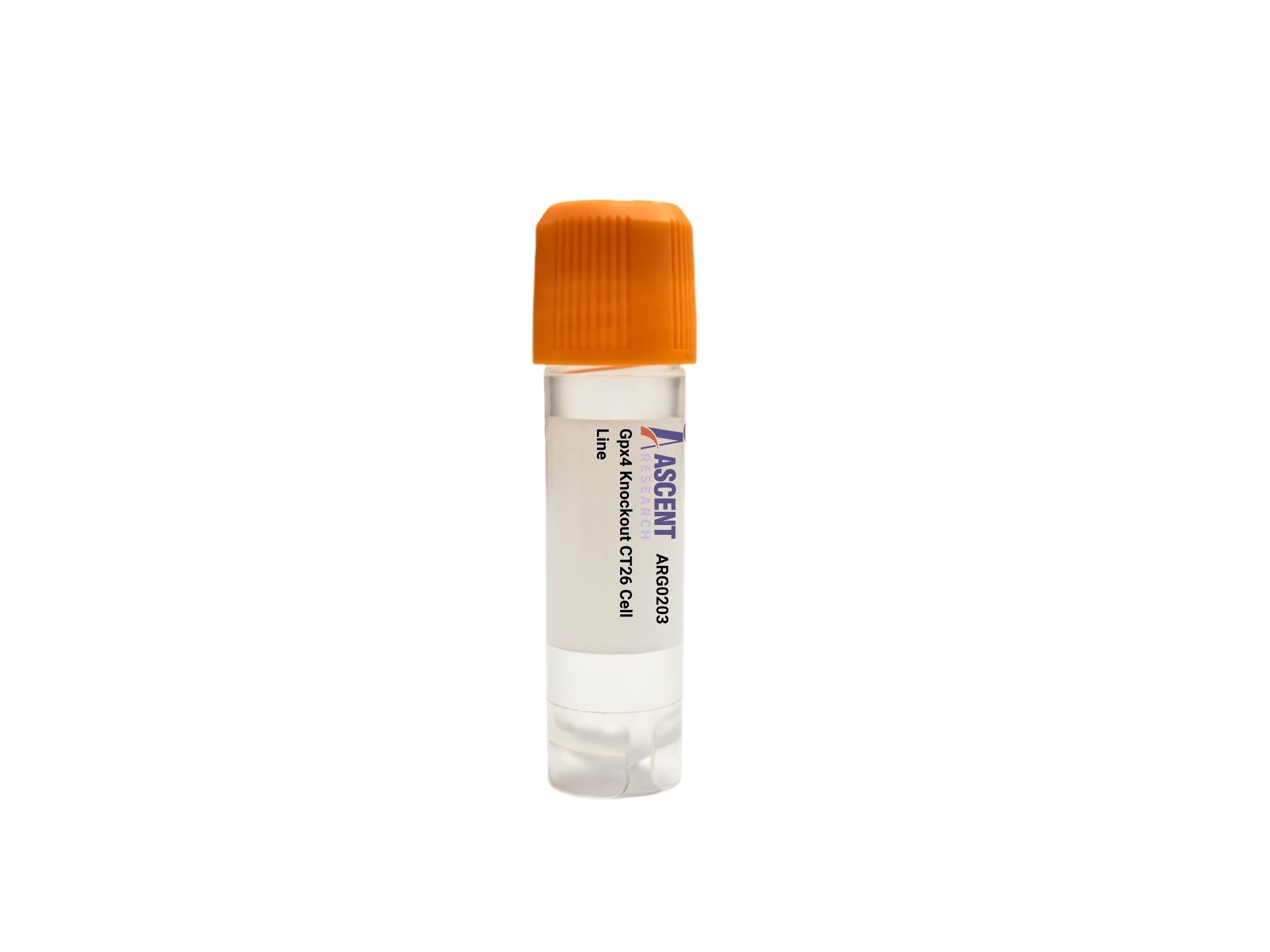
Cat. No. ARG0203

Gpx4 Knockout CT26 Cell Line

  • Product Type:

    Genome-edited Cells

  • Tissue Source:

    Large intestine (colon)

  • Gene Species:

    Mus musculus (Mouse)

The Gpx4 Knockout CT26 Cell Line is a CRISPR/Cas9-edited knockout cell line derived from the mouse colorectal carcinoma CT26 model. It features constitutive disruption of the GPX4 gene, which encodes a phospholipid hydroperoxidase that protects cells from ferroptosis by reducing lipid peroxides using glutathione. Major regulators include NFE2L2 and TP53, with downstream interactions involving ACSL4, ALOX15, and the GSH synthesis pathway. Applications include characterizing ferroptosis mechanisms, testing small-molecule modulators (e.g., RSL3, erastin), measuring lipid peroxidation and glutathione levels, and performing syngeneic tumor studies in BALB/c mice. It is suited for colorectal cancer research and ferroptosis-targeted therapy development.

Inquire Now

In stock

Ships next business day


Ask a Question

Shipping Info:

Cryopreserved in vials and shipped on dry ice


Disclaimer:

For Research Use Only

  • Characteristics

    Host Cell

    CT26

    Gene Name

    Gpx4

    Gene Species

    Mus musculus (Mouse)

    Gene Identifier

    NCBI Gene ID 625249

  • Culture Conditions

    Temperature

    37°C

    Atmosphere

    5% CO₂

  • Quality Control

    Sterility testing

    Daily monitoring confirms that the cells are free from bacterial, yeast, and fungal contamination.

    Mycoplasma testing

    Negative for mycoplasma through PCR analysis

    Pathogens

    Cells tested negative for HIV-1, HBV, and HCV.

  • Disclaimer

    Intended Use

    This product is intended for laboratory in vitro use only. lt is not intended for diagnostic, therapeutic, or clinical applications.

    Disclaimer

    Ascent Research endeavors to provide accurate and up-to-date product information. However, no warranties or representations are made regarding its completeness or reliability. References to scientific literature and patents are for informational purposes only, and the customer assumes sole responsibility for verifying their accuracy.

    By accepting this product, the customer acknowledges and agrees to assume all risks associated with its receipt, handling, storage, disposal, and use, including compliance with all applicable safety and environmental regulations and precautions. Relevant laws, regulations, and ethical guidelines must be followed in conducting any research, modifications, or derivatives derived from this product.

    This product is provided "AS IS", and except as expressly stated herein, Ascent Research disclaims all other warranties, express or implied. Under no circumstances shall Ascent Research, its affiliates, or representatives be liable for indirect, incidental, consequential, or punitive damages arising from the use of this material. While Ascent Research employs rigorous quality control measures, we shall not be held responsible for damages resulting from misidentification or misinterpretation of the provided materials.

Description

The Gpx4 Knockout CT26 Cell Line is a CRISPR/Cas9-edited knockout cell line based on the murine colorectal carcinoma epithelial cell line CT26. This product provides targeted disruption of the Gpx4 gene, encoding glutathione peroxidase 4 (GPX4), a key suppressor of ferroptosis. Loss of GPX4 function enables precise investigation of lipid peroxidation, oxidative stress, and regulated cell death signaling. The line serves as a validated loss-of-function model for studying ferroptosis biology in a tumor-relevant context.

The parental CT26 line was chemically induced in a BALB/c mouse and is characterized as an undifferentiated colon carcinoma with epithelial features. CT26 is a widely used syngeneic model for colorectal cancer, allowing orthotopic or subcutaneous tumor formation in immunocompetent hosts. Its epithelial origin and tumorigenic capacity make it a robust system for studying mechanisms of colon cancer progression and therapeutic response.

GPX4 is a phospholipid hydroperoxidase that reduces lipid hydroperoxides using reduced glutathione (GSH), preventing iron-dependent ferroptotic death. Expression of GPX4 is under transcriptional control of NFE2L2 (NRF2) and is inhibited by TP53, connecting ferroptosis to antioxidant and tumor suppressor pathways. Selenium incorporation via selenoprotein P is required for GPX4 activity. The enzyme counteracts lipid peroxidation driven by ACSL4, LPCAT3, ALOX5, and ALOX15, which oxidize arachidonic acid-containing phospholipids. GPX4 cooperates with SLC7A11-mediated cystine import for GSH synthesis, and operates in parallel with the FSP1/CoQ10 pathway to maintain membrane redox homeostasis.

In the CT26 colon carcinoma context, Gpx4 knockout increases sensitivity to ferroptosis agonists such as RSL3 and erastin, providing a robust model for ferroptosis research. This enables dissection of GPX4-dependent antioxidant defenses in colorectal cancer cells, assessment of ferroptosis vulnerability under metabolic stress, and comparison of ferroptosis sensitivity across tumor subtypes. The model supports exploration of ferroptosis?Capoptosis cross-talk in epithelial malignancies and evaluation of ferroptosis-targeted therapeutic strategies.

This knockout line is suitable for lipid peroxidation detection by C11-BODIPY, cell viability profiling with ferroptosis inducers, glutathione assays, RT-qPCR of ferroptosis markers, and GPX4 Western blotting. In vivo tumorigenesis can be studied via xenograft or syngeneic models in BALB/c mice, linking ferroptosis status to tumor growth. Drug screening applications benefit from the defined ferroptosis sensitivity phenotype. For ordering or technical inquiries, contact Ascent Research.


Reset Password

    Reach Us Questions? Click Me Here!

    Fill out the form below and a member of our team will contact you shortly!

    *Required field


      Reach Us

      Fill out the form below and a member of our team will contact you shortly!

      *Required field

      Product Inquiry (Optional)