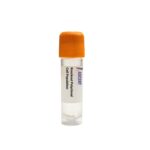
The GRAMD1B Knouckout HT29 Polyclonal Cells are a CRISPR/Cas9-edited polyclonal knockout population derived from the human colorectal adenocarcinoma HT29 cell line, offering a loss-of-function model to investigate GRAMD1B-mediated cholesterol transport and downstream signaling. This heterogeneous pool of edited cells avoids clonal selection bias and provides a robust system for interrogating gene function in a cancer-relevant background.
The HT29 host cell line is a well-established epithelial model of colorectal adenocarcinoma, characterized by its intestinal epithelial origin and active Wnt, EGFR, and Hedgehog signaling pathways. Commonly employed in drug screening, metastasis assays, and mechanistic oncology research, HT29 cells are particularly suited to studying how cholesterol metabolism influences cancer cell behavior, making them an ideal platform for GRAMD1B disruption.
GRAMD1B encodes Aster-B, a sterol transport protein that mediates non-vesicular cholesterol transfer from the endoplasmic reticulum to the plasma membrane at contact sites. Aster-B interacts with ER-resident proteins VAPA and VAPB and the lipid transfer protein OSBP to maintain plasma membrane cholesterol levels. Its expression is transcriptionally regulated by the cholesterol-sensing SREBP2 and LXR pathways, which control key genes such as HMGCR, LDLR, and ABCA1. Downstream, GRAMD1B-dependent cholesterol delivery supports lipid raft formation and modulates the Hedgehog pathway through cholesterol modification of the Smoothened receptor, as well as EGFR signaling, which relies on ordered membrane domains. Disruption of GRAMD1B thus perturbs cholesterol distribution, leading to dysregulation of these mitogenic and survival pathways.
In the colorectal cancer context, GRAMD1B knockout in HT29 cells impairs cholesterol homeostasis, potentially reducing lipid raft abundance and attenuating oncogenic signaling through EGFR and Hedgehog. This model enables dissection of how cholesterol trafficking impacts colorectal cancer progression and may reveal metabolic vulnerabilities linked to altered lipid distribution. It provides a physiologically relevant system to study membrane biology and lipid-dependent signal transduction in cancer.
Typical research applications include cholesterol trafficking studies, small-molecule screening for cholesterol metabolism modulators, and assessments of cell migration and invasion. Investigators can employ filipin staining for free cholesterol localization, lipidomics for sterol profiling, Western blotting for SREBP2 or EGFR, and Hedgehog pathway reporter assays. Flow cytometry can monitor lipid raft-dependent surface markers. For further technical details and ordering, contact Ascent Research.