Quick Order Cart

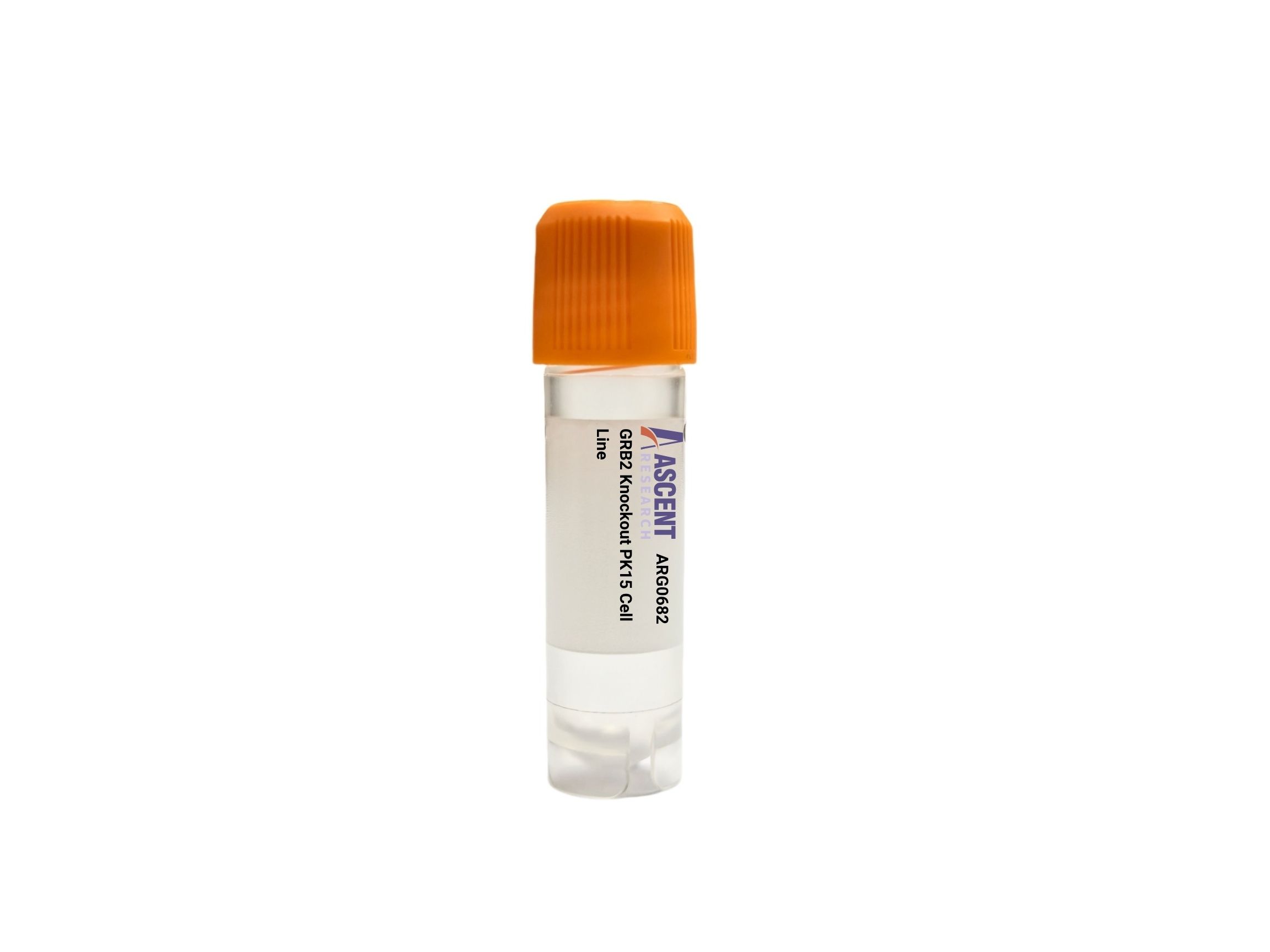
Cat. No. ARG0682

GRB2 Knockout PK15 Cell Line

  • Product Type:

    Genome-edited Cells

  • Tissue Source:

    Kidney

  • Gene Species:

    Sus scrofa (Pig)

CRISPR/Cas9-edited GRB2 knockout PK-15 cell line. This porcine kidney epithelial model lacks the adaptor protein GRB2, which couples activated receptor tyrosine kinases (e.g., EGFR, FGFR) to SOS1, Ras, and downstream MAPK and PI3K-Akt cascades, driving proliferation and survival. The knockout permits dissection of growth factor signaling, kinase inhibitor responses, and compensatory networks. Applications include cancer signaling studies, drug target validation, immune receptor research, and functional genomics. Compatible with phospho-ERK ELISA, co-immunoprecipitation, proliferation assays, and apoptosis analysis. For more information, visit Ascent Research.

Inquire Now

In stock

Ships next business day


Ask a Question

Shipping Info:

Cryopreserved in vials and shipped on dry ice


Disclaimer:

For Research Use Only

  • Characteristics

    Host Cell

    PK15

    Age

    Adult

    Sex of Donor

    Male

    Gene Name

    GRB2

    Gene Alias

    growth factor receptor bound protein 2

    Gene Species

    Sus scrofa (Pig)

    Gene Identifier

    NCBI Gene ID 100192436

    Gene Type

    protein coding gene

  • Culture Conditions

    Temperature

    37°C

    Atmosphere

    5% CO₂

  • Quality Control

    Sterility testing

    Daily monitoring confirms that the cells are free from bacterial, yeast, and fungal contamination.

    Mycoplasma testing

    Negative for mycoplasma through PCR analysis

    Pathogens

    Cells tested negative for HIV-1, HBV, and HCV.

  • Disclaimer

    Intended Use

    This product is intended for laboratory in vitro use only. lt is not intended for diagnostic, therapeutic, or clinical applications.

    Disclaimer

    Ascent Research endeavors to provide accurate and up-to-date product information. However, no warranties or representations are made regarding its completeness or reliability. References to scientific literature and patents are for informational purposes only, and the customer assumes sole responsibility for verifying their accuracy.

    By accepting this product, the customer acknowledges and agrees to assume all risks associated with its receipt, handling, storage, disposal, and use, including compliance with all applicable safety and environmental regulations and precautions. Relevant laws, regulations, and ethical guidelines must be followed in conducting any research, modifications, or derivatives derived from this product.

    This product is provided "AS IS", and except as expressly stated herein, Ascent Research disclaims all other warranties, express or implied. Under no circumstances shall Ascent Research, its affiliates, or representatives be liable for indirect, incidental, consequential, or punitive damages arising from the use of this material. While Ascent Research employs rigorous quality control measures, we shall not be held responsible for damages resulting from misidentification or misinterpretation of the provided materials.

Description

The GRB2 Knockout PK15 Cell Line is a CRISPR/Cas9-edited knockout cell line derived from porcine kidney epithelial PK-15 cells, engineered to disrupt the GRB2 gene. This model enables loss-of-function studies of GRB2-mediated signaling networks.

PK-15 is a widely used porcine kidney epithelial cell line suitable for virology, genetic modification, and toxicology assays. Its epithelial properties and robust growth support investigations into signal transduction associated with renal physiology and growth factor responses.

GRB2 acts as an essential adaptor linking activated receptor tyrosine kinases (RTKs), including EGFR, FGFR, PDGFR, and the insulin receptor, to multiple downstream signaling modules. Upon receptor activation, GRB2’s SH2 domain docks to phosphorylated tyrosine residues on the receptor itself or on scaffolding proteins such as SHC1, GAB1, and GAB2. Simultaneously, its two SH3 domains bind polyproline motifs within the guanine nucleotide exchange factor SOS1, catalyzing Ras activation. The resulting signal propagates through the Raf-MEK-ERK cascade, involving HRAS, BRAF, MAP2K1 (MEK), and MAPK1/3 (ERK), and also bifurcates to the PI3K-AKT and JAK-STAT pathways. Additionally, GRB2 forms complexes with VAV1, CBL, LAT, and PLCgamma1 in immune cell signaling, highlighting its broad role in coupling extracellular stimuli to cellular responses.

Within PK-15 cells, GRB2 ablation removes a central node for EGF, FGF, and PDGF signal integration, making this knockout line an ideal platform for studying growth factor?Cdependent proliferation, migration, and survival in a renal epithelial context. The porcine origin of the cell line adds value for comparative and translational studies, as the pig??s signaling machinery shares extensive homology with human systems, particularly in genes associated with cancer, development, and immune regulation.

This knockout cell line is suited for kinase inhibitor screening, drug sensitivity profiling, and dissection of EGFR and FGFR downstream signaling. Researchers can employ phospho-ERK ELISA to measure MAPK pathway activity, co-immunoprecipitation to verify interactions with SOS1 or SHC1, and xCELLigence assays to track proliferation. Flow cytometry, RT-qPCR, and apoptosis assays allow multidimensional phenotypic analysis. Loss of GRB2 enables the identification of alternative signaling routes and the assessment of targeted therapeutics. For further technical details, please contact Ascent Research.


Reset Password

    Reach Us Questions? Click Me Here!

    Fill out the form below and a member of our team will contact you shortly!

    *Required field


      Reach Us

      Fill out the form below and a member of our team will contact you shortly!

      *Required field

      Product Inquiry (Optional)