Quick Order Cart

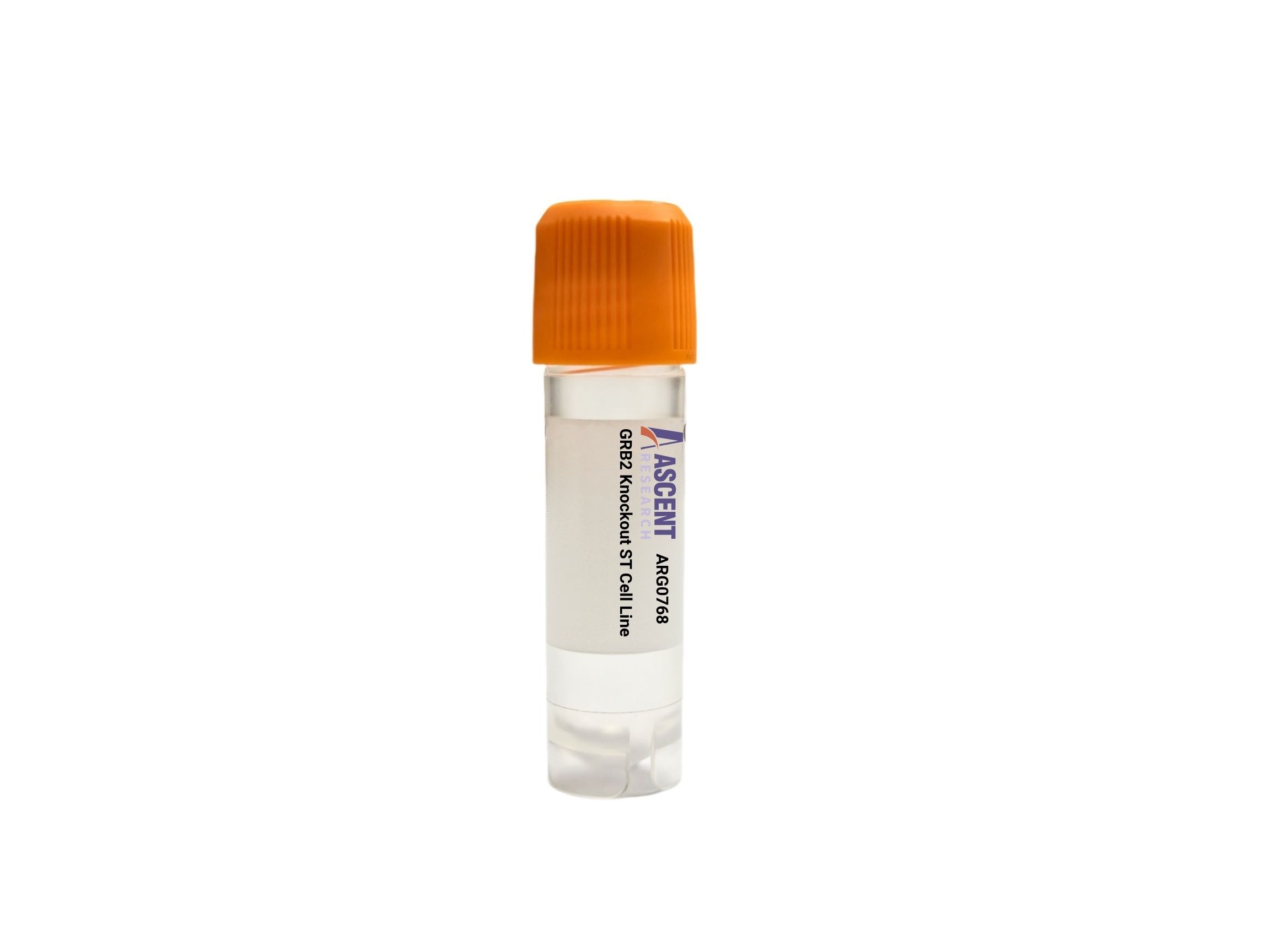
Cat. No. ARG0768

GRB2 Knockout ST Cell Line

  • Product Type:

    Genome-edited Cells

  • Tissue Source:

    Testis

  • Gene Species:

    Sus scrofa (Pig)

The GRB2 Knockout ST Cell Line is a CRISPR/Cas9-edited mouse embryonic fibroblast line (ST) with targeted disruption of Grb2, eliminating the GRB2 adapter essential for receptor tyrosine kinase (RTK) signal transduction. As a fibroblast model, it is relevant to studies of extracellular matrix biology and stem cell niche interactions. GRB2 bridges activated RTKs such as EGFR and PDGFR to the Ras-MAPK cascade via SOS1, also linking to PI3K-AKT signaling. This knockout line supports applications in cancer research, growth factor signaling, developmental biology, and adaptor protein analysis through assays including phospho-ERK western blotting, co-immunoprecipitation, and proliferation and migration studies.

Inquire Now

In stock

Ships next business day


Ask a Question

Shipping Info:

Cryopreserved in vials and shipped on dry ice


Disclaimer:

For Research Use Only

  • Characteristics

    Host Cell

    ST

    Age

    Fetus (80-90 days)

    Sex of Donor

    Male

    Gene Name

    GRB2

    Gene Alias

    growth factor receptor bound protein 2

    Gene Species

    Sus scrofa (Pig)

    Gene Identifier

    NCBI Gene ID 100192436

    Gene Type

    protein coding gene

  • Culture Conditions

    Temperature

    37°C

    Atmosphere

    5% CO₂

  • Quality Control

    Sterility testing

    Daily monitoring confirms that the cells are free from bacterial, yeast, and fungal contamination.

    Mycoplasma testing

    Negative for mycoplasma through PCR analysis

    Pathogens

    Cells tested negative for HIV-1, HBV, and HCV.

  • Disclaimer

    Intended Use

    This product is intended for laboratory in vitro use only. lt is not intended for diagnostic, therapeutic, or clinical applications.

    Disclaimer

    Ascent Research endeavors to provide accurate and up-to-date product information. However, no warranties or representations are made regarding its completeness or reliability. References to scientific literature and patents are for informational purposes only, and the customer assumes sole responsibility for verifying their accuracy.

    By accepting this product, the customer acknowledges and agrees to assume all risks associated with its receipt, handling, storage, disposal, and use, including compliance with all applicable safety and environmental regulations and precautions. Relevant laws, regulations, and ethical guidelines must be followed in conducting any research, modifications, or derivatives derived from this product.

    This product is provided "AS IS", and except as expressly stated herein, Ascent Research disclaims all other warranties, express or implied. Under no circumstances shall Ascent Research, its affiliates, or representatives be liable for indirect, incidental, consequential, or punitive damages arising from the use of this material. While Ascent Research employs rigorous quality control measures, we shall not be held responsible for damages resulting from misidentification or misinterpretation of the provided materials.

Description

The GRB2 Knockout ST Cell Line is a CRISPR/Cas9-edited knockout cell line derived from the Mus musculus ST embryonic fibroblast line. It carries targeted disruption of the Grb2 gene, ablating expression of the growth factor receptor-bound protein 2 adapter. This loss-of-function model facilitates study of GRB2-dependent signaling processes without implying specific editing outcomes or clonality.

ST cells are immortalized mouse embryonic fibroblasts commonly utilized as feeder layers to support pluripotent stem cell culture. As fibroblasts, they are connective tissue cells responsible for synthesizing extracellular matrix components and mediating wound healing responses. Their robust in vitro growth and well-characterized biology make them a reliable host for genetic modification, particularly in research on mesenchymal signal transduction and cell-cell communication.

GRB2 encodes a ubiquitously expressed adapter protein containing an N-terminal SH3 domain, a central SH2 domain, and a C-terminal SH3 domain. Upon ligand binding, receptor tyrosine kinases such as EGFR, PDGFR, and FGFR autophosphorylate tyrosine residues that serve as docking sites for GRB2??s SH2 domain. GRB2 can also bind phosphorylated SHC, a scaffold adaptor linking RTKs to downstream pathways. The SH3 domains of GRB2 constitutively associate with proline-rich motifs in the guanine nucleotide exchange factor SOS1, bringing SOS1 into proximity with membrane-bound Ras. This catalyzes Ras GTP loading and triggers the sequential activation of RAF, MEK, and ERK mitogen-activated protein kinases (MAPKs). Additionally, GRB2 contributes to PI3K-AKT signaling through interaction with insulin receptor substrate 1 (IRS1). Thus, GRB2 acts as a key node downstream of growth factors like EGF and PDGF, and upstream of the Ras-MAPK cascade, with SOS1, RAS, RAF, MEK, and ERK as representative pathway components.

In the ST fibroblast background, loss of GRB2 is expected to attenuate RTK-driven MAPK and AKT pathway activation, thereby impairing cell proliferation, matrix remodeling, and motility. As fibroblasts are integral to wound healing and the tumor microenvironment, this knockout provides a means to investigate GRB2??s role in these contexts. Moreover, as a feeder cell line, GRB2-deficient ST cells may exhibit altered paracrine secretion, enabling dissection of niche signals that support stem cell maintenance and differentiation.

The GRB2 Knockout ST Cell Line is suitable for a spectrum of experimental approaches. Western blotting for phospho-ERK permits direct assessment of MAPK pathway activity, while co-immunoprecipitation experiments can probe GRB2 complex formation with SOS1, SHC, or EGFR. Transcriptional profiling by RT-qPCR can measure downstream effector gene expression. Functional readouts such as cell proliferation and migration assays aid in characterizing the biological consequences of GRB2 loss. This product thus supports studies in cancer biology, adaptor protein function, developmental disorders, and RTK signaling. For further information, please contact Ascent Research.


Reset Password

    Reach Us Questions? Click Me Here!

    Fill out the form below and a member of our team will contact you shortly!

    *Required field


      Reach Us

      Fill out the form below and a member of our team will contact you shortly!

      *Required field

      Product Inquiry (Optional)