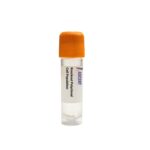
The GTPBP1 Knockout SK-HEP-1 Polyclonal Cells are a CRISPR/Cas9-edited polyclonal knockout cell population derived from SK-HEP-1 human liver adenocarcinoma cells, featuring targeted disruption of the GTPBP1 gene. This heterogeneous population contains diverse CRISPR-induced mutations, providing a robust loss-of-function model while minimizing clonal artifacts. The product is ideal for investigating GTPBP1 function in hepatic cancer biology without the need for single-cell cloning.
The host SK-HEP-1 cell line is a widely used human hepatic adenocarcinoma model, valued for studying hepatocellular carcinoma progression and endothelial functions. Originally isolated from a patient with liver adenocarcinoma, these cells have been extensively characterized for their tumorigenic properties and are a staple in translational liver cancer research. Exhibiting both epithelial and mesenchymal traits, SK-HEP-1 cells facilitate investigation of mTOR signaling and stress responses frequently altered in liver cancer. Their rapid growth and genetic tractability make them an excellent platform for interrogating gene function in a disease-relevant context.
GTPBP1 is a translational GTPase that modulates ribosome biogenesis, protein synthesis, and stress granule dynamics in response to cellular stress. Its activity is regulated by mTORC1, oxidative stress, heat shock, and amino acid deprivation. GTPBP1 interacts with stress granule proteins G3BP1, TIA-1, and PABP, and associates with ribosomal subunits to control translation. Downstream, GTPBP1 influences eIF2??, G3BP1, and TIA-1, thereby modulating stress granule assembly, while its crosstalk with mTOR pathway components eIF4E, S6K, and 4E-BP1 links stress adaptation to growth signaling.
In the SK-HEP-1 hepatocellular carcinoma background, GTPBP1 knockout offers a valuable model to dissect translational reprogramming and stress granule-mediated survival in liver cancer. Given the frequent hyperactivation of mTOR in HCC, this model enables exploration of GTPBP1??s contribution to oncogenic translation and stress resilience. The knockout system can be used to probe vulnerabilities arising from disrupted stress granule pathways under therapeutic stress conditions, aiding identification of potential targets in hepatic malignancies.
Applications include western blotting for stress granule markers G3BP1 and TIA-1, RT-qPCR for translation factors, immunofluorescence to visualize stress granules, puromycin incorporation assays for global translation, and RNA-seq for transcriptome-wide analysis. These approaches enable detailed study of GTPBP1-dependent translation control and stress response networks. For further information or technical assistance, please contact Ascent Research.