Quick Order Cart

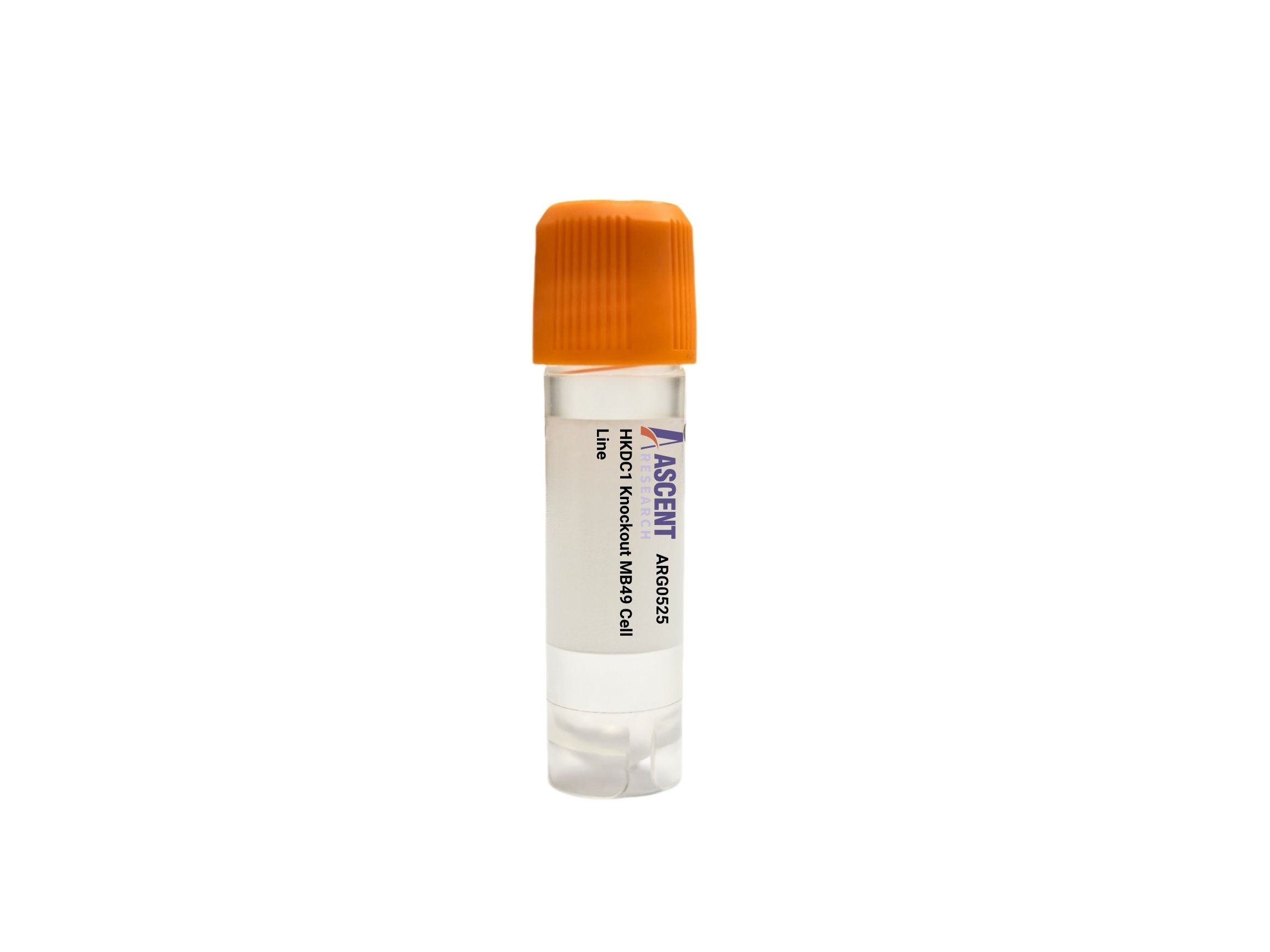
Cat. No. ARG0525

HKDC1 Knockout MB49 Cell Line

  • Product Type:

    Genome-edited Cells

  • Tissue Source:

    Urinary bladder

  • Disease:

    Transitional cell carcinoma

  • Gene Species:

    Homo sapiens (Human)

The HKDC1 Knockout MB49 Cell Line is a CRISPR/Cas9-edited knockout cell line derived from the MB49 murine bladder carcinoma epithelial line. It provides a targeted loss-of-function model for HKDC1, a hexokinase domain-containing protein involved in glucose phosphorylation and energy metabolism. HKDC1 functions downstream of insulin signaling and HIF1??, interacts with mitochondrial porins, and generates glucose-6-phosphate to drive glycolysis. This knockout model supports research into bladder cancer metabolism, tumor growth, and immune evasion, with applications including metabolic flux assays, glucose uptake measurements, and immune marker profiling.

Inquire Now

In stock

Ships next business day


Ask a Question

Shipping Info:

Cryopreserved in vials and shipped on dry ice


Disclaimer:

For Research Use Only

  • Characteristics

    Host Cell

    MB49

    Morphology

    Epithelial-like

    Age

    Adult

    Sex of Donor

    Male

    Gene Name

    HKDC1

    Gene Species

    Homo sapiens (Human)

    Gene Identifier

    NCBI Gene ID 68859

  • Culture Conditions

    Temperature

    37°C

    Atmosphere

    5% CO₂

  • Quality Control

    Sterility testing

    Daily monitoring confirms that the cells are free from bacterial, yeast, and fungal contamination.

    Mycoplasma testing

    Negative for mycoplasma through PCR analysis

    Pathogens

    Cells tested negative for HIV-1, HBV, and HCV.

  • Disclaimer

    Intended Use

    This product is intended for laboratory in vitro use only. lt is not intended for diagnostic, therapeutic, or clinical applications.

    Disclaimer

    Ascent Research endeavors to provide accurate and up-to-date product information. However, no warranties or representations are made regarding its completeness or reliability. References to scientific literature and patents are for informational purposes only, and the customer assumes sole responsibility for verifying their accuracy.

    By accepting this product, the customer acknowledges and agrees to assume all risks associated with its receipt, handling, storage, disposal, and use, including compliance with all applicable safety and environmental regulations and precautions. Relevant laws, regulations, and ethical guidelines must be followed in conducting any research, modifications, or derivatives derived from this product.

    This product is provided "AS IS", and except as expressly stated herein, Ascent Research disclaims all other warranties, express or implied. Under no circumstances shall Ascent Research, its affiliates, or representatives be liable for indirect, incidental, consequential, or punitive damages arising from the use of this material. While Ascent Research employs rigorous quality control measures, we shall not be held responsible for damages resulting from misidentification or misinterpretation of the provided materials.

Description

The HKDC1 Knockout MB49 Cell Line is a CRISPR/Cas9-edited knockout cell line originating from the murine MB49 bladder carcinoma epithelial cell line. It provides a stable loss-of-function model for HKDC1, a hexokinase domain-containing gene involved in glucose phosphorylation. CRISPR/Cas9-mediated gene disruption abrogates HKDC1 expression, enabling dissection of its metabolic roles in cancer. This cell line suits in vitro and in vivo studies of tumor metabolism, glucose utilization, and immune interactions in the bladder tumor microenvironment. The parental MB49 line was derived from a C57BL/6 mouse bladder carcinoma and serves as a syngeneic, immunocompetent model for tumor immunology and immunotherapy. These epithelial cells retain bladder cancer traits, forming tumors in immunocompetent hosts and influencing immune cell infiltration. The C57BL/6 background allows integration with transgenic models for mechanistic studies. HKDC1 catalyzes glucose phosphorylation to glucose-6-phosphate, a key glycolytic step. It is regulated by insulin signaling, HIF1??, and glucose availability, and interacts with mitochondrial porins and hexokinase-binding proteins, linking glycolysis to mitochondrial function. HKDC1 knockout disrupts this node, reducing glycolytic flux and altering energy metabolism. This leads to decreased glucose-6-phosphate and glycolytic intermediates, impairing proliferation-associated biosynthesis. In MB49 cells, HKDC1 disruption targets metabolic reprogramming typical of bladder cancer, where altered glucose metabolism supports the Warburg effect. Knockout abrogates HKDC1-mediated metabolic functions, altering glycolysis and energy homeostasis. This model enables study of glycolysis-dependent proliferation, survival, and immune modulatory secretion, and helps explore metabolic influences on tumor?Cimmune crosstalk, informing immunotherapy combinations. Applications include western blotting and RT-qPCR for HKDC1 validation, glucose uptake and lactate production assays for metabolic shifts, and proliferation assays under varied nutrients. Flow cytometry assesses immune markers like MHC-I and PD-L1, while metabolic flux analysis quantifies glycolytic and oxidative rates. In vivo tumor studies evaluate HKDC1-dependent growth and immunotherapy responses. For further details or custom applications, contact Ascent Research.

Reset Password

    Reach Us Questions? Click Me Here!

    Fill out the form below and a member of our team will contact you shortly!

    *Required field


      Reach Us

      Fill out the form below and a member of our team will contact you shortly!

      *Required field

      Product Inquiry (Optional)