Quick Order Cart

Cat. No. ARG0516

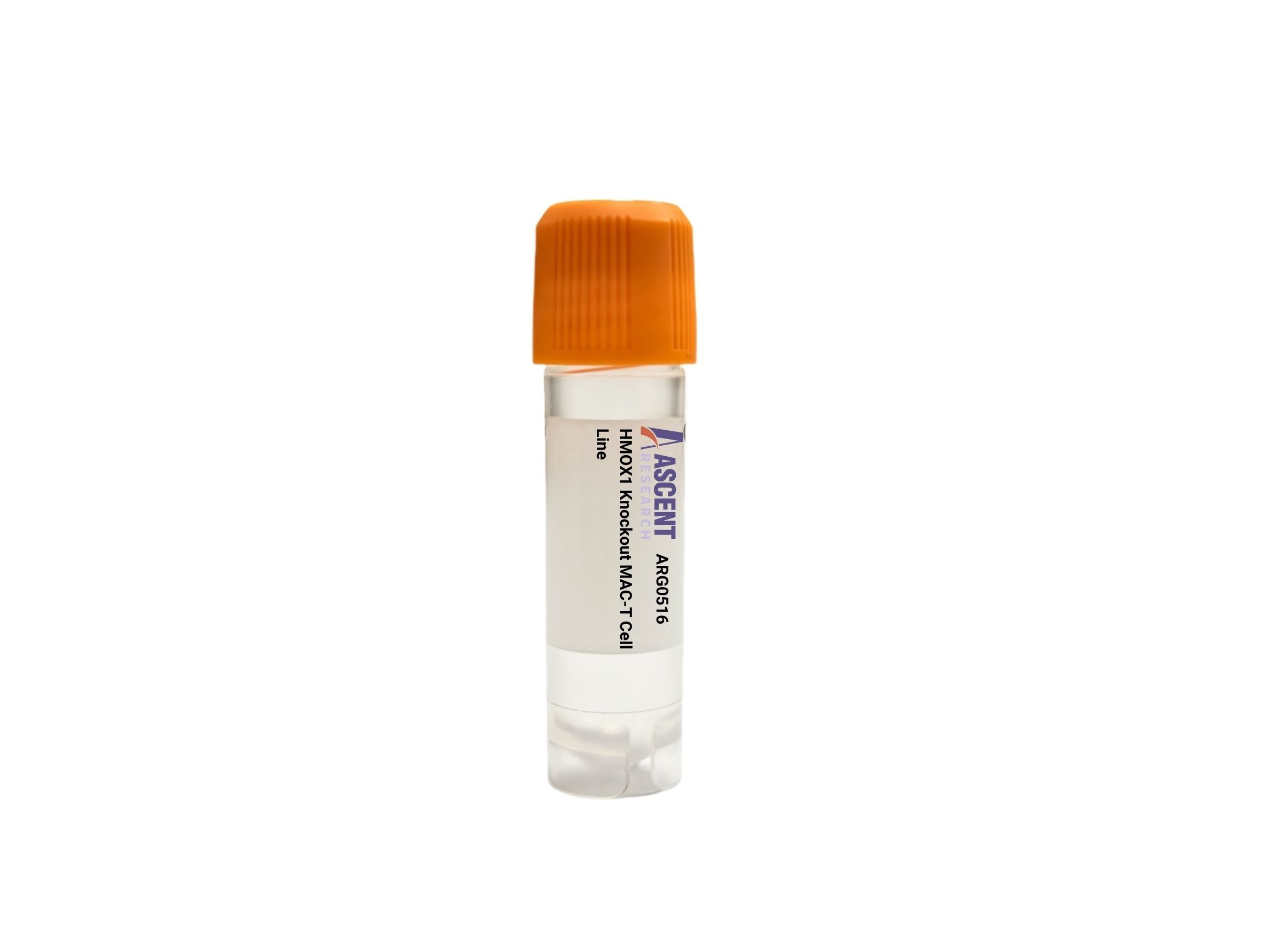
HMOX1 Knockout MAC-T Cell Line

  • Product Type:

    Genome-edited Cells

  • Tissue Source:

    Breast (mammary gland)

  • Gene Species:

    Bos taurus (Domestic cattle)

The HMOX1 Knockout MAC-T Cell Line is a CRISPR/Cas9-edited bovine mammary epithelial cell line with targeted disruption of heme oxygenase-1 (HO-1). It provides a stable loss-of-function model for studying oxidative stress, inflammatory signaling, and cytoprotection in a physiologically relevant lactation model. HMOX1 is transcriptionally induced by NRF2 (NFE2L2) and repressed by Bach1; its products biliverdin and carbon monoxide modulate MAPK (ERK) and NF-??B signaling. The knockout cell line is suitable for studies on bovine mastitis, drug screening for NRF2 activators, and oxidative stress research, with applications including ROS detection, bilirubin assays, cytokine profiling, and Western blotting.

Inquire Now

In stock

Ships next business day


Ask a Question

Shipping Info:

Cryopreserved in vials and shipped on dry ice


Disclaimer:

For Research Use Only

  • Characteristics

    Host Cell

    MAC-T

    Age

    Adult

    Sex of Donor

    Female

    Gene Name

    HMOX1

    Gene Alias

    Heme oxygenase 1; HO?1

    Gene Species

    Bos taurus (Domestic cattle)

    Gene Identifier

    NCBI Gene ID 513221

    Gene Family

    Heme oxygenase family

  • Culture Conditions

    Temperature

    37°C

    Atmosphere

    5% CO₂

  • Quality Control

    Sterility testing

    Daily monitoring confirms that the cells are free from bacterial, yeast, and fungal contamination.

    Mycoplasma testing

    Negative for mycoplasma through PCR analysis

    Pathogens

    Cells tested negative for HIV-1, HBV, and HCV.

  • Disclaimer

    Intended Use

    This product is intended for laboratory in vitro use only. lt is not intended for diagnostic, therapeutic, or clinical applications.

    Disclaimer

    Ascent Research endeavors to provide accurate and up-to-date product information. However, no warranties or representations are made regarding its completeness or reliability. References to scientific literature and patents are for informational purposes only, and the customer assumes sole responsibility for verifying their accuracy.

    By accepting this product, the customer acknowledges and agrees to assume all risks associated with its receipt, handling, storage, disposal, and use, including compliance with all applicable safety and environmental regulations and precautions. Relevant laws, regulations, and ethical guidelines must be followed in conducting any research, modifications, or derivatives derived from this product.

    This product is provided "AS IS", and except as expressly stated herein, Ascent Research disclaims all other warranties, express or implied. Under no circumstances shall Ascent Research, its affiliates, or representatives be liable for indirect, incidental, consequential, or punitive damages arising from the use of this material. While Ascent Research employs rigorous quality control measures, we shall not be held responsible for damages resulting from misidentification or misinterpretation of the provided materials.

Description

The HMOX1 Knockout MAC-T Cell Line is a CRISPR/Cas9-edited bovine mammary epithelial cell line engineered with a targeted disruption of the HMOX1 gene, which encodes heme oxygenase-1 (HO-1). This knockout cell line provides a stable loss-of-function model for investigating the enzyme??s cytoprotective, antioxidant, and anti-inflammatory functions within a physiologically relevant mammary epithelial context.

The parental MAC-T cell line is an immortalized yet non-transformed bovine mammary epithelial line derived from primary mammary alveolar cells. It retains responsiveness to lactogenic hormones and supports milk protein synthesis and secretion, making it a well-established model for lactation biology, mammary gland development, and dairy cattle health research. MAC-T cells exhibit polarized epithelial morphology and express caseins upon hormonal induction, faithfully recapitulating key features of the lactating mammary epithelium.

HMOX1 encodes heme oxygenase-1, which catalyzes the oxidative cleavage of heme into biliverdin, carbon monoxide (CO), and ferrous iron. Biliverdin is reduced by biliverdin reductase A to bilirubin, a key antioxidant. CO signals via soluble guanylyl cyclase to mediate anti-inflammatory effects, while ferrous iron induces ferritin, limiting oxidative damage. Transcriptional induction is driven by NRF2 (NFE2L2), which, under stress, dissociates from KEAP1 and translocates to the nucleus. Repression is mediated by Bach1 and MAF. Additional inputs from HIF1A, heat shock, heavy metals, and cytokines (IL-10, IL-1??) fine-tune expression. HO-1 activity modulates MAPK1/3 (ERK), AKT1 (PI3K-AKT), and NFKB1 (NF-??B) pathways, upregulating Bcl-2, p21, and VEGF. Interacting partners such as NADPH-cytochrome P450 reductase and p62/SQSTM1 contribute to enzyme function and NRF2 regulation.

In the mammary epithelium, high metabolic demands during lactation generate significant oxidative stress, and HO-1 is thought to protect cells by degrading pro-oxidant heme and generating antioxidant molecules. Additionally, its anti-inflammatory functions help restrain excessive immune responses that could compromise milk production or lead to mastitis. By disrupting HMOX1 in MAC-T cells, this knockout line enables studies on how loss of HO-1 affects mammary epithelial cell viability, redox homeostasis, and susceptibility to bacterial pathogens or inflammatory cytokines. It serves as a molecular tool for dissecting the interplay between oxidative stress, lactation, and mammary gland health.

Typical applications include ROS detection, cell viability assays under oxidative stress, bilirubin quantification, and RT-qPCR/Western blotting for NRF2 target genes. The line supports cytokine profiling by ELISA, immunofluorescence, and apoptosis flow cytometry. It is suitable for NRF2 activator screening and host-pathogen interaction studies modeling mastitis pathogens. Additional uses encompass cellular senescence research and analysis of HO-1??s role in mammary gland aging. For ordering, technical inquiries, or custom gene-editing services, contact Ascent Research.


Reset Password

    Reach Us Questions? Click Me Here!

    Fill out the form below and a member of our team will contact you shortly!

    *Required field


      Reach Us

      Fill out the form below and a member of our team will contact you shortly!

      *Required field

      Product Inquiry (Optional)