Quick Order Cart

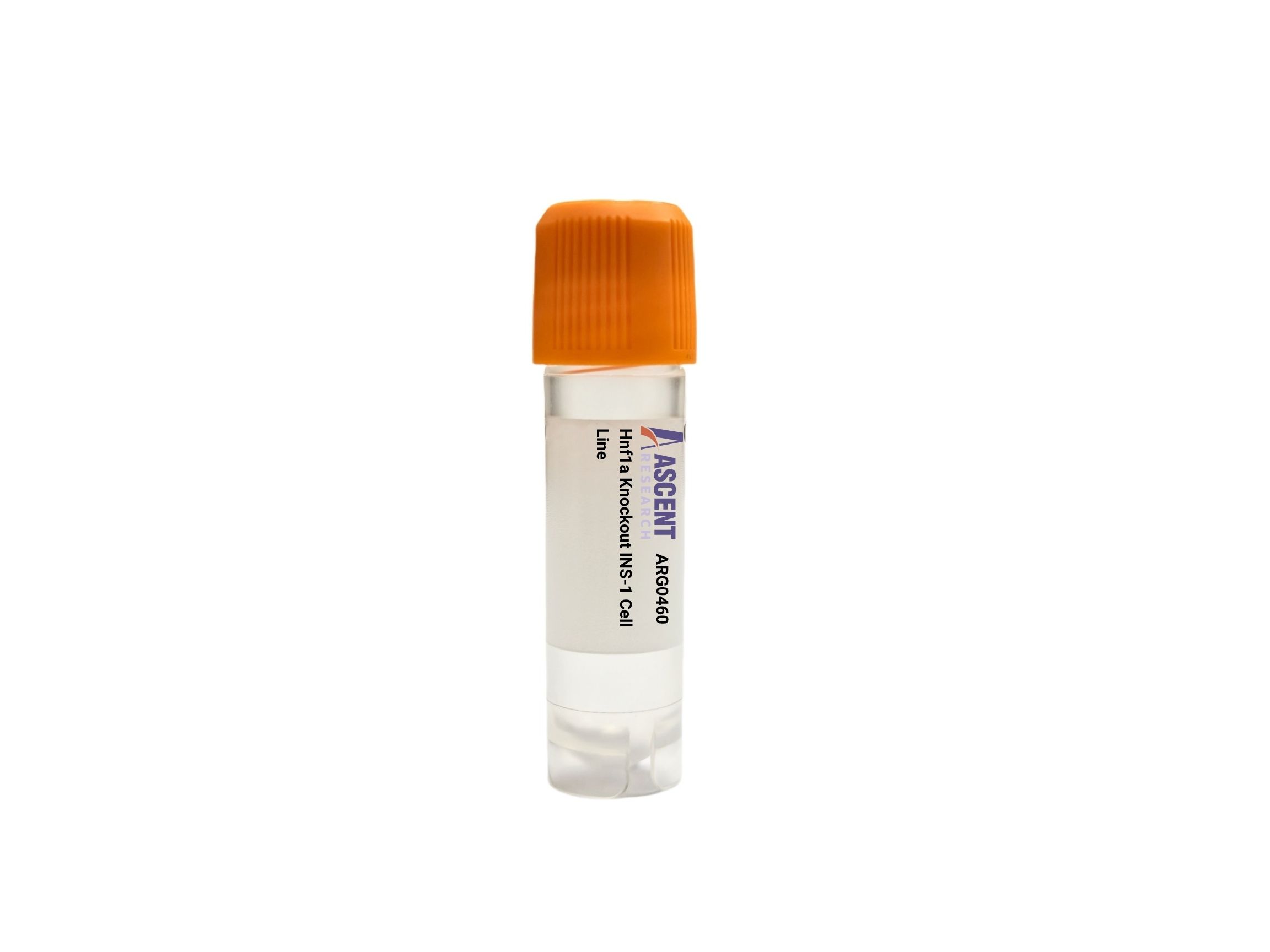
Cat. No. ARG0460

Hnf1a Knockout INS-1 Cell Line

  • Product Type:

    Genome-edited Cells

  • Tissue Source:

    Pancreas

  • Gene Species:

    Rattus norvegicus (Rat)

The Hnf1a Knockout INS-1 Cell Line is a CRISPR/Cas9-edited knockout cell line derived from rat pancreatic beta cells (INS-1), featuring disruption of the Hnf1a gene. HNF1A is a transcription factor that regulates key beta cell genes, including insulin (INS) and glucose transporter 2 (GLUT2), and is controlled by upstream factors such as HNF4A and PDX1. This model is suited for investigating MODY3, insulin secretion, and beta cell function. Applications include diabetes drug screening, gene regulatory network analysis, and mechanistic studies of beta cell failure. Researchers can employ GSIS assays, ChIP-qPCR, and RNA-seq to characterize the loss-of-function phenotype.

Inquire Now

In stock

Ships next business day


Ask a Question

Shipping Info:

Cryopreserved in vials and shipped on dry ice


Disclaimer:

For Research Use Only

  • Characteristics

    Host Cell

    INS-1

    Age

    666 days

    Gene Name

    Hnf1a

    Gene Alias

    HNF1 homeobox A

    Gene Species

    Rattus norvegicus (Rat)

    Gene Identifier

    NCBI Gene ID 24817

    Gene Type

    protein coding gene

  • Culture Conditions

    Temperature

    37°C

    Atmosphere

    5% CO₂

  • Quality Control

    Sterility testing

    Daily monitoring confirms that the cells are free from bacterial, yeast, and fungal contamination.

    Mycoplasma testing

    Negative for mycoplasma through PCR analysis

    Pathogens

    Cells tested negative for HIV-1, HBV, and HCV.

  • Disclaimer

    Intended Use

    This product is intended for laboratory in vitro use only. lt is not intended for diagnostic, therapeutic, or clinical applications.

    Disclaimer

    Ascent Research endeavors to provide accurate and up-to-date product information. However, no warranties or representations are made regarding its completeness or reliability. References to scientific literature and patents are for informational purposes only, and the customer assumes sole responsibility for verifying their accuracy.

    By accepting this product, the customer acknowledges and agrees to assume all risks associated with its receipt, handling, storage, disposal, and use, including compliance with all applicable safety and environmental regulations and precautions. Relevant laws, regulations, and ethical guidelines must be followed in conducting any research, modifications, or derivatives derived from this product.

    This product is provided "AS IS", and except as expressly stated herein, Ascent Research disclaims all other warranties, express or implied. Under no circumstances shall Ascent Research, its affiliates, or representatives be liable for indirect, incidental, consequential, or punitive damages arising from the use of this material. While Ascent Research employs rigorous quality control measures, we shall not be held responsible for damages resulting from misidentification or misinterpretation of the provided materials.

Description

The Hnf1a Knockout INS-1 Cell Line is a CRISPR/Cas9-edited knockout cell line designed for targeted disruption of the Hnf1a gene in Rattus norvegicus pancreatic beta cells. This loss-of-function model is generated using CRISPR/Cas9-mediated gene disruption, providing a stable knockout background for investigating HNF1A-dependent regulatory networks. Developed in the INS-1 host cell line, this product enables precise dissection of transcriptional mechanisms governing beta cell function without the variables of transient knockdown systems.

The INS-1 cell line is a well-established rat insulinoma-derived pancreatic beta cell line that retains glucose-responsive insulin secretion. Originating from Rattus norvegicus, INS-1 cells exhibit hallmark beta cell characteristics, including expression of key beta cell markers and the capacity to release insulin in response to physiological glucose concentrations. This makes the INS-1 line an ideal host for modeling beta cell biology, as it closely mimics primary islet beta cell behavior while offering robust and reproducible in vitro culture properties.

HNF1A is a critical transcription factor that orchestrates pancreatic beta cell identity and function. It directly binds to the promoters of essential beta cell genes, including insulin (INS) and glucose transporter 2 (SLC2A2/GLUT2), activating their transcription and thereby enabling glucose-stimulated insulin secretion. HNF1A functions within a complex regulatory network: it is regulated by upstream factors such as HNF4A, FOXA2, PDX1, and PAX6, and is influenced by Wnt signaling. It also interacts with transcriptional coactivators including PCAF, CREBBP, and EP300, and can cross-regulate HNF4A, forming a feed-forward loop. Downstream targets of HNF1A extend to PKLR and G6PC, linking it to broader glucose metabolism pathways. This network positions HNF1A as a master regulator of the mature beta cell phenotype.

Targeted disruption of Hnf1a in INS-1 cells directly compromises the beta cell transcriptional program. Loss of HNF1A leads to reduced expression of its target genes, particularly INS and GLUT2, resulting in diminished glucose-stimulated insulin secretion and a partial loss of beta cell identity. This phenotype recapitulates key features of maturity-onset diabetes of the young type 3 (MODY3) and aspects of type 2 diabetes, making the knockout cell line a physiologically relevant model for studying beta cell failure. By ablating HNF1A function, researchers can interrogate the molecular events driving impaired insulin secretion and explore compensatory mechanisms within the beta cell regulatory network.

This knockout cell line supports a wide array of investigative applications, including mechanistic studies of MODY3 pathogenesis, screening of potential antidiabetic compounds, and dissection of insulin secretion pathways. It is particularly valuable for gene regulatory network analysis, employing techniques such as ChIP-qPCR to map HNF1A target engagement and RNA-seq for transcriptomic profiling. Key supporting assays include genomic PCR and Sanger sequencing for knockout confirmation, western blotting for HNF1A protein, RT-qPCR for insulin and GLUT2 transcripts, GSIS assays, and immunofluorescence staining for insulin. Contact Ascent Research for more information.


Reset Password

    Reach Us Questions? Click Me Here!

    Fill out the form below and a member of our team will contact you shortly!

    *Required field


      Reach Us

      Fill out the form below and a member of our team will contact you shortly!

      *Required field

      Product Inquiry (Optional)