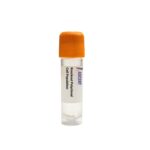
The HOMER1 Knockout HT29 Polyclonal Cells constitute a CRISPR/Cas9-edited polyclonal knockout cell population derived from the HT29 colorectal adenocarcinoma epithelial cell line, in which the HOMER1 gene has been disrupted to ablate protein expression. This pooled population contains a heterogeneous mixture of edited alleles, offering a robust loss?of?function model without clonal selection, thereby avoiding the confounding effects of single?cell bottlenecks and providing a representative genetic background for functional studies.
HT29 is a widely used human colorectal adenocarcinoma epithelial cell line originally isolated from a primary tumor of a 44?year?old Caucasian female. These cells harbor oncogenic mutations in APC, TP53, and KRAS, driving constitutive Wnt/???catenin signaling, genomic instability, and uncontrolled proliferation. HT29 cells form polarized monolayers and are frequently employed as an in vitro model of intestinal epithelial barrier function, colorectal cancer biology, and drug absorption.
HOMER1 encodes a scaffold protein that interacts with group I metabotropic glutamate receptors (mGluR1/5), inositol 1,4,5?trisphosphate receptors (IP3Rs), and Shank family proteins to organize postsynaptic signaling complexes. In non?neuronal cells, HOMER1 facilitates intracellular calcium mobilization, actin cytoskeleton remodeling, and signal integration downstream of growth factors such as EGF and NGF. The protein is activated by mGluR1/5 stimulation and ERK/MAPK pathway signaling, and it promotes downstream events including CREB?mediated gene transcription and ???catenin stabilization through direct interactions with PIKE and ???catenin.
In HT29 cells, HOMER1 has been implicated in colorectal cancer pathogenesis by promoting the stabilization and nuclear translocation of ???catenin, thereby potentiating Wnt/???catenin target gene expression. Disruption of HOMER1 in this genetic background provides a physiologically relevant system to dissect the scaffold??s contributions to tumor cell proliferation, migration, and invasive behavior. The polyclonal nature of the knockout minimizes clonal adaptation artifacts, yielding a more representative population for investigating genotype?Cphenotype relationships in a cancer context.
These polyclonal knockout cells are suitable for a wide range of downstream assays, including functional genomics via RNA?seq, proliferation (MTT) and migration (scratch wound) analyses, calcium imaging to monitor mGluR?evoked transients, and co?immunoprecipitation to probe protein?Cprotein interactions. They also serve as a platform for drug screening with glutamate receptor antagonists or mGluR modulators, and for investigating the interplay between glutamatergic signaling and Wnt/???catenin activity using TOPFlash reporter assays. For further details or custom orders, please contact Ascent Research.