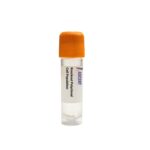
The HOMEZ Knockout HT29 Polyclonal Cells represent a CRISPR/Cas9-edited polyclonal knockout cell population in which the HOMEZ gene has been disrupted to create a loss-of-function model for biomedical research. This product consists of a heterogeneous pool of HT29 cells carrying diverse CRISPR/Cas9-induced mutations in the HOMEZ locus, resulting in a population-level reduction or ablation of functional HOMEZ protein. The polyclonal format allows researchers to study gene function without clonal selection effects, providing a more representative model of genetic perturbation in a cancer cell context.
HT29 is a widely characterized human colorectal adenocarcinoma cell line originally derived from a primary tumor in a 44-year-old Caucasian female. These cells exhibit epithelial morphology and retain features of intestinal epithelial cells, including the ability to undergo differentiation and form polarized monolayers with barrier properties. HT29 cells are extensively employed as an in vitro model for colorectal cancer, intestinal epithelial biology, and drug transport studies, making them a relevant host for investigating the role of HOMEZ in colorectal adenocarcinoma.
HOMEZ encodes a putative transcription factor containing leucine zipper and homeodomain-like domains, suggesting a role in DNA binding and protein dimerization. The HOMEZ protein is predicted to interact with ??-catenin and TCF/LEF transcription factors, placing it within the Wnt/??-catenin signaling network. Upstream regulators may include Wnt ligands, Notch receptors, and receptor tyrosine kinases, while downstream targets likely encompass cell cycle regulators such as CCND1, apoptosis-related genes, and differentiation markers. HOMEZ knockout in HT29 cells impairs the transcriptional regulation of these target genes, potentially disrupting cell cycle progression and Wnt/??-catenin-dependent transcriptional programs, thereby affecting cellular proliferation and differentiation.
In the HT29 cellular context, loss of HOMEZ function provides a physiologically relevant system to dissect the contribution of this transcription factor to colorectal cancer phenotypes. The knockout model enables the study of altered cell cycle dynamics, apoptotic responses, and epithelial differentiation, which are central to adenocarcinoma progression. Moreover, the disruption of HOMEZ-mediated transcriptional control may influence the responsiveness of HT29 cells to therapeutic agents, offering a platform for drug sensitivity profiling and identification of synthetic lethal interactions.
This polyclonal knockout population is suitable for a broad range of downstream applications in cancer cell biology and drug discovery. Researchers can employ techniques such as Western blotting and RT-qPCR to confirm protein and transcript-level changes, RNA-seq for transcriptomic profiling, and ChIP-qPCR to assess altered chromatin occupancy. Functional assays including MTT or BrdU proliferation assays, apoptosis detection, migration and invasion assays, and drug sensitivity testing are compatible with this model. The HOMEZ Knockout HT29 Polyclonal Cells thus serve as a versatile tool for investigating transcriptional regulation in colorectal cancer. For additional information or technical support, please contact Ascent Research.