Quick Order Cart

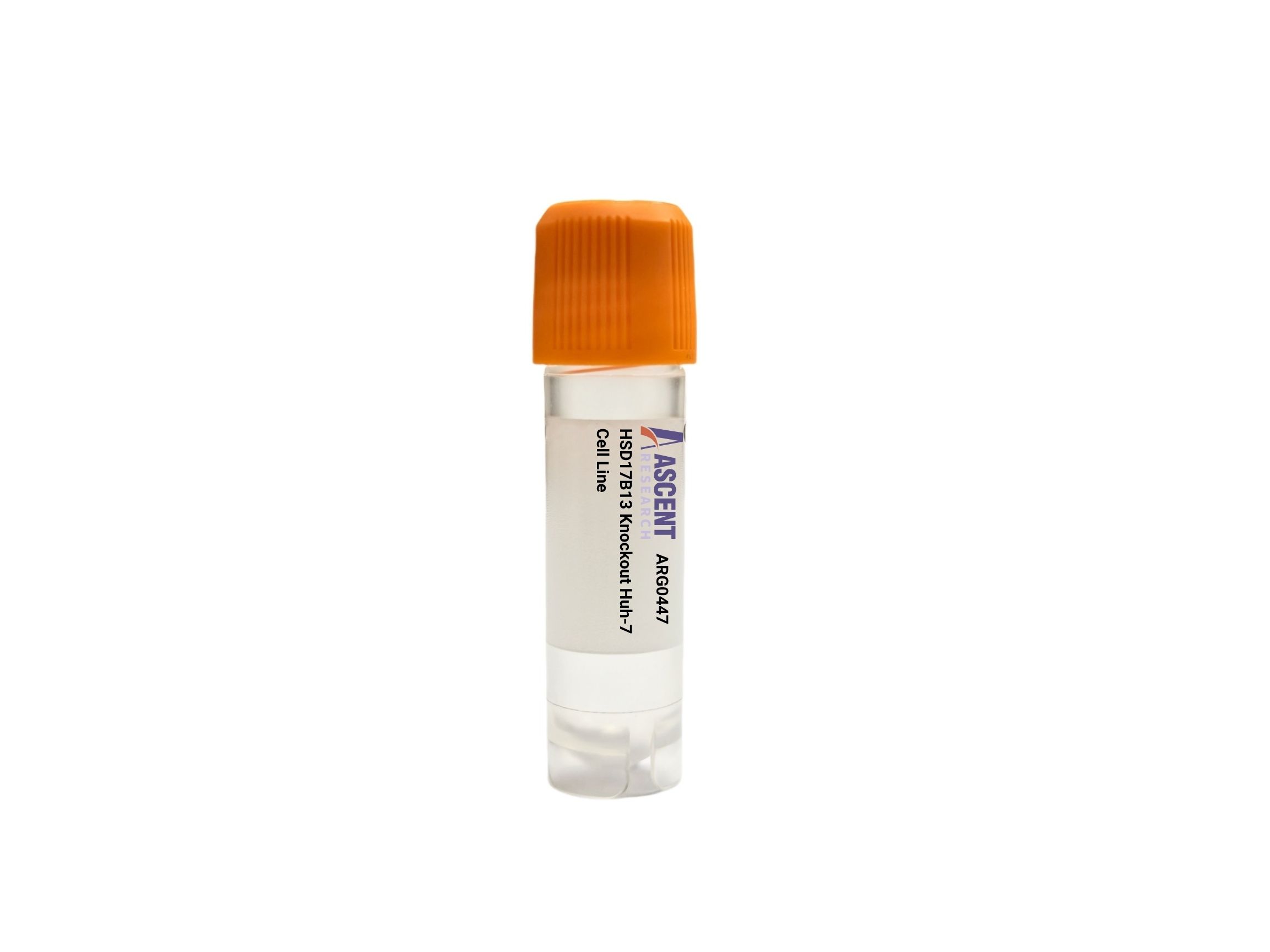
Cat. No. ARG0447

HSD17B13 Knockout Huh-7 Cell Line

  • Product Type:

    Genome-edited Cells

  • Tissue Source:

    Liver

  • Disease:

    Hepatocellular carcinoma

  • Gene Species:

    Homo sapiens (Human)

The HSD17B13 Knockout Huh-7 Cell Line is a CRISPR/Cas9-edited human hepatocellular carcinoma model offering targeted disruption of the HSD17B13 gene. Engineered in the liver-derived Huh-7 cell line, this tool enables investigation of HSD17B13??s role as a lipid droplet-associated enzyme in retinoid and steroid metabolism, linking it to hepatic lipid storage and non-alcoholic fatty liver disease (NAFLD) pathogenesis. Regulated by metabolic factors such as PPAR?? and SREBP-1c, HSD17B13 influences retinoic acid signaling through RAR/RXR and controls expression of lipogenic and inflammatory mediators. Applications include steatosis modeling, drug screening, and CRISPR-based validation using biochemical, imaging, and transcriptomic assays.

Inquire Now

In stock

Ships next business day


Ask a Question

Shipping Info:

Cryopreserved in vials and shipped on dry ice


Disclaimer:

For Research Use Only

  • Characteristics

    Host Cell

    Huh-7

    Morphology

    Epithelial-like

    Age

    57 years

    Sex of Donor

    Male

    Gene Name

    HSD17B13

    Gene Species

    Homo sapiens (Human)

    Gene Identifier

    NCBI Gene ID 345275

  • Culture Conditions

    Temperature

    37°C

    Atmosphere

    5% CO₂

  • Quality Control

    Sterility testing

    Daily monitoring confirms that the cells are free from bacterial, yeast, and fungal contamination.

    Mycoplasma testing

    Negative for mycoplasma through PCR analysis

    Pathogens

    Cells tested negative for HIV-1, HBV, and HCV.

  • Disclaimer

    Intended Use

    This product is intended for laboratory in vitro use only. lt is not intended for diagnostic, therapeutic, or clinical applications.

    Disclaimer

    Ascent Research endeavors to provide accurate and up-to-date product information. However, no warranties or representations are made regarding its completeness or reliability. References to scientific literature and patents are for informational purposes only, and the customer assumes sole responsibility for verifying their accuracy.

    By accepting this product, the customer acknowledges and agrees to assume all risks associated with its receipt, handling, storage, disposal, and use, including compliance with all applicable safety and environmental regulations and precautions. Relevant laws, regulations, and ethical guidelines must be followed in conducting any research, modifications, or derivatives derived from this product.

    This product is provided "AS IS", and except as expressly stated herein, Ascent Research disclaims all other warranties, express or implied. Under no circumstances shall Ascent Research, its affiliates, or representatives be liable for indirect, incidental, consequential, or punitive damages arising from the use of this material. While Ascent Research employs rigorous quality control measures, we shall not be held responsible for damages resulting from misidentification or misinterpretation of the provided materials.

Description

The HSD17B13 Knockout Huh-7 Cell Line is a precisely engineered CRISPR/Cas9-mediated knockout cell model that disrupts the HSD17B13 gene in the well-established human hepatocellular carcinoma Huh-7 cell line. This product provides a powerful loss-of-function platform for investigating the molecular roles of HSD17B13 in hepatic lipid metabolism and disease pathogenesis. By eliminating HSD17B13 expression, researchers can dissect its contribution to retinoid and steroid metabolism, lipid droplet dynamics, and downstream signaling cascades in a liver-relevant cellular context.

Huh-7 cells originate from a well-differentiated human hepatocellular carcinoma and are widely recognized as a robust model for hepatocyte biology. They retain key hepatic functions, including lipid uptake, storage, and secretion, and are amenable to studies of viral pathogenesis, metabolic regulation, and drug metabolism. Their epithelial origin and ability to accumulate lipid droplets under appropriate conditions make them an ideal host for examining the interplay between hepatocarcinogenesis and metabolic stress.

HSD17B13 encodes a lipid droplet-associated enzyme that catalyzes redox reactions involving retinoids and steroids, thereby influencing lipid droplet morphology and cellular retinoic acid levels. Its expression is regulated by key metabolic transcription factors, including PPAR??, SREBP-1c, ChREBP, LXR, and FXR, and is responsive to insulin and glucose. Downstream, HSD17B13 activity modulates retinoic acid signaling through RAR/RXR nuclear receptors, alters droplet-associated proteins such as PLIN2, PLIN3, and CIDEC, and affects the expression of inflammatory cytokines (TNF-??, IL-6) and lipogenic genes (FASN, SCD1). In this network, HSD17B13 functions at a node connecting nutrient-sensing pathways to lipid storage and inflammatory responses.

In the Huh-7 background, HSD17B13 knockout is predicted to impair retinol metabolism, leading to reduced retinoic acid synthesis and attenuated RAR/RXR activation, ultimately dampening the expression of downstream targets like CYP26A1. This disruption also impacts lipid droplet stability and size through altered interactions with perilipin family members and ATGL. The resulting phenotype mimics protective effects observed in NAFLD and NASH models, including diminished steatosis and blunted pro-inflammatory signaling, making this cell line a valuable tool for dissecting disease mechanisms and identifying therapeutic targets.

This knockout cell line is suited for a broad array of experimental applications, including functional studies of HSD17B13 in hepatocyte lipid metabolism, NAFLD/NASH disease modeling, and screening of compounds that modulate steatosis or retinoic acid signaling. Representative workflows include western blotting and RT-qPCR for target validation, oil red O staining and triglyceride quantification for lipid assessment, retinol dehydrogenase activity and retinoic acid reporter assays for pathway analysis, as well as immunofluorescence, RNA-seq, ELISA, and flow cytometry for detailed phenotyping. For further details and technical support, please contact Ascent Research.


Reset Password

    Reach Us Questions? Click Me Here!

    Fill out the form below and a member of our team will contact you shortly!

    *Required field


      Reach Us

      Fill out the form below and a member of our team will contact you shortly!

      *Required field

      Product Inquiry (Optional)