Quick Order Cart

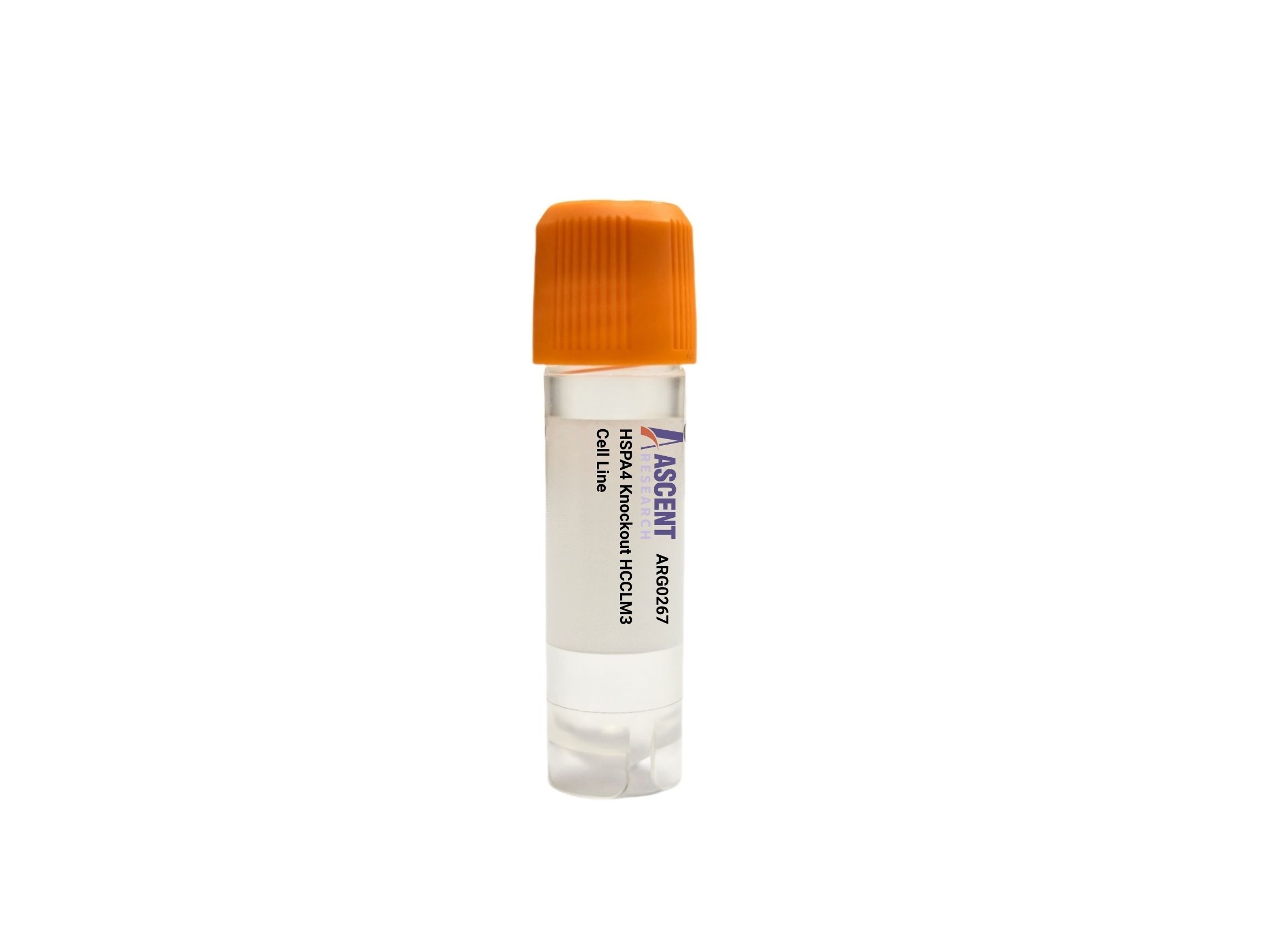
Cat. No. ARG0267

HSPA4 Knockout HCCLM3 Cell Line

  • Product Type:

    Genome-edited Cells

  • Tissue Source:

    Liver

  • Disease:

    Hepatocellular carcinoma

  • Gene Species:

    Homo sapiens (Human)

The HSPA4 Knockout HCCLM3 Cell Line provides a CRISPR/Cas9-mediated loss-of-function of the HSP70 chaperone HSPA4 in the highly metastatic HCCLM3 liver cancer model. HSPA4, regulated by HSF1, interacts with HSP90 and co-chaperones such as HOP and CHIP/STUB1 to manage protein folding and clearance. This knockout facilitates investigations into proteotoxic stress, tumor cell migration, and MAPK pathway activity (RAS-RAF-MEK-ERK) in hepatocellular carcinoma. Applications include viability and invasion assays, and testing inhibitors targeting heat shock or chaperone systems.

Inquire Now

In stock

Ships next business day


Ask a Question

Shipping Info:

Cryopreserved in vials and shipped on dry ice


Disclaimer:

For Research Use Only

  • Characteristics

    Host Cell

    HCCLM3

    Age

    39 years

    Gene Name

    HSPA4

    Gene Species

    Homo sapiens (Human)

    Gene Identifier

    NCBI Gene ID 3308

  • Culture Conditions

    Temperature

    37°C

    Atmosphere

    5% CO₂

  • Quality Control

    Sterility testing

    Daily monitoring confirms that the cells are free from bacterial, yeast, and fungal contamination.

    Mycoplasma testing

    Negative for mycoplasma through PCR analysis

    Pathogens

    Cells tested negative for HIV-1, HBV, and HCV.

  • Disclaimer

    Intended Use

    This product is intended for laboratory in vitro use only. lt is not intended for diagnostic, therapeutic, or clinical applications.

    Disclaimer

    Ascent Research endeavors to provide accurate and up-to-date product information. However, no warranties or representations are made regarding its completeness or reliability. References to scientific literature and patents are for informational purposes only, and the customer assumes sole responsibility for verifying their accuracy.

    By accepting this product, the customer acknowledges and agrees to assume all risks associated with its receipt, handling, storage, disposal, and use, including compliance with all applicable safety and environmental regulations and precautions. Relevant laws, regulations, and ethical guidelines must be followed in conducting any research, modifications, or derivatives derived from this product.

    This product is provided "AS IS", and except as expressly stated herein, Ascent Research disclaims all other warranties, express or implied. Under no circumstances shall Ascent Research, its affiliates, or representatives be liable for indirect, incidental, consequential, or punitive damages arising from the use of this material. While Ascent Research employs rigorous quality control measures, we shall not be held responsible for damages resulting from misidentification or misinterpretation of the provided materials.

Description

The HSPA4 Knockout HCCLM3 Cell Line is a CRISPR/Cas9-edited human liver cancer model featuring targeted disruption of the HSPA4 gene (encoding an HSP70 family chaperone) in the HCCLM3 hepatocellular carcinoma cell background. This cell line provides a stable loss-of-function system for investigating HSP70-mediated processes without pharmacological inhibition. The knockout is achieved using CRISPR/Cas9 technology to eliminate functional HSPA4 protein expression.

HCCLM3 is a highly metastatic variant derived from the MHCC97H cell line, originally established from a Chinese patient with HBV-related hepatocellular carcinoma. This cell line is characterized by strong invasive and migratory capacity, making it a well-suited model for metastasis research. HCCLM3 cells harbor mutations in TP53 and other oncogenic pathways, providing a relevant genetic background for studying liver cancer progression.

HSPA4 encodes a molecular chaperone central to protein folding, stress responses, and aggregate clearance. Transcriptionally activated by HSF1 in response to hyperthermia, oxidative stress, or heavy metals, HSPA4 cooperates with co-chaperones such as HOP, HSP40/DNAJ, BAG proteins, and the ubiquitin ligase CHIP/STUB1, and works alongside HSP90 to fold client proteins including kinases and steroid receptors. It also contributes to ER-associated degradation and antigen processing pathways. Disruption of HSPA4 impairs proteostasis and sensitizes cells to proteotoxic stress.

In the HCCLM3 background, loss of HSPA4 is anticipated to disrupt protein homeostasis, particularly under tumor microenvironmental stress. This model enables dissection of how chaperone dysfunction affects hepatocellular carcinoma behaviors such as proliferation, migration, and survival. Additionally, because HSPA4 interfaces with the MAPK cascade (RAS-RAF-MEK-ERK), the knockout may alter oncogenic signaling, making it a valuable tool for studying crosstalk between stress pathways and metastasis.

Typical applications include cell viability assays (MTT/CCK-8) under stress conditions, Transwell migration/invasion assays, Annexin V apoptosis detection, and co-immunoprecipitation to examine altered interactomes of HSP70 partners. Transcriptomic analysis via RNA-seq can reveal global expression changes. The cell line also supports targeted inhibitor testing against heat shock or MAPK components. For technical inquiries, please contact Ascent Research.


Reset Password

    Reach Us Questions? Click Me Here!

    Fill out the form below and a member of our team will contact you shortly!

    *Required field


      Reach Us

      Fill out the form below and a member of our team will contact you shortly!

      *Required field

      Product Inquiry (Optional)