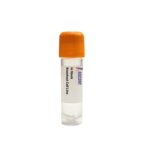
Quick Order Cart

Cat. No. ARG43911

Hspa5 Knockout RAW 264.7 Cell Line

  • Product Type:

    In Stock Cell Lines

  • Species:

    Mus musculus (Mouse)

  • Tissue Source:

    Ascites

  • Disease:

    Leukemia

The Hspa5 Knockout RAW 264.7 Cell Line is a CRISPR/Cas9-edited mouse macrophage model with disrupted Hspa5, encoding the ER chaperone BiP. Derived from BALB/c RAW 264.7 cells, it retains phagocytic and immune functions. Loss of Hspa5 abrogates its interaction with UPR sensors IRE1??, PERK, and ATF6, dysregulating ER stress and inflammatory signaling. This knockout line enables dissection of UPR-dependent cytokine production, apoptosis, and macrophage polarization. It suits studies in cancer, neurodegeneration, and inflammatory diseases using assays like XBP1 splicing and phospho-eIF2?? western blotting. It is a robust tool for investigating BiP-dependent pathways in innate immunity.

Inquire Now

In stock

Ships next business day


Ask a Question

Shipping Info:

Cryopreserved in vials and shipped on dry ice


Disclaimer:

For Research Use Only

  • Characteristics

    Host Cell

    RAW 264.7

    Sex of Donor

    Male

    Age

    Adult

    Derived From Site

    In situ; Ascites

    Gene Name

    Hspa5

    Gene Identifier

    NCBI Gene ID 14828

    Growth Mode

    Adherent

    Storage

    Liquid nitrogen (LN2)

  • Culture Conditions

    Temperature

    37°C

    Atmosphere

    5% CO₂

  • Quality Control

    Sterility testing

    The bacterial, yeast, and fungi are not detected in these cells by daily monitor.

    Mycoplasma testing

    Negative for mycoplasma through PCR analysis

  • Disclaimer

    Intended Use

    This product is intended for laboratory in vitro use only. lt is not intended for diagnostic, therapeutic, or clinical applications.

    Disclaimer

    Ascent Research endeavors to provide accurate and up-to-date product information. However, no warranties or representations are made regarding its completeness or reliability. References to scientific literature and patents are for informational purposes only, and the customer assumes sole responsibility for verifying their accuracy.

    By accepting this product, the customer acknowledges and agrees to assume all risks associated with its receipt, handling, storage, disposal, and use, including compliance with all applicable safety and environmental regulations and precautions. Relevant laws, regulations, and ethical guidelines must be followed in conducting any research, modifications, or derivatives derived from this product.

    This product is provided "AS IS", and except as expressly stated herein, Ascent Research disclaims all other warranties, express or implied. Under no circumstances shall Ascent Research, its affiliates, or representatives be liable for indirect, incidental, consequential, or punitive damages arising from the use of this material. While Ascent Research employs rigorous quality control measures, we shall not be held responsible for damages resulting from misidentification or misinterpretation of the provided materials.

Description

The Hspa5 Knockout RAW 264.7 Cell Line is a CRISPR/Cas9-edited mouse macrophage model with targeted disruption of the Hspa5 gene encoding the ER chaperone BiP/GRP78. This loss-of-function cell line facilitates dissection of Hspa5 roles in ER proteostasis, UPR signaling, and downstream stress responses. Derived from the well-characterized RAW 264.7 host, it provides a stable platform for reproducible experiments focused on the interplay between ER stress and macrophage function in innate immunity and disease.

The RAW 264.7 host cell line originates from BALB/c mice and was immortalized by Abelson murine leukemia virus. It retains macrophage hallmarks such as phagocytic activity, antigen presentation, and secretion of cytokines including TNF-?? and IL-6. Its well-documented responses to immune stimuli and genetic tractability render it an ideal platform for exploring how ER stress intersects with innate immune functions in a myeloid context.

Hspa5/BiP is a central ER chaperone that binds to IRE1??, PERK, and ATF6 under basal conditions, keeping the UPR inactive. ER stressors??tunicamycin, thapsigargin, hypoxia, glucose deprivation??promote BiP dissociation to engage misfolded proteins, triggering sensor activation. IRE1?? splices Xbp1 mRNA to generate XBP1s; PERK phosphorylates eIF2?? to induce ATF4; ATF6 is cleaved to an active transcription factor. These effectors upregulate ERAD components (SEL1L, HRD1) and, under severe stress, CHOP. BiP also modulates NF-??B signaling and cytokine production (TNF-??, IL-6), linking proteostasis to inflammation.

In macrophages, Hspa5 knockout ablates a critical control point of the UPR, disrupting the balance between adaptation and apoptosis. RAW 264.7 cells lacking BiP offer a clean system to study how unmitigated ER stress alters cytokine secretion, phagocytosis, and polarization, with implications for chronic inflammation and tumor-associated macrophage biology. This model allows dissection of individual UPR branch contributions??e.g., XBP1s and ATF4??to inflammatory gene programs, revealing the necessity of Hspa5 for proper innate immune responses and cellular viability under proteotoxic challenge.

This knockout line is suited for ER stress induction assays using pharmacological agents, followed by Western blot for BiP, CHOP, and phospho-eIF2??, XBP1 splicing analysis, apoptosis detection, and cytokine profiling. Applications span cancer biology, neurodegenerative disease, and diabetes research, elucidating how macrophage ER stress influences disease progression. It also supports drug screening to identify UPR modulators. For further details, please contact Ascent Research.


Reset Password

    Reach Us Questions? Click Me Here!

    Fill out the form below and a member of our team will contact you shortly!

    *Required field


      Reach Us

      Fill out the form below and a member of our team will contact you shortly!

      *Required field

      Product Inquiry (Optional)