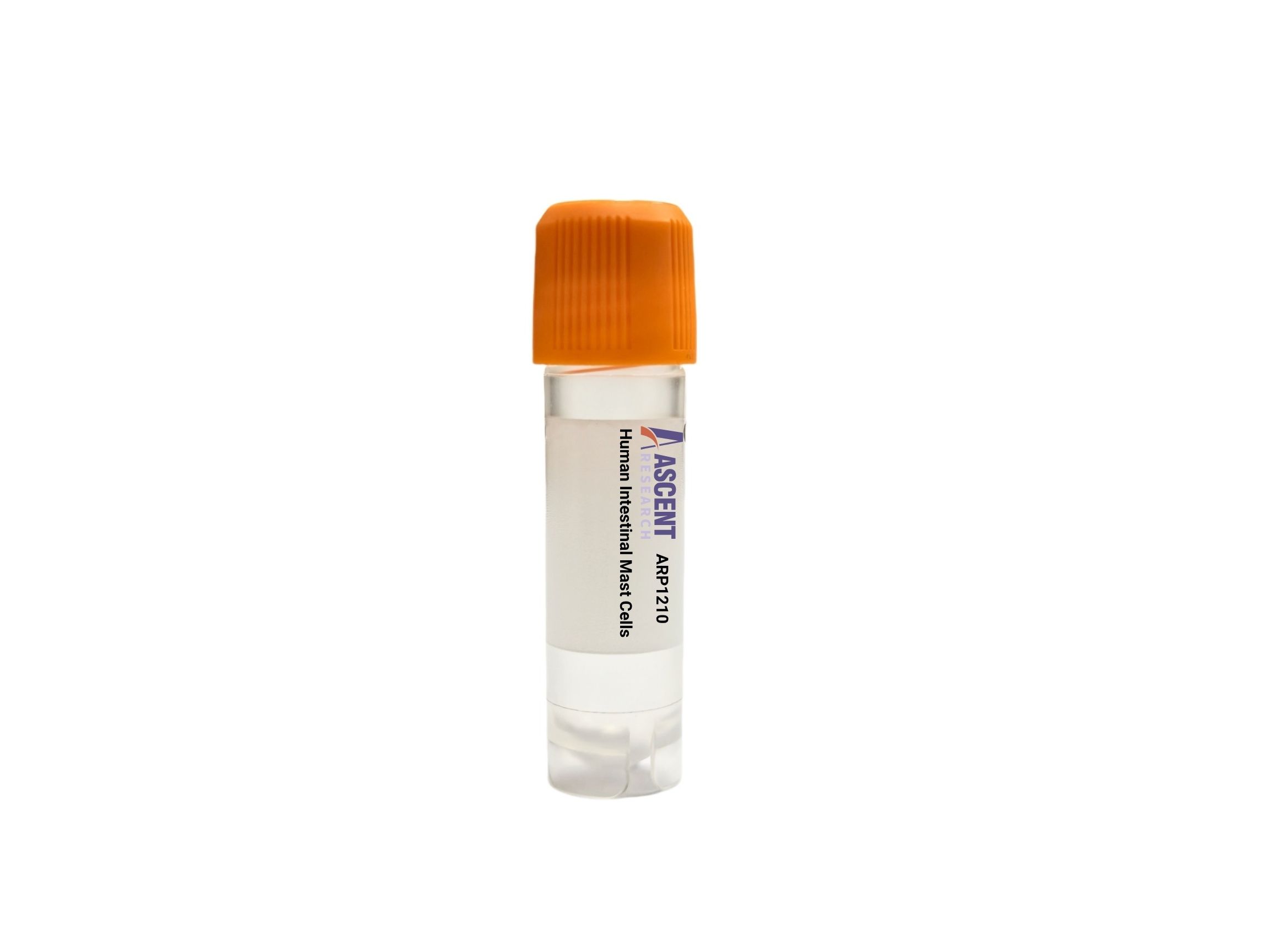
Human intestinal mast cells are primary cells isolated from intestinal tissue within the digestive system. These cells are prepared from native tissue and cryopreserved at an early passage stage to help retain physiologically relevant characteristics for in vitro studies.
The intestine is central to digestion, nutrient absorption, and mucosal barrier defense. Within this environment, mast cells support local immune balance by sensing luminal and tissue-derived signals and responding rapidly to perturbations that affect epithelial integrity and mucosal homeostasis.
Intestinal mast cells are key effector cells in immediate hypersensitivity and allergic responses. They release histamine, proteases, cytokines, and lipid mediators that influence vascular permeability, epithelial function, leukocyte recruitment, and communication with neighboring immune and stromal cells. In the intestinal mucosa, they contribute to immune surveillance while also participating in inflammatory regulation during infection or tissue stress.
These cells are well suited for studies of intestinal mucosal immunity, allergy and hypersensitivity, inflammation and cytokine signaling, and host-pathogen interactions. For additional product details or donor information, please contact Ascent Research.