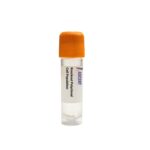
This product is a CRISPR/Cas9-edited polyclonal knockout cell population targeting the IFIT2 gene in the A-549 human lung adenocarcinoma cell line. The polyclonal knockout pool contains heterogeneous IFIT2 disruptions and has not undergone single-cell cloning, providing a representative loss-of-function model while retaining genetic diversity of the parental line.
The A-549 cell line was established from a lung tumor of a 58-year-old Caucasian male and serves as a model of lung alveolar epithelial carcinoma. It is extensively employed in cancer, immunology, and virology research due to its type II alveolar characteristics, viral permissiveness, and strong interferon responsiveness.
IFIT2 is an interferon-stimulated gene mediating antiviral innate immunity. It is transcriptionally upregulated by type I interferons (alpha, beta, gamma) through the JAK-STAT pathway: binding to IFNAR1/IFNAR2 activates JAK1 and TYK2, which phosphorylate STAT1 and STAT2, enabling complex formation with IRF9 to promote ISRE-driven expression. Additionally, viral dsRNA sensing by RIG-I and MDA5 activates IRF3 and IRF7 to induce IFIT2. The protein inhibits viral replication by binding the eIF3 complex, blocking viral mRNA translation, and interacting with viral proteins. IFIT2 also regulates apoptosis via caspase association (including BAX) and cell migration through actin cytoskeleton reorganization, involving interactions with tubulin and IFIT family members IFIT1 and IFIT3.
In the A-549 lung carcinoma context, CRISPR/Cas9-mediated disruption of IFIT2 provides a powerful tool to explore the intersection of interferon signaling, viral defense, and cancer cell biology. Given that A-549 cells retain functional innate immune pathways and express relevant viral sensors, this knockout model allows dissection of IFIT2??s specific contribution to antiviral innate immunity within a malignant epithelial background. Furthermore, the known roles of IFIT2 in apoptosis regulation and cell migration are particularly pertinent to lung cancer, where evasion of apoptosis and metastatic spread are hallmarks. Consequently, this model supports investigations into how interferon-stimulated genes modulate tumor cell survival and motility.
This polyclonal IFIT2 knockout A-549 cell population is well-suited for antiviral innate immunity research, interferon signaling studies, cancer biology investigations, and apoptosis/migration assays. Typical experimental approaches include RT-qPCR and Western blot for IFIT2 expression, interferon stimulation and viral infection assays, Annexin V apoptosis detection, scratch wound migration tests, immunofluorescence localization, and RNA-seq transcriptomics. For additional product information or to request a quote, contact Ascent Research.