Quick Order Cart

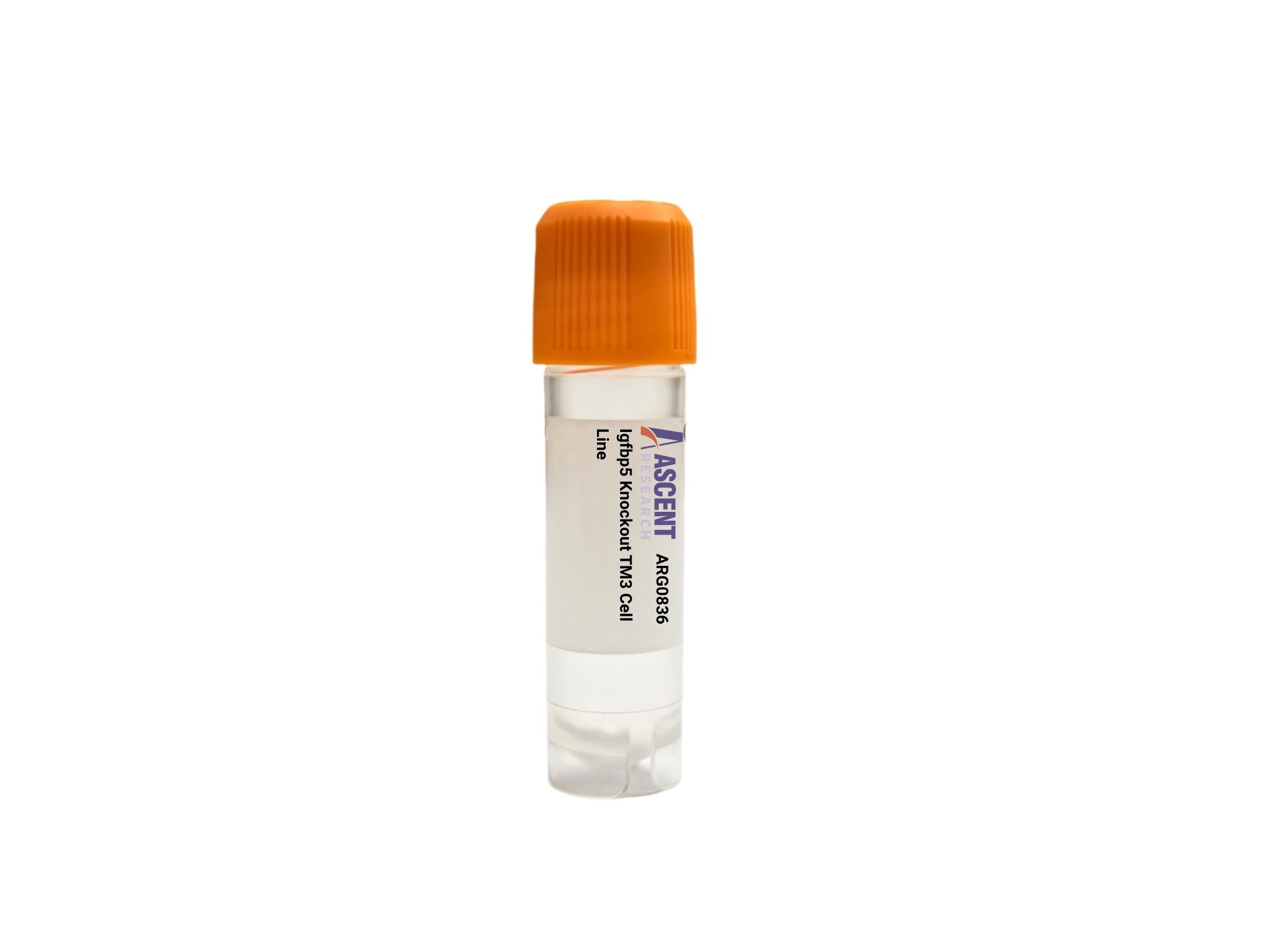
Cat. No. ARG0836

Igfbp5 Knockout TM3 Cell Line

  • Product Type:

    Genome-edited Cells

  • Tissue Source:

    Testis

  • Gene Species:

    Mus musculus (Mouse)

The Igfbp5 Knockout TM3 Cell Line is a CRISPR/Cas9-edited knockout cell line from Mus musculus, providing a loss-of-function model for insulin-like growth factor binding protein 5 in Leydig cells. IGFBP5 regulates IGF bioavailability and interacts with fibronectin, affecting PI3K-AKT and MAPK pathways, apoptosis (BAX/BCL2, CASP3), and cell adhesion. This model is suited for investigating testosterone synthesis, reproductive toxicity, and fertility. Standard assays include Western blotting for STAR and CYP11A1, ELISA for testosterone, cAMP quantification, and apoptosis/proliferation analyses via TUNEL or MTT.

Inquire Now

In stock

Ships next business day


Ask a Question

Shipping Info:

Cryopreserved in vials and shipped on dry ice


Disclaimer:

For Research Use Only

  • Characteristics

    Host Cell

    TM3

    Age

    11-13 days

    Sex of Donor

    Male

    Gene Name

    Igfbp5

    Gene Species

    Mus musculus (Mouse)

    Gene Identifier

    NCBI Gene ID 16011

  • Culture Conditions

    Temperature

    37°C

    Atmosphere

    5% CO₂

  • Quality Control

    Sterility testing

    Daily monitoring confirms that the cells are free from bacterial, yeast, and fungal contamination.

    Mycoplasma testing

    Negative for mycoplasma through PCR analysis

    Pathogens

    Cells tested negative for HIV-1, HBV, and HCV.

  • Disclaimer

    Intended Use

    This product is intended for laboratory in vitro use only. lt is not intended for diagnostic, therapeutic, or clinical applications.

    Disclaimer

    Ascent Research endeavors to provide accurate and up-to-date product information. However, no warranties or representations are made regarding its completeness or reliability. References to scientific literature and patents are for informational purposes only, and the customer assumes sole responsibility for verifying their accuracy.

    By accepting this product, the customer acknowledges and agrees to assume all risks associated with its receipt, handling, storage, disposal, and use, including compliance with all applicable safety and environmental regulations and precautions. Relevant laws, regulations, and ethical guidelines must be followed in conducting any research, modifications, or derivatives derived from this product.

    This product is provided "AS IS", and except as expressly stated herein, Ascent Research disclaims all other warranties, express or implied. Under no circumstances shall Ascent Research, its affiliates, or representatives be liable for indirect, incidental, consequential, or punitive damages arising from the use of this material. While Ascent Research employs rigorous quality control measures, we shall not be held responsible for damages resulting from misidentification or misinterpretation of the provided materials.

Description

The Igfbp5 Knockout TM3 Cell Line is a CRISPR/Cas9-edited knockout cell line derived from Mus musculus, enabling stable disruption of the insulin-like growth factor binding protein 5 (Igfbp5) gene in an immortalized Leydig cell background. This model facilitates loss-of-function studies of IGFBP5, which modulates both IGF-dependent and IGF-independent signaling pathways critical for cell growth, differentiation, and apoptosis.

The parental TM3 cell line originates from BALB/c mouse testis and serves as a well-characterized Leydig cell model. These cells retain key steroidogenic functions, including androgen production and testosterone synthesis in response to luteinizing hormone (LH) stimulation, making them ideal for studying testicular interstitial cell biology and reproductive endocrinology.

IGFBP5 regulates insulin-like growth factor (IGF) bioavailability by binding IGF1 and IGF2, thereby controlling IGF1R activation. It also exerts IGF-independent effects through interactions with extracellular matrix proteins such as fibronectin, laminin, and integrins. Upstream regulators include TP53, progesterone, retinoic acid, cAMP, androgens, and glucocorticoids. Downstream, IGFBP5 influences the PI3K-AKT and MAPK pathways, modulates the BAX/BCL2 balance, activates CASP3, induces CDKN1A, and inhibits IGF1R signaling, thereby integrating multiple signals that govern cell survival and proliferation.

In TM3 Leydig cells, knockout of Igfbp5 likely enhances IGF1-mediated activation of PI3K-AKT and MAPK cascades, potentially increasing steroidogenic gene expression (e.g., STAR, CYP11A1) and testosterone output. Concurrent loss of pro-apoptotic IGFBP5 functions??such as caspase activation and CDKN1A induction??may shift cells toward proliferation, offering a model to dissect IGF-dependent versus -independent regulation of Leydig cell fate.

This cell line is applicable to reproductive toxicity screening, apoptosis studies, and drug testing for agents affecting testosterone synthesis. Representative assays include Western blotting (IGFBP5, STAR, CYP11A1), RT-qPCR (Igfbp5, steroidogenic genes), ELISA (testosterone), cAMP assays, TUNEL, BrdU/MTT proliferation assays, immunofluorescence, and RNA-seq. For further information, contact Ascent Research.


Reset Password

    Reach Us Questions? Click Me Here!

    Fill out the form below and a member of our team will contact you shortly!

    *Required field


      Reach Us

      Fill out the form below and a member of our team will contact you shortly!

      *Required field

      Product Inquiry (Optional)