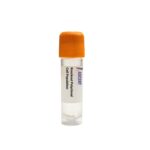
The IKBKB Knockout 786-O Polyclonal Cells are a genetically disrupted polyclonal cell population generated by CRISPR/Cas9-mediated targeting of the IKBKB locus in the human 786-O renal cell carcinoma line. This polyclonal knockout model provides a heterogeneous pool of edited cells, enabling robust, population-level loss-of-function studies of IKBKB-dependent signaling without single-cell clonal selection.
The parental 786-O cell line is a well-characterized human renal adenocarcinoma line derived from a clear cell renal cell carcinoma. These cells exhibit an epithelial morphology and are widely employed as a model system to investigate the molecular mechanisms underlying kidney cancer biology, including oncogenic signaling, tumor microenvironment interactions, and therapeutic resistance.
IKBKB encodes IKK??, a critical serine kinase in the canonical NF-??B pathway. Upon stimulation by upstream activators such as TNF??, IL-1??, or Toll-like receptor ligands, IKK?? forms a complex with IKBKG (NEMO) and CHUK (IKK??) to phosphorylate NFKBIA (I??B??) at specific serine residues. This phosphorylation marks I??B?? for ubiquitin-dependent proteasomal degradation, liberating RELA (p65)-NFKB1 (p50) heterodimers to translocate to the nucleus. Nuclear NF-??B dimers drive transcription of downstream targets including IL6, IL8, and BCL2L1, orchestrating inflammatory, anti-apoptotic, and proliferative gene programs.
In the 786-O renal carcinoma background, constitutive or induced NF-??B activity supports tumor cell survival and growth. Disruption of IKBKB in these cells ablates canonical NF-??B signaling, as evidenced by abrogated I??B?? phosphorylation and diminished target gene induction. This knockout model thereby allows dissection of IKK??-dependent mechanisms that sustain renal cell carcinoma phenotypes, including resistance to apoptosis and cytokine production, and can reveal vulnerabilities to therapeutic inhibitors targeting the IKK complex.
Researchers can apply this polyclonal IKBKB knockout model in a variety of functional assays, including Western blotting for phospho-I??B?? and total I??B??, NF-??B luciferase reporter assays, RT-qPCR quantification of IL6 and IL8 transcripts, cell proliferation and apoptosis analyses, and phospho-signaling profiling by immunoblotting. These applications support investigations into NF-??B biology in clear cell renal cell carcinoma, validation of IKK?? as a drug target, and functional genomic screens probing inflammatory and oncogenic pathways. For technical details and ordering information, please contact Ascent Research.