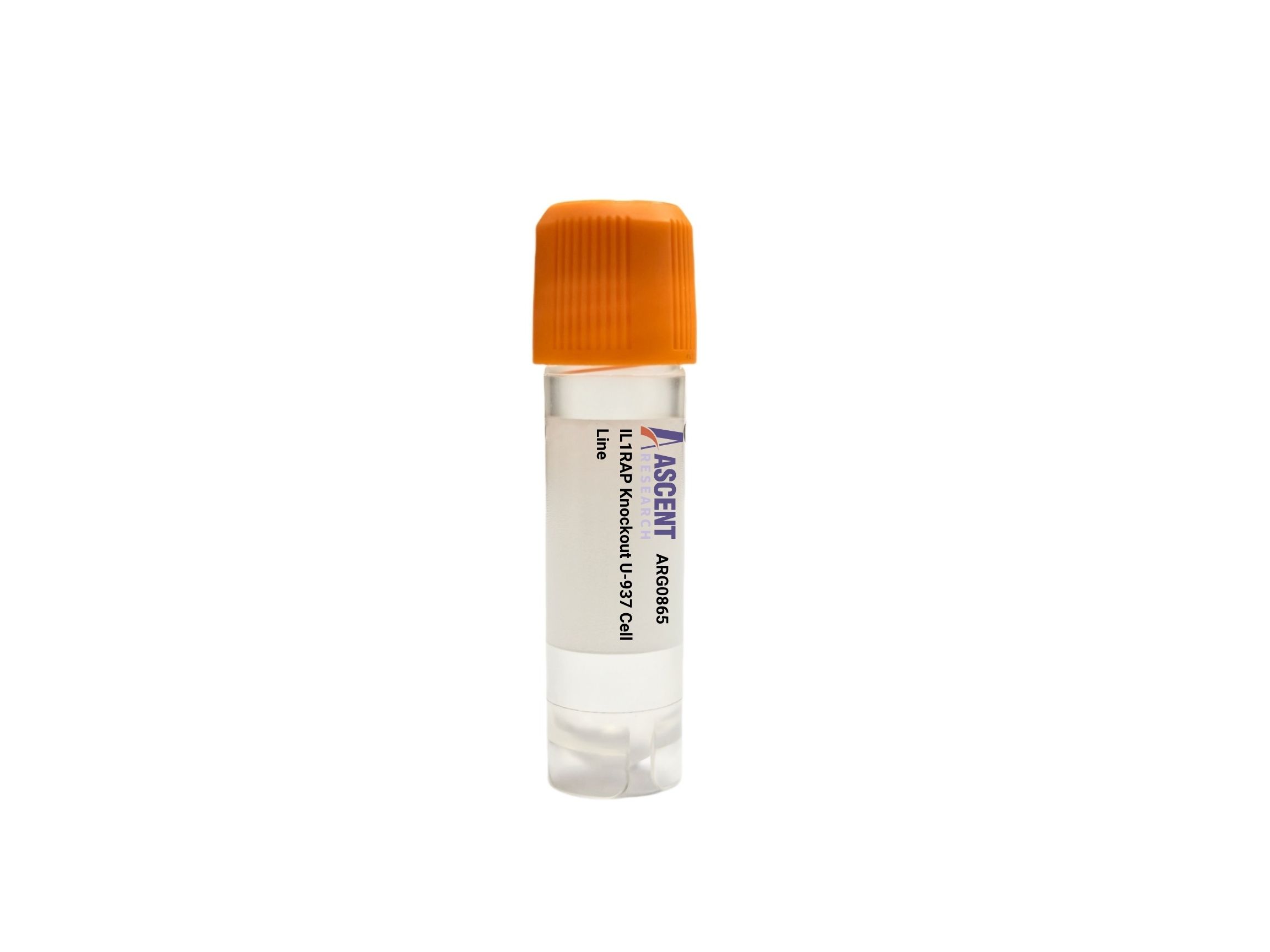
The IL1RAP Knockout U-937 Cell Line is a CRISPR/Cas9-edited human knockout cell line in which IL1RAP gene disruption eliminates expression of the interleukin-1 receptor accessory protein. Derived from the parental U-937 line, this suspension cell model provides stable loss of IL1RAP function, preventing assembly of IL-1R1/IL1RAP and ST2/IL1RAP complexes and abrogating downstream signaling.
U-937 is a human monocyte-like histiocytic lymphoma cell line originally isolated from a pleural effusion. It serves as a widely used model for monocyte and macrophage biology, characterized by phagocytic activity, cytokine production, and phorbol ester-induced differentiation. This suspension cell line enables versatile in vitro studies of immune signaling, inflammation, and hematopoietic malignancy.
IL1RAP functions as an obligate coreceptor that pairs with IL-1R1 or ST2 (IL1RL1) to mediate signaling by IL-1??, IL-1??, and IL-33. Ligand binding recruits MYD88, IRAK4, IRAK1, and TRAF6, forming the Myddosome complex. IRAK1 and TRAF6 subsequently activate the IKK complex (IKBKB, CHUK, IKBKG)?CNF-??B axis and the p38 MAPK (MAPK14)?CJNK (MAPK8) cascades. Downstream, NF-??B and MAPK pathways drive transcription of pro-inflammatory genes such as IL6, TNFA, IL8, and CXCL8. TOLLIP modulates Myddosome dynamics. CRISPR/Cas9-mediated knockout of IL1RAP prohibits ligand-induced recruitment of MYD88 and phosphorylation of IRAK1/4, thereby halting NF-??B and MAPK activation and subsequent cytokine/chemokine production.
In the U-937 monocytic background, IL1RAP knockout enables dissection of IL-1/IL-33 signaling roles in inflammatory responses and leukemic processes. The model is valuable for investigating pathological mechanisms in acute and chronic myeloid leukemias, myelodysplastic syndromes, autoinflammatory disorders, and rheumatoid arthritis. It also supports IL1RAP target validation and screening of antagonists, and studies of monocyte functions such as phagocytosis and differentiation within tumor microenvironments.
Researchers can employ this line in functional assays including cytokine ELISA (IL-6, TNF-??), phospho-NF-??B western blotting, NF-??B reporter assays, and RT-qPCR for inflammatory genes. Flow cytometry and viability/apoptosis assays permit exploration of IL1RAP??s role in cell survival. Co-culture systems can assess monocytic contributions to tumor immunity. For further details, please contact Ascent Research.