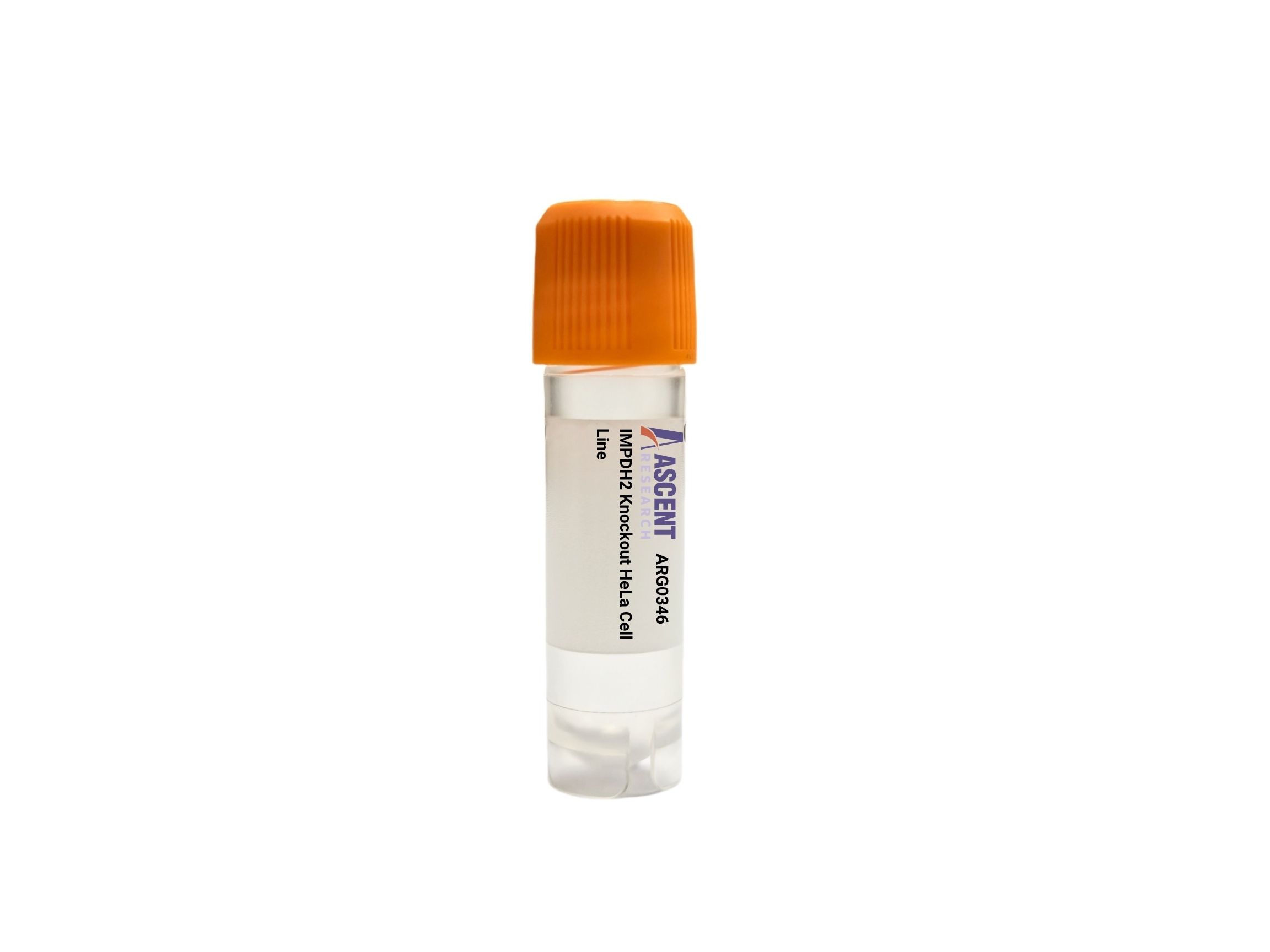
The IMPDH2 Knockout HeLa Cell Line is a CRISPR/Cas9-edited human cell line in which the IMPDH2 gene has been disrupted, creating a loss-of-function model for studying de novo guanine nucleotide biosynthesis. Derived from the widely used HeLa cervical adenocarcinoma cell line, this product is provided as a knockout cell line suitable for a range of functional assays. The gene-editing approach uses CRISPR/Cas9 technology to introduce targeted modifications that abolish IMPDH2 protein expression, enabling researchers to investigate the consequences of impaired guanine nucleotide synthesis in a human cancer cell context. This model supports direct interrogation of IMPDH2-dependent pathways without the need for transient gene silencing or pharmacological inhibition.
The parental HeLa cell line is an established human cervical epithelial carcinoma line, originally isolated from a patient with adenocarcinoma. HeLa cells are positive for human papillomavirus type 18 (HPV18), and the viral oncoproteins E6 and E7 inactivate the tumor suppressors p53 and Rb, respectively. This genetic background results in deregulated cell cycle progression and high proliferative capacity, making HeLa cells a robust model for cancer biology and signaling studies. The immortalized and rapidly dividing nature of these cells renders them particularly dependent on nucleotide biosynthesis pathways, providing a sensitive background for assessing the impact of IMPDH2 disruption.
IMPDH2 catalyses the rate-limiting step in de novo guanine nucleotide synthesis, converting inosine monophosphate (IMP) to xanthosine monophosphate (XMP) with the reduction of NAD+ as a cofactor. This enzyme functions as a critical gatekeeper for the production of guanine nucleotides, including GMP, GDP, and GTP, which are essential for RNA and DNA synthesis and cell cycle progression. IMPDH2 activity is subject to allosteric feedback inhibition by GMP and is transcriptionally regulated by the MYC oncoprotein, linking its expression to growth factor signalling and mTORC1 activity. In normal physiology, IMPDH2 ensures balanced nucleotide pools; its disruption leads to depletion of GTP and dGTP, impairing nucleic acid polymerization and limiting cell proliferation, particularly in situations of high metabolic demand.
In the HeLa cell context, the IMPDH2 knockout is expected to profoundly affect cell fitness due to the cells’ rapid division rate and reliance on robust nucleotide biosynthesis. The loss of guanine nucleotide production likely induces cell cycle arrest, as GTP is required for multiple ATP/GTP-dependent signalling events and as a substrate for DNA replication. The HPV-driven transformation, with compromised p53 and Rb checkpoints, may further sensitize these cells to nucleotide deprivation, potentially leading to apoptotic responses. This knockout model thus serves as a powerful tool to dissect the interplay between oncogenic signalling and metabolic liabilities, and to evaluate the therapeutic potential of IMPDH inhibition in cervical and other HPV-associated cancers.
This cell line is designed for investigators studying cancer nucleotide metabolism, validating IMPDH inhibitors like mycophenolic acid, or examining the role of guanine nucleotides in cell cycle regulation and immunosuppression. Typical experimental applications include Western blotting and RT-qPCR for confirming target knockdown, HPLC-based nucleotide quantification to measure changes in GTP/dGTP pools, and functional assays such as MTS/BrdU proliferation, colony formation, and flow cytometric analysis of cell cycle and apoptosis. Sensitivity to allosteric inhibitors and rescue experiments with exogenous guanosine can be performed to confirm on-target effects. For further information, please contact Ascent Research.