Quick Order Cart

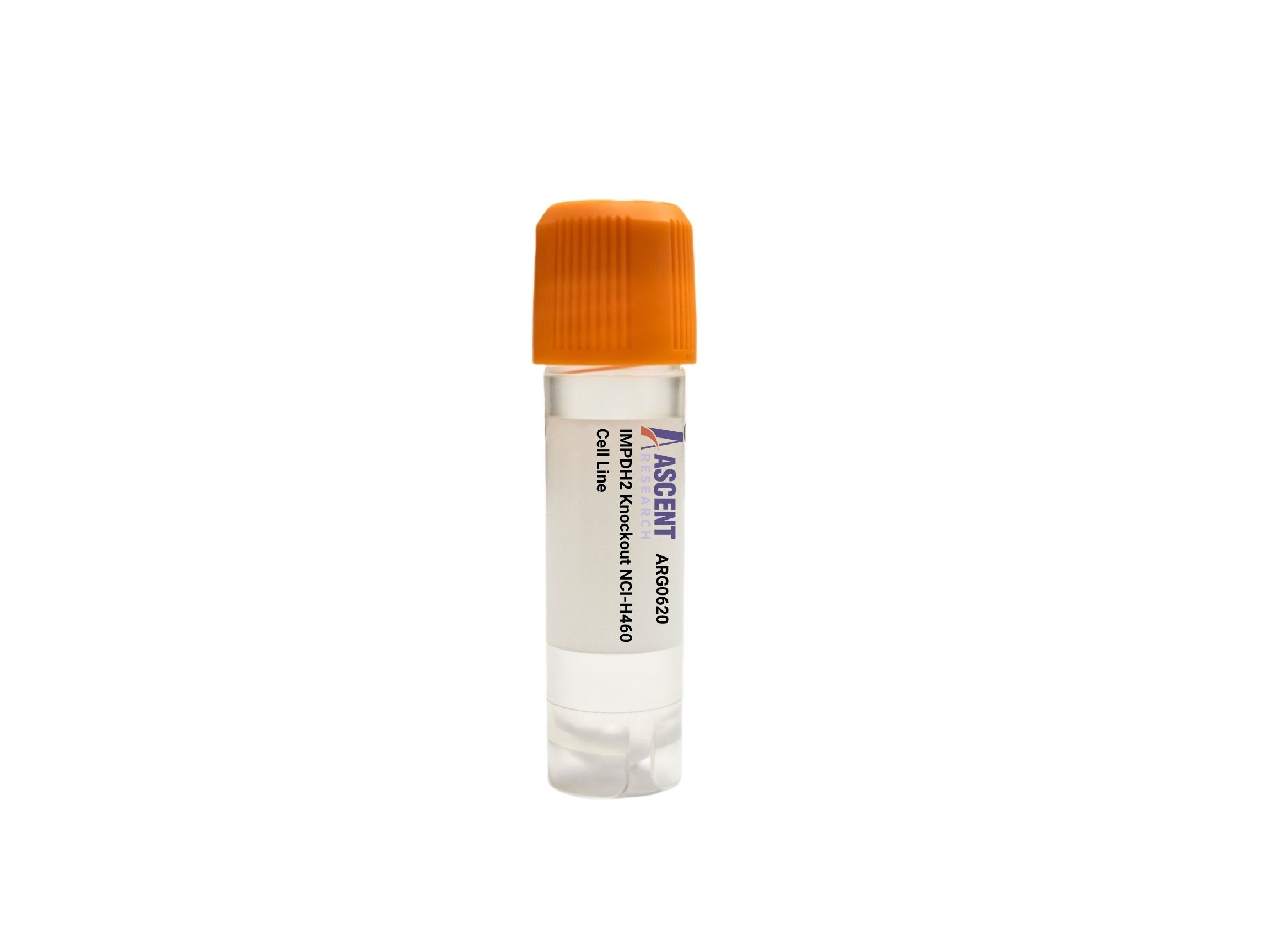
Cat. No. ARG0620

IMPDH2 Knockout NCI-H460 Cell Line

  • Product Type:

    Genome-edited Cells

  • Tissue Source:

    Lung

  • Disease:

    Carcinoma

  • Gene Species:

    Homo sapiens (Human)

The IMPDH2 Knockout NCI-H460 Cell Line is a CRISPR/Cas9-edited human lung carcinoma model with disrupted IMPDH2, the rate-limiting enzyme of de novo guanine nucleotide biosynthesis. Upregulated by MYC and mTORC1, IMPDH2 generates GTP and dGTP essential for RAS GTPases and nucleic acid synthesis, linking growth signaling to proliferation. In the NCI-H460 NSCLC background, IMPDH2 knockout depletes guanine nucleotides, inhibiting tumor cell proliferation and supporting studies in purine metabolism, IMPDH inhibitor validation, and antimetabolite screening. Key applications include viability assays, HPLC nucleotide quantification, flow cytometry, and RNA-seq.

Inquire Now

In stock

Ships next business day


Ask a Question

Shipping Info:

Cryopreserved in vials and shipped on dry ice


Disclaimer:

For Research Use Only

  • Characteristics

    Host Cell

    NCI-H460

    Morphology

    Epithelial-like

    Age

    Unknown

    Sex of Donor

    Male

    Gene Name

    IMPDH2

    Gene Species

    Homo sapiens (Human)

    Gene Identifier

    NCBI Gene ID 3615

  • Culture Conditions

    Temperature

    37°C

    Atmosphere

    5% CO₂

  • Quality Control

    Sterility testing

    Daily monitoring confirms that the cells are free from bacterial, yeast, and fungal contamination.

    Mycoplasma testing

    Negative for mycoplasma through PCR analysis

    Pathogens

    Cells tested negative for HIV-1, HBV, and HCV.

  • Disclaimer

    Intended Use

    This product is intended for laboratory in vitro use only. lt is not intended for diagnostic, therapeutic, or clinical applications.

    Disclaimer

    Ascent Research endeavors to provide accurate and up-to-date product information. However, no warranties or representations are made regarding its completeness or reliability. References to scientific literature and patents are for informational purposes only, and the customer assumes sole responsibility for verifying their accuracy.

    By accepting this product, the customer acknowledges and agrees to assume all risks associated with its receipt, handling, storage, disposal, and use, including compliance with all applicable safety and environmental regulations and precautions. Relevant laws, regulations, and ethical guidelines must be followed in conducting any research, modifications, or derivatives derived from this product.

    This product is provided "AS IS", and except as expressly stated herein, Ascent Research disclaims all other warranties, express or implied. Under no circumstances shall Ascent Research, its affiliates, or representatives be liable for indirect, incidental, consequential, or punitive damages arising from the use of this material. While Ascent Research employs rigorous quality control measures, we shall not be held responsible for damages resulting from misidentification or misinterpretation of the provided materials.

Description

The IMPDH2 Knockout NCI-H460 Cell Line is a CRISPR/Cas9-edited human cell line designed for targeted disruption of the IMPDH2 gene, which encodes inosine-5'-monophosphate dehydrogenase 2. This live cell line, established from the NCI-H460 lung carcinoma parent, provides a precise loss-of-function model for dissecting the role of de novo guanine nucleotide biosynthesis in cancer cell biology. By eliminating IMPDH2 enzymatic activity, the line permits systematic analysis of purine metabolism, GTP-dependent signaling, and proliferation control in the context of non-small cell lung cancer (NSCLC) research. The NCI-H460 parent cell line was established from the pleural effusion of a patient with large cell lung carcinoma and is a widely used epithelial model for NSCLC. It recapitulates key features of aggressive lung cancer, including rapid proliferation and characteristic pathway alterations, making it a robust platform for oncology drug screening and signal transduction studies. The CRISPR-edited knockout derivative maintains this well-characterized genetic and phenotypic background, enabling direct, controlled comparisons with wild-type controls in functional assays. Its consistent growth properties and compatibility with high-throughput formats further enhance its value for reproducible experimental workflows. IMPDH2 catalyzes the NAD+-dependent oxidation of IMP to XMP, the rate-limiting step in de novo guanine nucleotide synthesis. Transcriptional regulation by MYC, mTORC1, and E2F1 links its activity to nutrient-sensing and proliferative signaling. The GTP and dGTP produced are essential for RAS superfamily GTPases, RNA polymerases, and DNA polymerases. IMPDH2 cooperates with CTPS and IMPDH1 in filamentous structures modulated by polyamines, feeding XMP to GMPS. In knockout cells, depletion of guanine nucleotides disrupts nucleic acid synthesis, GTPase-mediated signaling, and cell cycle progression, inducing metabolic stress. In the NCI-H460 NSCLC background, IMPDH2 knockout generates a profound deficit in intracellular guanine nucleotide pools, directly blunting GTP-dependent oncogenic signaling driven by mTORC1 and MYC. Salvage pathways alone cannot sustain the high nucleotide demand of rapidly dividing lung cancer cells, resulting in markedly reduced proliferation and viability. This metabolic vulnerability positions the line as a powerful system for evaluating IMPDH inhibitors such as mycophenolic acid, which capitalize on nucleotide addiction in cancer. Furthermore, purine imbalance may compromise mitochondrial function and trigger apoptosis, providing a model to study metabolic crisis and therapeutic resistance mechanisms in lung tumors. The IMPDH2 knockout cell line supports tumor metabolism studies, including dissection of the mTORC1/MYC/nucleotide synthesis axis, and serves as a platform for drug target validation of novel IMPDH inhibitors. Researchers routinely employ this model in cell viability (MTT), guanine nucleotide HPLC quantification, flow cytometry for cell cycle and apoptosis (Annexin V), and RNA-seq-based transcriptional profiling. Mycophenolic acid sensitivity assays further enable screening of antimetabolite strategies. For additional technical support or collaboration inquiries, contact Ascent Research.

Reset Password

    Reach Us Questions? Click Me Here!

    Fill out the form below and a member of our team will contact you shortly!

    *Required field


      Reach Us

      Fill out the form below and a member of our team will contact you shortly!

      *Required field

      Product Inquiry (Optional)