Quick Order Cart

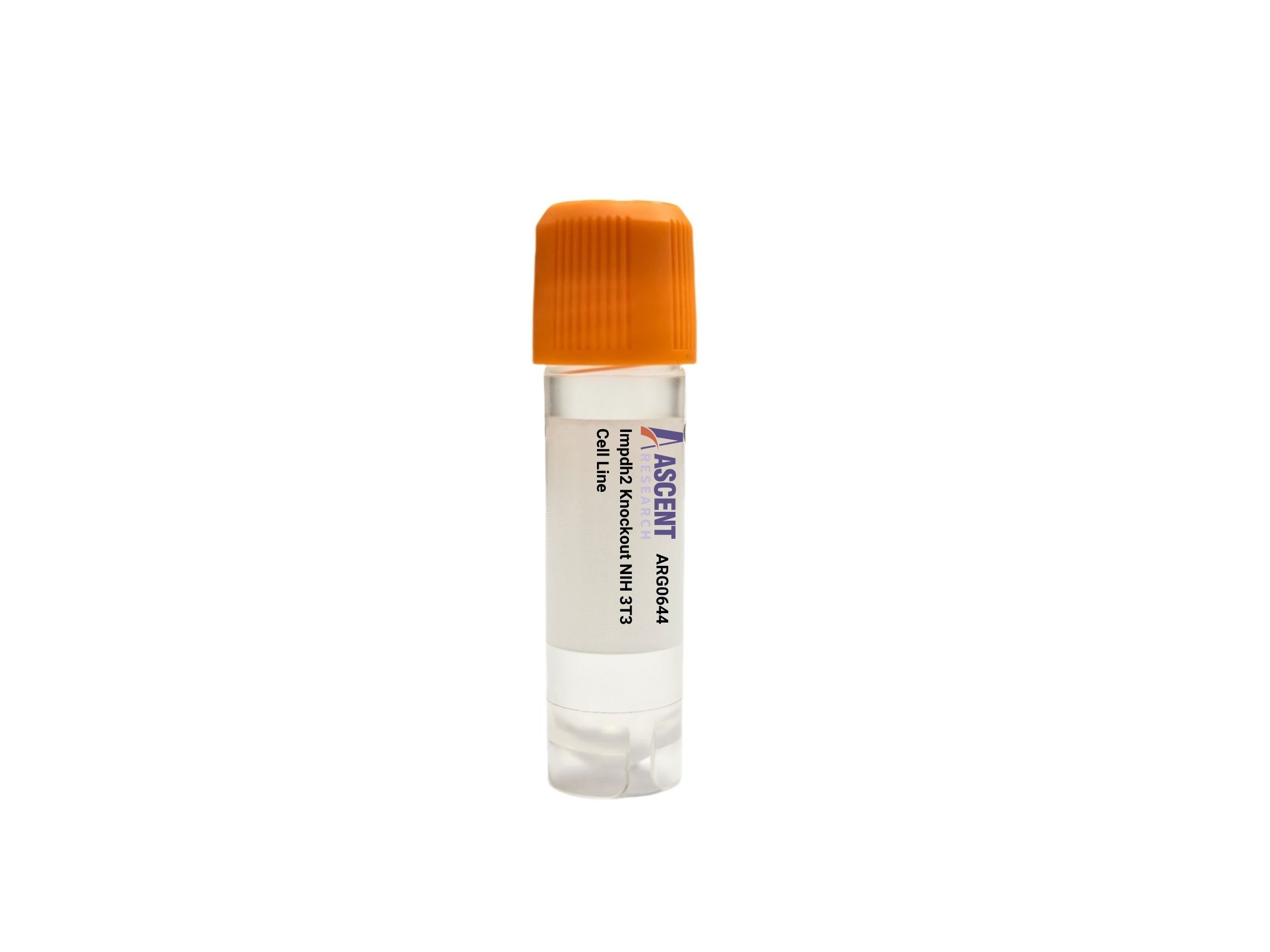
Cat. No. ARG0644

Impdh2 Knockout NIH 3T3 Cell Line

  • Product Type:

    Genome-edited Cells

  • Disease:

    Normal

  • Gene Species:

    Mus musculus (Mouse)

The Impdh2 Knockout NIH 3T3 Cell Line is a CRISPR/Cas9-edited loss-of-function model targeting inosine monophosphate dehydrogenase 2 (Impdh2), the rate-limiting enzyme in de novo guanine nucleotide biosynthesis. In NIH 3T3 mouse embryonic fibroblasts, Impdh2 disruption impairs the conversion of IMP to XMP, depleting GTP and GDP pools essential for cell proliferation. Impdh2 activity is regulated by MYC and mTORC1 and inhibited by mycophenolic acid. This knockout line enables detailed studies of nucleotide metabolism, cancer cell proliferation, and immunosuppression mechanisms, serving as a platform for drug target validation and metabolic research. For inquiries, contact Ascent Research.

Inquire Now

In stock

Ships next business day


Ask a Question

Shipping Info:

Cryopreserved in vials and shipped on dry ice


Disclaimer:

For Research Use Only

  • Characteristics

    Host Cell

    NIH 3T3

    Gene Name

    IMPDH2

    Gene Species

    Mus musculus (Mouse)

    Gene Identifier

    NCBI Gene ID 23918

  • Culture Conditions

    Temperature

    37°C

    Atmosphere

    5% CO₂

  • Quality Control

    Sterility testing

    Daily monitoring confirms that the cells are free from bacterial, yeast, and fungal contamination.

    Mycoplasma testing

    Negative for mycoplasma through PCR analysis

    Pathogens

    Cells tested negative for HIV-1, HBV, and HCV.

  • Disclaimer

    Intended Use

    This product is intended for laboratory in vitro use only. lt is not intended for diagnostic, therapeutic, or clinical applications.

    Disclaimer

    Ascent Research endeavors to provide accurate and up-to-date product information. However, no warranties or representations are made regarding its completeness or reliability. References to scientific literature and patents are for informational purposes only, and the customer assumes sole responsibility for verifying their accuracy.

    By accepting this product, the customer acknowledges and agrees to assume all risks associated with its receipt, handling, storage, disposal, and use, including compliance with all applicable safety and environmental regulations and precautions. Relevant laws, regulations, and ethical guidelines must be followed in conducting any research, modifications, or derivatives derived from this product.

    This product is provided "AS IS", and except as expressly stated herein, Ascent Research disclaims all other warranties, express or implied. Under no circumstances shall Ascent Research, its affiliates, or representatives be liable for indirect, incidental, consequential, or punitive damages arising from the use of this material. While Ascent Research employs rigorous quality control measures, we shall not be held responsible for damages resulting from misidentification or misinterpretation of the provided materials.

Description

The Impdh2 Knockout NIH 3T3 Cell Line is a CRISPR/Cas9-edited knockout cell line derived from the NIH 3T3 mouse embryonic fibroblast line, engineered for loss-of-function studies of inosine monophosphate dehydrogenase 2 (Impdh2). This gene-edited model provides a defined genetic background for investigating Impdh2-dependent processes. NIH 3T3 cells are contact-inhibited immortalized mouse embryonic fibroblasts commonly used in cancer and signal transduction research. Due to their well-characterized growth properties and responsiveness to oncogenic transformation, they serve as a robust platform for dissecting proliferation and metabolic pathways. Impdh2 encodes the rate-limiting enzyme in de novo guanine nucleotide biosynthesis, catalyzing the NAD+-dependent oxidation of inosine monophosphate (IMP) to xanthosine monophosphate (XMP). This reaction is essential for maintaining intracellular pools of guanine nucleotides (GMP, GDP, GTP) required for DNA and RNA synthesis. Impdh2 is transcriptionally regulated by MYC, mTORC1, and E2F, and is subject to negative regulation by p53. Its activity directly interacts with GTP and GDP as allosteric regulators and is inhibited by mycophenolic acid, a clinically used immunosuppressant. Downstream, Impdh2 function governs cell cycle progression by controlling the supply of nucleotides for replication. Disruption of Impdh2 therefore depletes guanine nucleotide pools, impairing nucleic acid synthesis and leading to proliferation arrest. In NIH 3T3 fibroblasts, Impdh2 knockout creates a unique model to interrogate the intersection of nucleotide metabolism with contact inhibition and oncogenic signaling. Given the reliance of rapidly dividing cancer cells on de novo nucleotide synthesis, this knockout line is particularly valuable for studying the metabolic vulnerabilities of transformed cells. It enables precise assessment of how guanine nucleotide depletion influences fibroblast proliferation, survival, and response to oncogenic stimuli. This engineered cell line is ideal for applications including validation of nucleotide biosynthesis targets, investigation of immunosuppression mechanisms mediated by IMPDH inhibition, and screening of compounds that modulate purine metabolism. Representative assays include cell proliferation and colony formation assays, HPLC-based nucleotide pool quantification, flow cytometric cell cycle analysis, and western blot detection of IMPDH2 protein levels. It supports translational research in cancer and viral infections where host nucleotide synthesis is co-opted. For additional details or inquiries, please contact Ascent Research.

Reset Password

    Reach Us Questions? Click Me Here!

    Fill out the form below and a member of our team will contact you shortly!

    *Required field


      Reach Us

      Fill out the form below and a member of our team will contact you shortly!

      *Required field

      Product Inquiry (Optional)