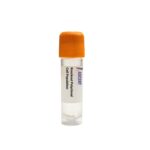
The INA Knockout HT29 Polyclonal Cells represent a CRISPR/Cas9-edited polyclonal knockout population derived from the HT29 human colorectal adenocarcinoma cell line. This product comprises a heterogeneous pool of cells in which the INA gene??encoding alpha-internexin??has been targeted for disruption via CRISPR/Cas9-mediated gene editing. As a polyclonal population, it offers a versatile loss-of-function model for bulk functional studies without the need for single-cell clone isolation, enabling researchers to interrogate the collective impact of INA deficiency on cellular phenotypes and signaling networks.
The HT29 cell line, established from a primary colorectal adenocarcinoma of a 44-year-old Caucasian female, serves as a well-characterized intestinal epithelial model widely employed in cancer biology. HT29 cells exhibit epithelial morphology and retain the capacity for enterocytic differentiation under appropriate culture conditions, making them a robust platform for investigating cytoskeletal organization, cell adhesion, and oncogenic signaling. Their genetic stability and responsiveness to differentiation cues render HT29 an ideal host for studying how aberrant expression of neuronal intermediate filament proteins influences epithelial cancer cell behavior.
Alpha-internexin (INA) is a type IV neuronal intermediate filament protein that, although primarily associated with the nervous system, can be ectopically expressed in certain cancer cells. INA co-assembles with neurofilament subunits NF-L (NEFL), NF-M (NEFM), and NF-H (NEFH) to stabilize the neuronal cytoskeleton. Mechanistically, INA expression is regulated by transcription factors such as NEUROD1 and REST, and it responds to neurotrophic signaling. At the protein level, INA interacts with vimentin (VIM) and other intermediate filament components, and its assembly dynamics are modulated by kinases including CDK5 and GSK3B, which phosphorylate intermediate filaments to regulate filament formation and turnover. Downstream, INA influences the organization of neurofilaments and microtubule-associated proteins, thereby contributing to cytoskeletal integrity. In the HT29 context, disruption of INA likely perturbs these interactions, altering filament networks and potentially affecting cell morphology, adhesion, and mechanotransduction.
The knockout of INA in HT29 cells provides a physiologically relevant model to dissect the roles of neuronal intermediate filaments in epithelial cancer cells. Since HT29 cells typically do not express high levels of INA, this model may reveal gain- or loss-of-function phenotypes when INA is artificially expressed or silenced, offering insights into how aberrant cytoskeletal proteins contribute to cancer hallmarks such as migration, invasion, and altered differentiation. The polyclonal population approach captures averaged phenotypic responses, which is advantageous for screening assays and for identifying robust molecular signatures associated with INA deficiency, without the confounding effects of clonal variation.
This INA knockout product is well-suited for diverse research applications, including investigation of intermediate filament function in cancer cells, neuronal differentiation paradigms, cytoskeleton dynamics, and drug screening for neurodegenerative disorders where INA is implicated (e.g., amyotrophic lateral sclerosis). Compatible assays include western blotting and RT-qPCR to confirm gene disruption, immunofluorescence to visualize cytoskeletal reorganization, and functional assays such as cell migration and invasion assays to assess metastatic potential. Apoptosis assays can further evaluate the impact of INA loss on cell survival. For detailed product information, validation data, and ordering, please contact Ascent Research.