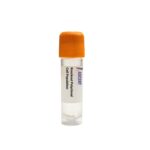
The IRAK4 Knockout NCI-H1975 Polyclonal Cells comprise a CRISPR/Cas9-edited polyclonal knockout population derived from the human NCI-H1975 lung adenocarcinoma cell line, featuring targeted disruption of the IRAK4 gene. This polyclonal cell format provides a heterogeneous population of cells with varied knockout alleles, representing a more physiologically relevant model compared to single-cell clones, and is well-suited for studies requiring robust loss-of-function phenotypes without clonal selection artifacts. The cells are supplied as a ready-to-use polyclonal stock, ensuring immediate utility for downstream experiments.
The parental NCI-H1975 cell line is a widely used in vitro model of non-small-cell lung carcinoma, originally established from a 61-year-old female non-smoker with lung adenocarcinoma. It harbors activating L858R and resistance-associated T790M mutations in the epidermal growth factor receptor (EGFR), making it valuable for EGFR-targeted therapy studies. This genetic background makes NCI-H1975 a relevant system for exploring oncogenic and innate immune pathway interactions in lung cancer.
IRAK4 is a serine/threonine kinase that functions as a central signal transducer in the MyD88-dependent pathways downstream of Toll-like receptors (TLRs) and the interleukin-1 receptor (IL-1R). Upon receptor activation, MyD88 recruits IRAK4, which phosphorylates IRAK1, activating TRAF6. This initiates a cascade involving TAK1, directing the IKK complex to phosphorylate I??B??, leading to NF-??B (p65/p50) activation, and the MAP kinase module (p38 and JNK), culminating in AP-1 activation. IRAK4 also promotes AKT and c-Myc signaling. This network drives expression of pro-inflammatory cytokines like IL-6 and TNF-??. Interacting partners include MyD88, IRAK1, IRAK2, TRAF6, and the TAK1?CTAB1?CTAB2 complex.
In EGFR-mutant lung adenocarcinoma, IRAK4-dependent innate immune signaling may foster a pro-tumor inflammatory microenvironment and survival signaling. TLR or IL-1R activation can drive IRAK4-mediated NF-??B activity, potentially promoting resistance to EGFR inhibitors. This knockout model enables dissection of IRAK4??s role in tumor cell proliferation, survival, and cytokine production in an oncogene-driven background, allowing separation of EGFR and innate immune contributions to malignancy and therapy response.
These polyclonal knockout cells are suited for profiling the TLR/IL-1R signaling landscape in EGFR-mutant lung adenocarcinoma, identifying IRAK4-dependent gene expression via RNA-seq, and evaluating IRAK4 inhibitors. Assays include Western blotting for phospho-p65, phospho-p38, and phospho-JNK; RT-qPCR for IL-6 and TNF-??; NF-??B luciferase reporters; co-immunoprecipitation of IRAK4?CMyD88; and cell viability or apoptosis assays upon IL-1?? or TLR stimulation. The model also supports drug combination studies assessing synergy between IRAK4 inhibition and EGFR tyrosine kinase inhibitors. For further details, contact Ascent Research.