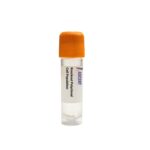
The ITCH Knockout NCI-H1975 Polyclonal Cells product comprises a CRISPR/Cas9-edited polyclonal knockout cell population derived from the human lung adenocarcinoma cell line NCI-H1975, featuring targeted disruption of the ITCH gene locus. This genetically engineered model provides a loss-of-function system for investigating ITCH-dependent molecular mechanisms in a clinically relevant non-small cell lung cancer (NSCLC) context, without specification of the precise editing outcome or clonal composition.
The host NCI-H1975 cell line originates from a metastatic lymph node of a female patient with NSCLC and harbors compound activating EGFR mutations (L858R/T790M). These mutations confer constitutive kinase activity and represent a well-characterized background for studying acquired resistance to first- and third-generation EGFR tyrosine kinase inhibitors (TKIs). The cells exhibit dependency on EGFR-driven signaling and are widely employed in preclinical drug discovery and resistance research, making them an ideal platform for evaluating ITCH function in oncogenic signaling.
ITCH encodes a HECT-type E3 ubiquitin ligase that catalyzes both K48- and K63-linked polyubiquitination of diverse protein substrates, thereby controlling their stability, trafficking, and signaling output. ITCH activity is regulated by upstream kinases including JNK (MAPK8/9) and Src family members, adaptor proteins such as NDFIP1, and calcium signaling. Key downstream targets include EGFR, NOTCH1, TP63, CFLAR (c-FLIP), SMAD7, and JUN, with ubiquitination directing substrates toward lysosomal or proteasomal degradation. In the EGFR signaling axis, ITCH ubiquitinates activated EGFR, facilitating its downregulation and attenuation of downstream cascades mediated by GRB2, SOS, RAS, RAF, MEK, and ERK. ITCH also modulates apoptosis via CFLAR and NOTCH1, and regulates TGF-?? and inflammatory responses through SMAD7 ubiquitination, interacting with NEDD4 family members and ubiquitin-conjugating enzymes such as UBE2L3 and UBE2D2.
In the NCI-H1975 background with hyperactive EGFR mutants, ITCH ordinarily provides a negative feedback constraint on receptor signaling. CRISPR/Cas9-mediated disruption of ITCH is expected to impair EGFR ubiquitination and subsequent lysosomal/proteasomal degradation, resulting in sustained surface EGFR levels and persistent downstream ERK pathway activation via the GRB2-SOS-RAS-RAF-MEK axis. This context may reveal altered sensitivity or resistance profiles to EGFR TKIs such as gefitinib and osimertinib, thereby offering a physiologically relevant model to dissect ubiquitin-dependent resistance mechanisms. Additionally, the loss of ITCH may broadly impact apoptosis, proliferation, and immune-related pathways through accumulated substrates like CFLAR, NOTCH1, and SMAD7, mirroring the multifunctional roles of ITCH in tumor biology.
This polyclonal knockout cell pool is suited for diverse applications including mechanistic studies of EGFR endocytosis and degradation, drug-sensitivity profiling in EGFR-mutant NSCLC, synthetic lethal screening, and functional interrogation of ITCH substrates in cancer progression and immune evasion. Representative experimental approaches encompass cycloheximide-chase assays with surface EGFR flow cytometry or western blotting, ubiquitination co-immunoprecipitation, cell viability and apoptosis analyses using Annexin V/PI flow cytometry, phospho-EGFR/ERK immunoblotting, and dose-response studies with clinically relevant EGFR inhibitors. Downstream target gene expression can be monitored by RT-qPCR. For additional information and technical support, please contact Ascent Research.