Quick Order Cart

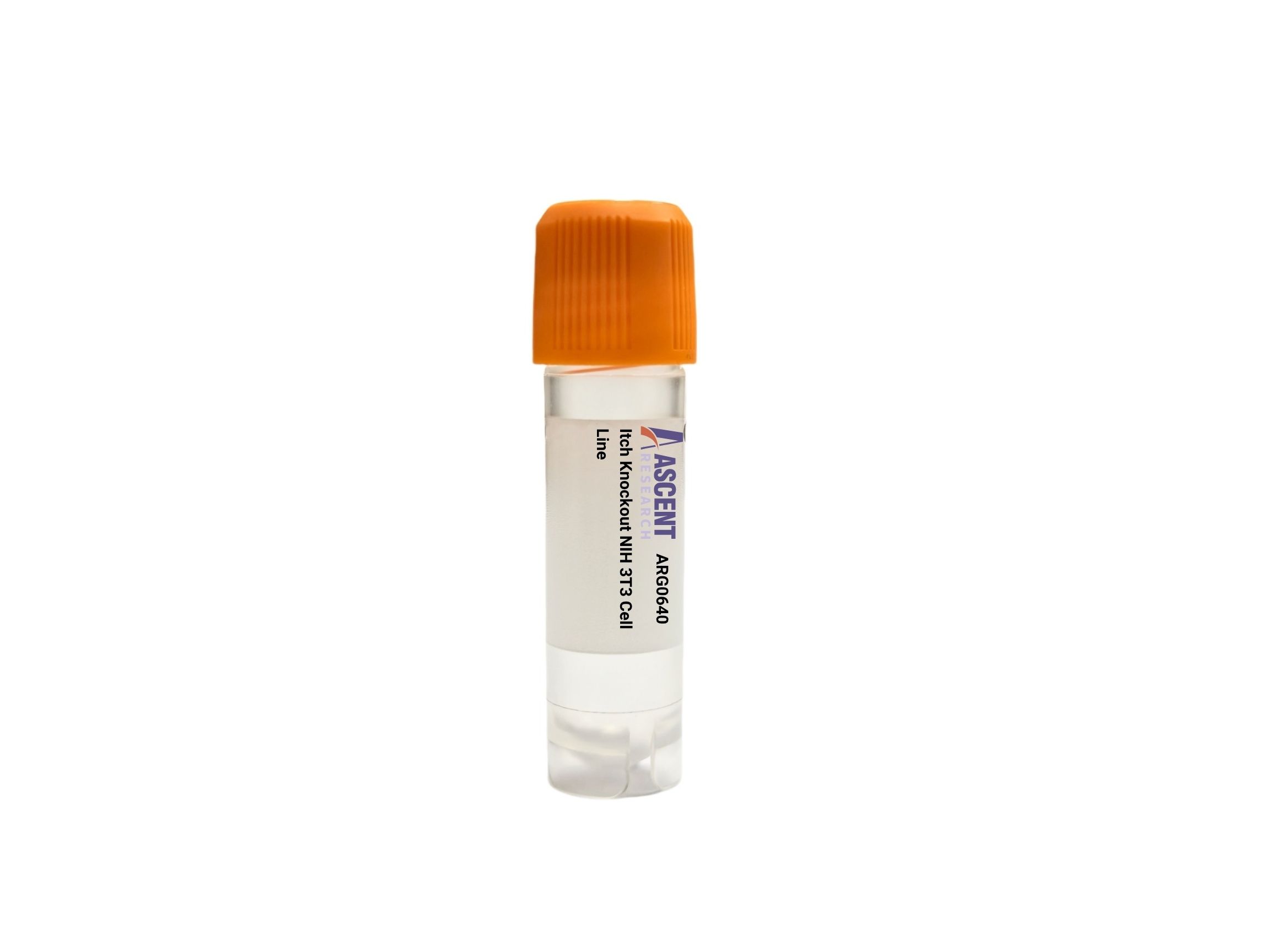
Cat. No. ARG0640

Itch Knockout NIH 3T3 Cell Line

  • Product Type:

    Genome-edited Cells

  • Disease:

    Normal

  • Gene Species:

    Mus musculus (Mouse)

The Itch Knockout NIH 3T3 Cell Line provides a constitutive loss-of-function model for the E3 ubiquitin ligase Itch, generated by CRISPR/Cas9-mediated gene disruption in immortalized mouse embryonic fibroblasts. This line facilitates dissection of Itch-dependent ubiquitination and degradation of key signaling proteins, including c-FLIP, Notch intracellular domain, and Smad7, and is ideal for studying TGF-??, TNF-??/NF-??B, and Notch pathways. Applications include protein turnover analysis, ubiquitination assays, co-immunoprecipitation, reporter gene studies, and flow cytometry-based receptor quantification. It is particularly suited for investigations into autoimmune and inflammatory disease mechanisms, cancer signaling, and drug target validation.

Inquire Now

In stock

Ships next business day


Ask a Question

Shipping Info:

Cryopreserved in vials and shipped on dry ice


Disclaimer:

For Research Use Only

  • Characteristics

    Host Cell

    NIH 3T3

    Gene Name

    Itch

    Gene Species

    Mus musculus (Mouse)

    Gene Identifier

    NCBI Gene ID 16396

  • Culture Conditions

    Temperature

    37°C

    Atmosphere

    5% CO₂

  • Quality Control

    Sterility testing

    Daily monitoring confirms that the cells are free from bacterial, yeast, and fungal contamination.

    Mycoplasma testing

    Negative for mycoplasma through PCR analysis

    Pathogens

    Cells tested negative for HIV-1, HBV, and HCV.

  • Disclaimer

    Intended Use

    This product is intended for laboratory in vitro use only. lt is not intended for diagnostic, therapeutic, or clinical applications.

    Disclaimer

    Ascent Research endeavors to provide accurate and up-to-date product information. However, no warranties or representations are made regarding its completeness or reliability. References to scientific literature and patents are for informational purposes only, and the customer assumes sole responsibility for verifying their accuracy.

    By accepting this product, the customer acknowledges and agrees to assume all risks associated with its receipt, handling, storage, disposal, and use, including compliance with all applicable safety and environmental regulations and precautions. Relevant laws, regulations, and ethical guidelines must be followed in conducting any research, modifications, or derivatives derived from this product.

    This product is provided "AS IS", and except as expressly stated herein, Ascent Research disclaims all other warranties, express or implied. Under no circumstances shall Ascent Research, its affiliates, or representatives be liable for indirect, incidental, consequential, or punitive damages arising from the use of this material. While Ascent Research employs rigorous quality control measures, we shall not be held responsible for damages resulting from misidentification or misinterpretation of the provided materials.

Description

The Itch Knockout NIH 3T3 Cell Line is a CRISPR/Cas9-edited murine fibroblast model with targeted disruption of the Itch gene, which encodes a HECT-type E3 ubiquitin ligase. This constitutive loss-of-function line enables rigorous investigation of ubiquitin-mediated degradation pathways without residual Itch activity. It serves as an essential tool for dissecting how Itch governs protein turnover, signal transduction, and cellular homeostasis in a non-immune context. NIH 3T3 is an immortalized embryonic fibroblast line derived from NIH Swiss mouse cultures, extensively used in signal transduction, proliferation, and transformation studies. The cells display robust growth, are easily transfectable, and respond to diverse extracellular ligands. This background is particularly suited for analyzing receptor-coupled signaling cascades, mitogenic responses, and stress-activated pathways, providing a well-characterized platform for studying the functional consequences of Itch loss. Itch functions as an E3 ubiquitin ligase that catalyzes ubiquitination of target proteins, typically marking them for proteasomal degradation. Its catalytic activity is stimulated by JNK-mediated phosphorylation at Ser199/Thr222, often downstream of TCR signaling or inflammatory cytokines such as TNF-?? and IL-1. Adaptor proteins Ndfip1 and Ndfip2 recruit Itch to substrates including c-FLIP, Notch intracellular domain, Smad7, RIP1, p73, p63, and EGFR. Through these interactions, Itch negatively regulates TGF-??, TNF-??/NF-??B, and Notch pathways, while also intersecting with endocytic trafficking and the JNK cascade. The Itch knockout NIH 3T3 model is uniquely positioned to explore the ligase??s function in fibroblasts, where it may critically influence TGF-??/Smad, NF-??B, and Notch signaling dynamics. In these cells, Itch loss can be probed to determine its impact on basal and ligand-induced protein stability, cell cycle progression, and apoptosis sensitivity. This system complements immunological studies, revealing cell-type?Cspecific regulatory mechanisms mediated by Itch. This engineered cell line supports a broad range of applications, including ubiquitination assays, co-immunoprecipitation of Itch?Csubstrate complexes, Western blot-based protein turnover analysis, NF-??B luciferase reporter assays, and flow cytometry for surface receptor quantification. It is valuable for research on signaling nodes, autoimmune mechanisms (e.g., lymphoproliferative syndrome), inflammatory disorders, and cancer biology. For further information, please contact Ascent Research.

Reset Password

    Reach Us Questions? Click Me Here!

    Fill out the form below and a member of our team will contact you shortly!

    *Required field


      Reach Us

      Fill out the form below and a member of our team will contact you shortly!

      *Required field

      Product Inquiry (Optional)