Security Notice: Please be aware of impersonation attempts using our company name
Legitimate communications from Ascent Research will only come from official @ascentresearch.com email addresses.
Quick Order Cart

Cat. No. ARG0295

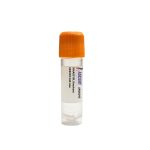
KIAA0319L Knockout HEK293 Cell Line

  • Product Type:

    Genome-edited Cells

  • Disease:

    Normal

  • Gene Species:

    Homo sapiens (Human)

The KIAA0319L Knockout HEK293 Cell Line is a CRISPR/Cas9-edited knockout cell line that disrupts the human KIAA0319L gene, the primary receptor for adeno-associated viruses (AAV). This model leverages the widely used HEK293 background, known for its high transfectability and viral production capacity, to eliminate endogenous KIAA0319L expression, thereby blocking AAV transduction. KIAA0319L initiates clathrin-mediated endocytosis by directly binding AAV capsid proteins and recruiting adaptor AP2, with subsequent trafficking through Rab5 and Rab7 endosomes. This knockout line is ideal for AAV gene therapy vector screening, host-virus interaction studies, and endocytosis pathway analysis.

Inquire Now

In stock

Ships next business day


Ask a Question

Shipping Info:

Cryopreserved in vials and shipped on dry ice


Disclaimer:

For Research Use Only

  • Characteristics

    Host Cell

    HEK293

    Age

    Fetus

    Gene Name

    KIAA0319L

    Gene Species

    Homo sapiens (Human)

    Gene Identifier

    NCBI Gene ID 79932

  • Culture Conditions

    Temperature

    37°C

    Atmosphere

    5% CO₂

  • Quality Control

    Sterility testing

    Daily monitoring confirms that the cells are free from bacterial, yeast, and fungal contamination.

    Mycoplasma testing

    Negative for mycoplasma through PCR analysis

    Pathogens

    Cells tested negative for HIV-1, HBV, and HCV.

  • Disclaimer

    Intended Use

    This product is intended for laboratory in vitro use only. lt is not intended for diagnostic, therapeutic, or clinical applications.

    Disclaimer

    Ascent Research endeavors to provide accurate and up-to-date product information. However, no warranties or representations are made regarding its completeness or reliability. References to scientific literature and patents are for informational purposes only, and the customer assumes sole responsibility for verifying their accuracy.

    By accepting this product, the customer acknowledges and agrees to assume all risks associated with its receipt, handling, storage, disposal, and use, including compliance with all applicable safety and environmental regulations and precautions. Relevant laws, regulations, and ethical guidelines must be followed in conducting any research, modifications, or derivatives derived from this product.

    This product is provided "AS IS", and except as expressly stated herein, Ascent Research disclaims all other warranties, express or implied. Under no circumstances shall Ascent Research, its affiliates, or representatives be liable for indirect, incidental, consequential, or punitive damages arising from the use of this material. While Ascent Research employs rigorous quality control measures, we shall not be held responsible for damages resulting from misidentification or misinterpretation of the provided materials.

Description

The KIAA0319L Knockout HEK293 Cell Line is a CRISPR/Cas9-edited knockout cell line in which the human KIAA0319L gene has been disrupted to eliminate functional protein expression. This cell line serves as a defined loss-of-function model for studying the role of KIAA0319L, the primary receptor for adeno-associated viruses (AAV), in a human embryonic kidney background. By leveraging CRISPR/Cas9-mediated gene disruption, researchers can investigate AAV host interactions and endocytic trafficking without interference from endogenous receptor activity.

The host cell line, HEK293, is derived from human embryonic kidney cells transformed with adenovirus 5 DNA. This cell line is widely employed in biomedical research due to its robust protein expression capabilities, ease of transfection, and permissiveness to viral production. Its use as a platform for AAV vector manufacturing and host-virus interaction studies makes it an ideal context for examining KIAA0319L function and the effects of its ablation.

KIAA0319L encodes a transmembrane protein that acts as the essential host receptor for multiple AAV serotypes. It directly binds to AAV capsid proteins and subsequently recruits the clathrin adaptor AP2 complex, initiating clathrin-mediated endocytosis. Downstream of receptor engagement, the internalized virion is routed through dynamin-dependent vesicle scission and traffics sequentially through Rab5-positive early endosomes and Rab7-positive late endosomes. This endosomal sorting ultimately facilitates viral genome escape and nuclear import, steps critical for transgene expression. Beyond its virological role, KIAA0319L has been implicated in neuronal migration and cell adhesion, although its upstream transcriptional regulators remain poorly defined.

In the HEK293 context, knockout of KIAA0319L completely abrogates AAV transduction, rendering the cells refractory to infection. This phenotype provides a stringent negative control for experiments dissecting the cellular machinery of AAV entry and for validating the specificity of AAV-based gene delivery vectors. Furthermore, the HEK293 background, permissive for many steps of viral replication, allows researchers to recapitulate early infection events while eliminating the confounding variable of endogenous receptor expression. This model thus enables clean gain-of-function reconstitution studies with mutant receptors or alternative serotypes.

This knockout cell line supports applications including AAV gene therapy vector development, host-virus interaction studies, and high-throughput AAV variant screening. Essential assays such as AAV transduction with GFP reporters, Western blotting for KIAA0319L, immunofluorescence for viral capsid uptake, and flow cytometry for transduction efficiency can be readily employed. RT-qPCR for viral genome trafficking and co-immunoprecipitation with AAV capsid further dissect entry mechanisms, while T7E1 assay validates genomic editing. For further details or to discuss custom projects, please contact Ascent Research.


Reset Password

    Reach Us Questions? Click Me Here!

    Fill out the form below and a member of our team will contact you shortly!

    *Required field


      Reach Us

      Fill out the form below and a member of our team will contact you shortly!

      *Required field

      Product Inquiry (Optional)