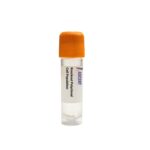
The KLF4 Knockout CAL-27 Polyclonal Cells are a CRISPR/Cas9-edited polyclonal knockout cell population designed for loss-of-function studies of the KLF4 gene. This product comprises a heterogeneous pool of CAL-27 cells harboring targeted disruptions in the KLF4 locus, generated via CRISPR/Cas9-mediated gene disruption. The polyclonal format preserves the diversity of editing events across the cell population, enabling robust assessment of KLF4 function without clonal selection bias. The knockout model is well-suited for studies in cancer biology, signal transduction, and epithelial-mesenchymal transition research.
CAL-27 is a human tongue squamous cell carcinoma cell line with an adherent epithelial morphology, widely used as a model system for oral squamous cell carcinoma. Derived from a primary tumor, CAL-27 cells retain key characteristics of oral cancer, including dysregulated proliferation, invasive potential, and responsiveness to microenvironmental cues. This cell line is frequently utilized to investigate the molecular underpinnings of oral carcinogenesis, drug sensitivity, and cellular differentiation within the oral cavity.
KLF4 (Kr??ppel-like factor 4) encodes a zinc finger transcription factor that exerts context-dependent roles as a tumor suppressor or oncogene. It is activated by upstream regulators such as TGF-??1 and p53, and it functions within key signaling networks including the Wnt/??-catenin and TGF-?? pathways. KLF4 directly regulates downstream targets critical for cell cycle control (e.g., CDKN1A/p21, CCND1/cyclin D1), apoptosis (BAX, BCL2), and epithelial identity (CDH1/E-cadherin, VIM/vimentin). It also interacts with co-regulators like EP300/p300, HDAC1/2, and pluripotency factors OCT4 and SOX2, where it transcriptionally mediates cellular reprogramming and differentiation.
In the CAL-27 oral cancer context, KLF4 knockout allows dissection of its dualistic roles. Loss of KLF4 may disrupt p21-mediated cell cycle arrest and E-cadherin-dependent cell adhesion, potentially shifting cells toward a mesenchymal phenotype and altering apoptotic thresholds. This model enables the study of KLF4-dependent regulation of epithelial-mesenchymal transition, as well as its interplay with ??-catenin/TCF signaling and SMAD2/3 downstream of TGF-?? receptors. The model’s relevance extends to colorectal and gastric cancers, where KLF4 dysregulation is also implicated.
Typical research applications for these polyclonal knockout cells include functional genomics, drug response profiling, and mechanistic studies in oral squamous cell carcinoma. Researchers can employ quantitative RT-PCR and RNA-seq to confirm KLF4 disruption and assess transcriptional alterations in downstream targets. Proliferation (MTT, BrdU), apoptosis (Annexin V), and migration/invasion assays are used to quantify phenotypic consequences. Interaction studies via co-immunoprecipitation or ChIP-qPCR can probe KLF4 complexes with HDACs, ??-catenin, or SOX2. Western blotting and immunofluorescence validate protein-level changes. For further technical information, please contact Ascent Research.