Quick Order Cart

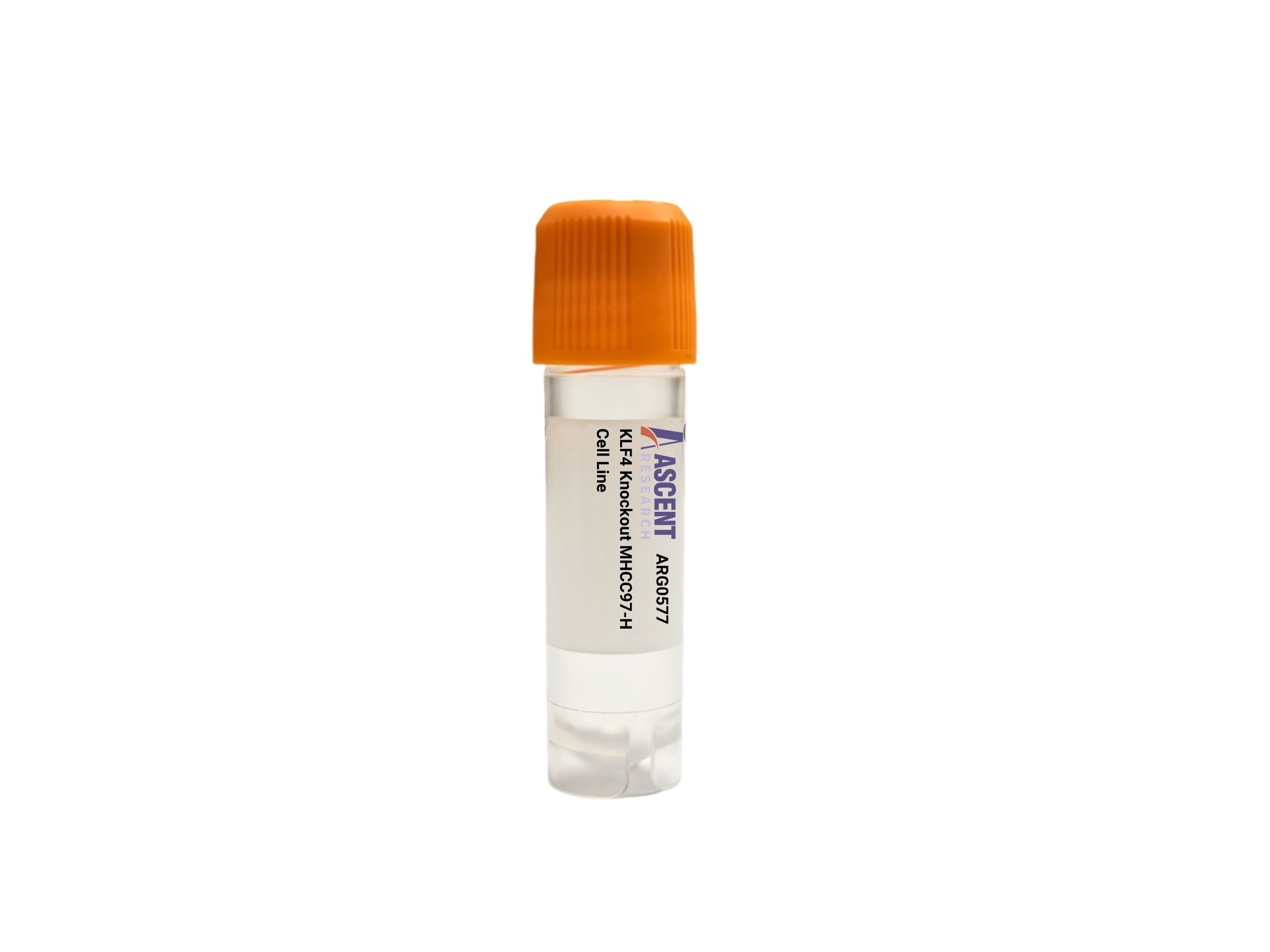
Cat. No. ARG0577

KLF4 Knockout MHCC97-H Cell Line

  • Product Type:

    Genome-edited Cells

  • Tissue Source:

    Liver

  • Disease:

    Hepatocellular carcinoma

  • Gene Species:

    Homo sapiens (Human)

The KLF4 Knockout MHCC97-H Cell Line is a CRISPR/Cas9-edited knockout cell line generated from the highly metastatic MHCC97-H human hepatocellular carcinoma line. KLF4 is a tumor-suppressive transcription factor that regulates cell cycle, apoptosis, and epithelial-mesenchymal transition (EMT) by modulating targets such as p21 and E-cadherin, and through inhibition of Wnt/??-catenin and PI3K/AKT signaling. This knockout model in an aggressive liver cancer background is ideal for investigating KLF4's role in HCC metastasis, EMT, and tumor suppression. Applications include functional genomics, drug screening, and molecular mechanism studies using assays like Transwell migration, Annexin V apoptosis, and pathway activity analysis.

Inquire Now

In stock

Ships next business day


Ask a Question

Shipping Info:

Cryopreserved in vials and shipped on dry ice


Disclaimer:

For Research Use Only

  • Characteristics

    Host Cell

    MHCC97-H

    Age

    39 years

    Gene Name

    KLF4

    Gene Alias

    KLF transcription factor 4; EZF; GKLF

    Gene Species

    Homo sapiens (Human)

    Gene Identifier

    NCBI Gene ID 9314

    Gene Family

    Zinc fingers C2H2-type, KLF transcription factors

  • Culture Conditions

    Temperature

    37°C

    Atmosphere

    5% CO₂

  • Quality Control

    Sterility testing

    Daily monitoring confirms that the cells are free from bacterial, yeast, and fungal contamination.

    Mycoplasma testing

    Negative for mycoplasma through PCR analysis

    Pathogens

    Cells tested negative for HIV-1, HBV, and HCV.

  • Disclaimer

    Intended Use

    This product is intended for laboratory in vitro use only. lt is not intended for diagnostic, therapeutic, or clinical applications.

    Disclaimer

    Ascent Research endeavors to provide accurate and up-to-date product information. However, no warranties or representations are made regarding its completeness or reliability. References to scientific literature and patents are for informational purposes only, and the customer assumes sole responsibility for verifying their accuracy.

    By accepting this product, the customer acknowledges and agrees to assume all risks associated with its receipt, handling, storage, disposal, and use, including compliance with all applicable safety and environmental regulations and precautions. Relevant laws, regulations, and ethical guidelines must be followed in conducting any research, modifications, or derivatives derived from this product.

    This product is provided "AS IS", and except as expressly stated herein, Ascent Research disclaims all other warranties, express or implied. Under no circumstances shall Ascent Research, its affiliates, or representatives be liable for indirect, incidental, consequential, or punitive damages arising from the use of this material. While Ascent Research employs rigorous quality control measures, we shall not be held responsible for damages resulting from misidentification or misinterpretation of the provided materials.

Description

The KLF4 Knockout MHCC97-H Cell Line is a CRISPR/Cas9-edited knockout cell line featuring targeted disruption of the KLF4 gene within the MHCC97-H human hepatocellular carcinoma host background. This stable loss-of-function model is supplied as a validated cell line and is designed to facilitate detailed functional studies of KLF4 in a metastatic liver cancer setting. The use of CRISPR/Cas9-mediated gene disruption enables robust knockout while preserving the genetic integrity of the host line.

The MHCC97-H cell line was established from the LCI-D20 metastatic human hepatocellular carcinoma and is recognized for its high invasive and metastatic potential. These cells exhibit aggressive motile and invasive behaviors, making them an ideal platform for examining mechanisms underlying HCC metastasis and for evaluating the role of tumor suppressor genes such as KLF4 in controlling these processes.

KLF4 is a zinc-finger transcription factor that orchestrates cell cycle arrest, apoptosis, differentiation, and maintenance of stemness. In hepatocellular carcinoma, KLF4 acts as a tumor suppressor by upregulating cyclin-dependent kinase inhibitors p21/CDKN1A and p27/CDKN1B and by suppressing Cyclin D1 expression. KLF4 also antagonizes epithelial-mesenchymal transition (EMT) through transcriptional activation of E-cadherin and repression of mesenchymal markers such as Snail, Vimentin, MMP2, and MMP9. Its activity is regulated by upstream signals including TGF-??1, p53, and AKT, and it functionally interacts with coregulators p300/CBP and HDAC1/2. KLF4 integrates diverse signaling cascades, notably inhibiting Wnt/??-catenin and PI3K/AKT pathways to exert its anti-proliferative and anti-metastatic effects.

In the highly metastatic MHCC97-H background, disruption of KLF4 is anticipated to potentiate proliferative capacity, suppress apoptosis, and enhance EMT-driven invasion. This knockout model thus provides a relevant cellular context to dissect how KLF4 loss cooperates with the endogenous aggressive phenotype, allowing exploration of downstream effectors such as ??-catenin, AKT, Smad2/3, and ERK in promoting HCC progression. Consequently, the KLF4 Knockout MHCC97-H Cell Line serves as a critical tool for deciphering the molecular interplay between KLF4 and pathways involved in hepatocellular carcinoma metastasis.

Researchers can employ this cell line to investigate tumor suppressor mechanisms, study EMT regulation, perform drug sensitivity screening, and analyze signaling pathway alterations. Compatible techniques include Western blotting, RT-qPCR, RNA-seq, ChIP-qPCR, immunofluorescence, flow cytometry, Transwell migration/invasion assays, wound healing assays, Annexin V apoptosis detection, and luciferase reporter assays. The model also supports co-immunoprecipitation and analysis of phospho-AKT/ERK changes. For further technical details or support, please contact Ascent Research.


Reset Password

    Reach Us Questions? Click Me Here!

    Fill out the form below and a member of our team will contact you shortly!

    *Required field


      Reach Us

      Fill out the form below and a member of our team will contact you shortly!

      *Required field

      Product Inquiry (Optional)