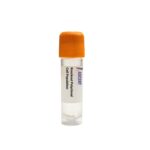
The KRT14 Knockout A2780 Polyclonal Cells product provides a CRISPR/Cas9-edited polyclonal knockout cell population derived from the human ovarian carcinoma cell line A2780. This loss-of-function model targets the human KRT14 gene, which encodes the type I keratin 14, a key structural component of intermediate filaments in epithelial cells. The cell population comprises a heterogeneous mix of edited alleles, enabling functional studies without clonal expansion artifacts. This polyclonal format is particularly suitable for assays requiring cellular heterogeneity, such as mixed-population migration or drug response profiling, while maintaining the ovarian cancer background of the parental A2780 line.
The A2780 cell line is a widely used epithelial model established from an untreated patient with ovarian carcinoma. These cells exhibit adherent growth, retain epithelial characteristics, and express markers relevant to ovarian cancer biology. As a model for high-grade serous ovarian carcinoma, A2780 cells are employed extensively in studies of tumor progression, therapeutic resistance, and metastasis. Their utility in cancer research is enhanced by the absence of prior drug selection, making them a representative substrate for investigating native tumor cell behavior and molecular mechanisms underlying ovarian cancer pathogenesis.
KRT14 forms obligate heterodimers with type II keratin 5 (KRT5) to assemble intermediate filaments that provide mechanical resilience and support adhesion. This network anchors at desmosomes via desmoplakin and plectin. Upstream, KRT14 is regulated by TP63 (p63), EGFR, AP-1, FGF, and BMP signaling. Its loss disrupts KRT5-KRT14 heterodimers, altering interactions with desmoplakin, integrin ??4, and 14-3-3 proteins, thereby perturbing Rho GTPases, PI3K-Akt, and cell cycle regulators, as well as kinases PKC, ROCK, and FAK. This network links KRT14 to epithelial differentiation and survival.
In ovarian cancer, KRT14 knockout creates a model to explore how keratin network disruption influences aggressive phenotypes. The loss of mechanical stability and altered adhesion may promote epithelial-mesenchymal transition (EMT)-like changes, enhancing migratory and invasive capacity. Concurrently, dysregulation of PI3K-Akt and Rho GTPase signaling can modify cellular responses to chemotherapeutic agents, aiding dissection of drug resistance mechanisms. Findings may extend to squamous cell carcinoma and breast and bladder cancers.
Typical applications include immunofluorescence for keratin network structure, western blot for KRT14 and KRT5, transwell migration and invasion assays, cell adhesion assays, RNA-seq profiling, and drug sensitivity testing with cisplatin or olaparib. This polyclonal model supports ovarian cancer research into cytoskeletal dynamics, metastasis, and signaling. Contact Ascent Research for further information.